
Type 4 Hair: A Straightforward Guide to Coily and Kinky Textures
If you have type 4 hair, you already know it does things no other texture can. What you might not know is why it behaves the way it does, and how to work with it instead of against it. This guide covers the real differences between 4A, 4B, and 4C, the science behind shrinkage and dryness, and the techniques that actually keep coily and kinky hair healthy.
Type 4 hair typically has fewer total strands than straighter hair types, but its tight coil pattern creates impressive volume that can make it appear much denser than it is. It appears thinner because the tight coil pattern causes significant shrinkage, sometimes up to 75% of actual length.
No fluff. No apologies for your texture. Just what works.
Type 4 Hair Is the Most Versatile Hair on Earth
This isn’t flattery. Count the styles.
Locs. Twists. Two-strand twists. Flat twists. Braids of every size. Cornrows. Afros. Twist-outs. Braid-outs. Bantu knots. Bantu knot-outs. Flat-ironed straight. Coiled. Stretched. Finger coils. Puffs. Updos. Wigs over protective styles. Crochet braids.
The LOC method (Liquid, Oil, Cream) was specifically developed for Type 4 hair. Apply a water-based leave-in first, then a penetrating oil like jojoba, then a thick cream to seal everything in.
No other hair type on the Andre Walker scale can do all of that. Type 1 (straight) can be curled, but it won’t hold without product and heat. Type 2 and 3 can do some protective styles, but the texture doesn’t grip and hold the way type 4 does. Your hair’s tight coil pattern is what makes braids stay braided, twists stay twisted, and styles hold their shape for weeks.
The natural oils your scalp produces have a harder time traveling down tightly coiled strands compared to straight hair. This is why Type 4 hair needs external moisture more frequently, not because it is inherently dry.
The tight curl pattern also means your hair stands up and out from the scalp, giving you volume that other textures spend thirty dollars in product trying to achieve. An afro is a hairstyle that only type 4 hair can truly pull off.
So before we get into care routines and moisture strategies, start here: you have the most versatile hair texture that exists. Everything in this guide is about helping you make the most of it.

4A vs 4B vs 4C: The Differences
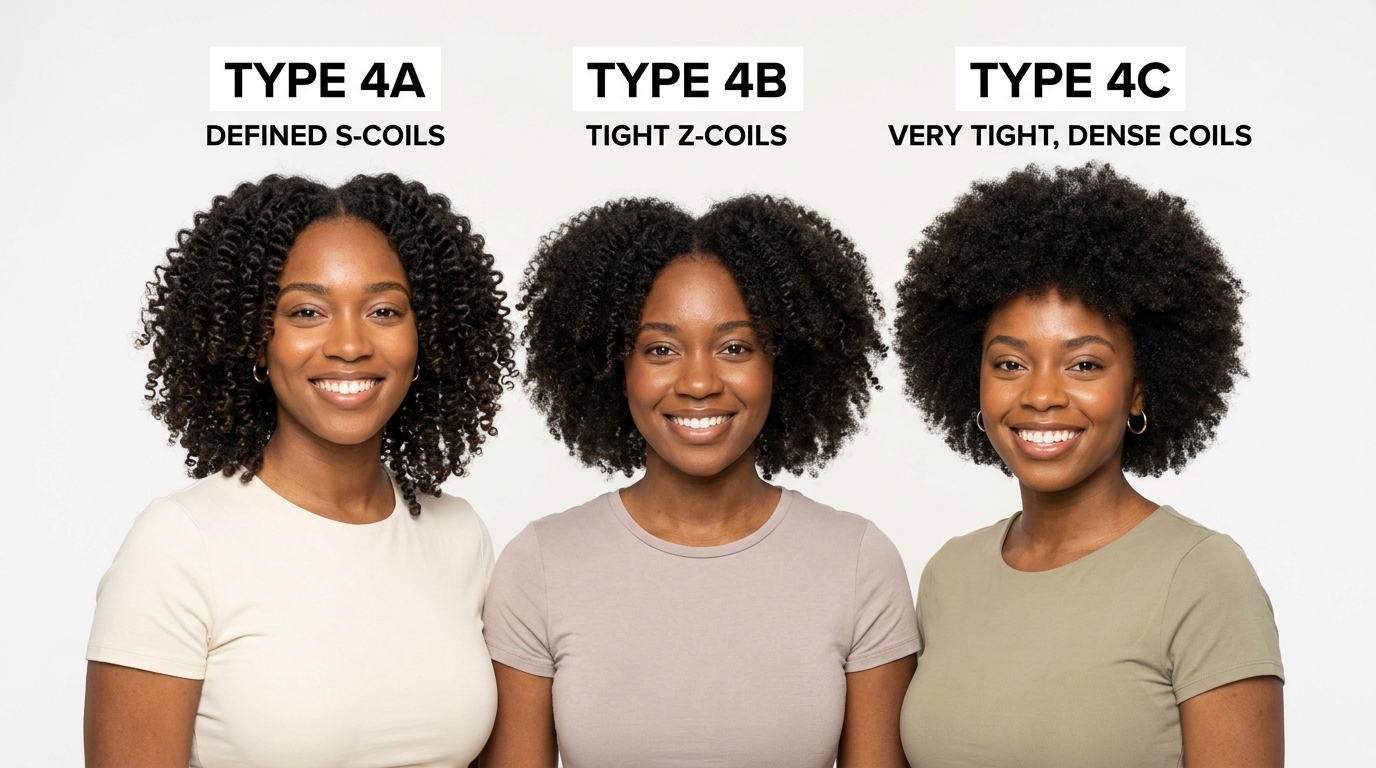
The type 4 category contains three subtypes, and they behave differently enough that your care routine should account for which one you have. Most people have a mix of at least two subtypes across different sections of their head, so don’t stress about landing in one exact box.
4A Hair
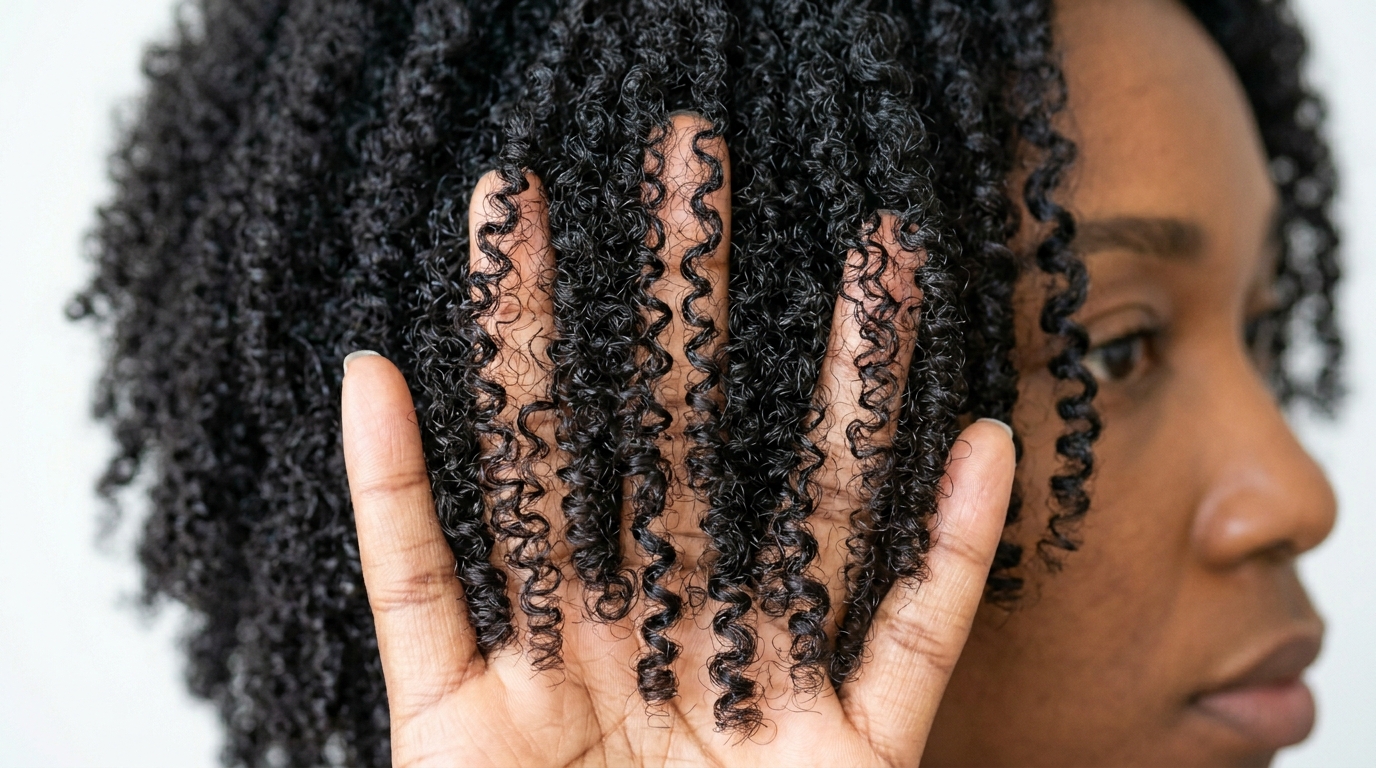
4A coils are S-shaped and well-defined. Think of wrapping a strand around a pencil. That’s roughly the diameter of a 4A coil. When you stretch a 4A strand and let go, it springs back into a visible coil pattern. Of the three type 4 subtypes, 4A has the most visible curl definition without any product.
4A hair tends to have more moisture than 4B or 4C because the coil shape, while tight, still allows some sebum to travel down the hair shaft. It’s still drier than type 2 or 3 hair, but within the type 4 family, 4A is the least dry.
4B Hair
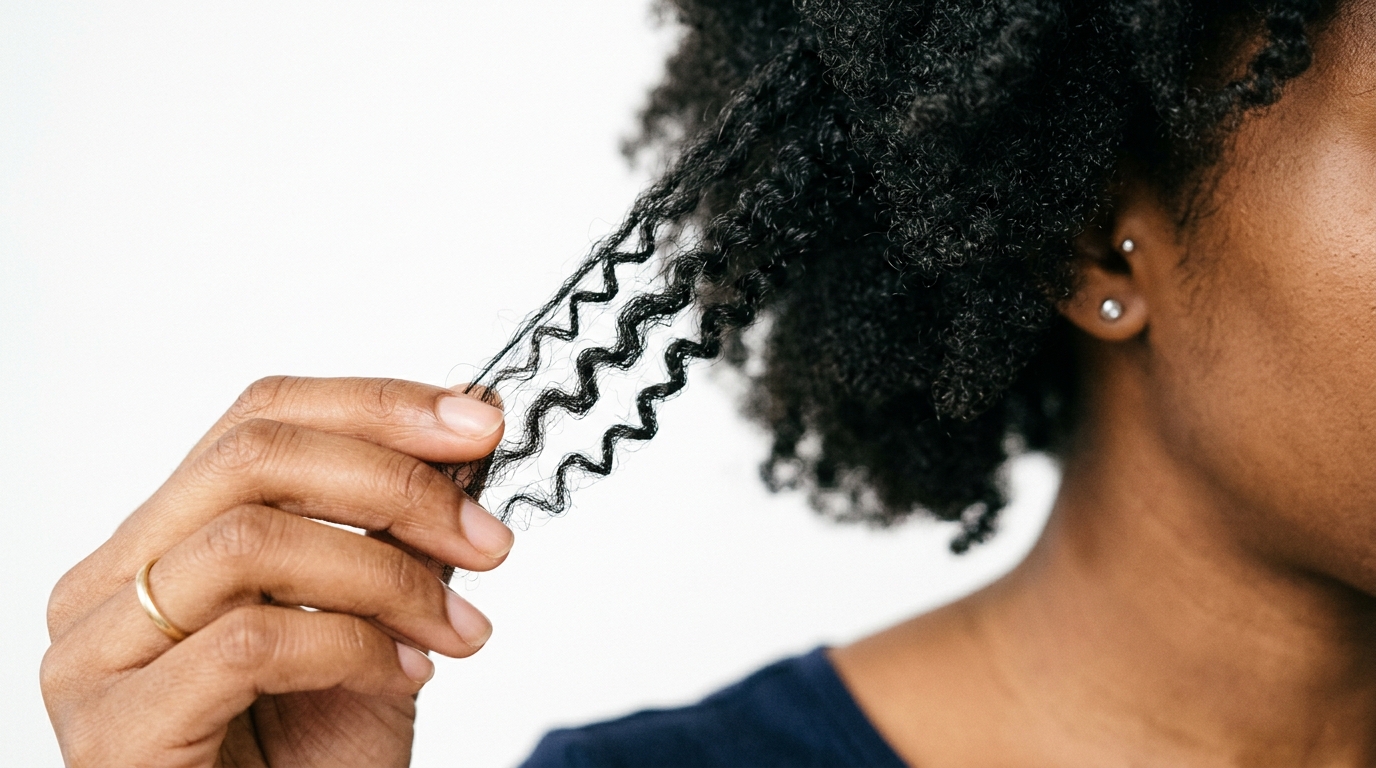
4B hair bends in sharp Z-shaped angles rather than forming round coils. If you look at a single strand, you’ll see it zigzags instead of curling. The pattern is less visibly defined than 4A, but there is still a pattern. It’s just angular instead of circular.
Shrinkage with 4B hair runs around 70 to 75 percent. A strand that’s eight inches long might look like two inches when dry. The Z-shape also means more friction between strands, which is why 4B hair tangles more easily than 4A and needs more careful detangling.
4C Hair
4C is the tightest curl pattern. Individual strands may appear to have no pattern at all when dry, but wet or stretch a 4C strand and you’ll see extremely tight coils or zigzags. The pattern is there. It’s just so tight that it’s hard to see without magnification or manipulation.
4C hair experiences the most shrinkage of any hair type, sometimes up to 75 to 80 percent of its actual length. It’s also the most fragile because those tight bends create stress points along the strand where breakage is more likely to occur. And it’s the driest, because sebum has the hardest time navigating those sharp angles.
But 4C hair is also, arguably, the most versatile of the subtypes. It grips styles better, holds shapes longer, and can be manipulated into the widest range of looks. If type 4 is the most versatile category, 4C is the most versatile within that category.

Mixed Textures Are Normal
Run your hands across different sections of your head. The crown, the nape, the edges, the sides. You will almost certainly find at least two different textures. This is completely normal. It means your care routine might need small adjustments for different sections. The nape, for example, tends to be more fragile and tighter than the crown for many people.
Shrinkage Is Not a Problem to Solve
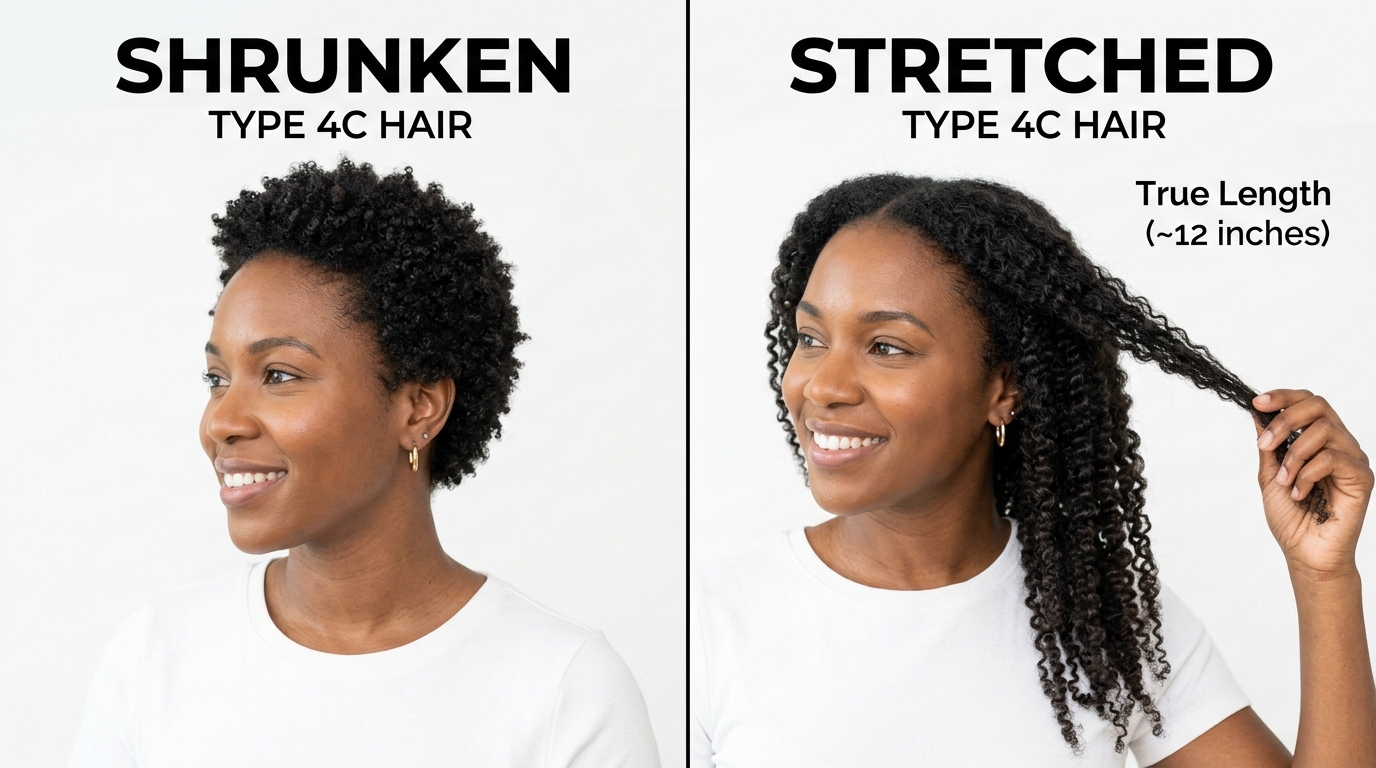
Let’s reframe this right now. Shrinkage is your hair’s curl doing what curls do. When a coil is healthy and elastic, it contracts. That contraction is shrinkage. It means your hair has good elasticity. It means your strands are intact and not heat-damaged.
The numbers are real, though. 4C hair can shrink to 75 percent or more of its actual length. If your hair is 12 inches stretched, it might look like 3 inches in its natural state. You have a full foot of hair that presents as a few inches. This surprises people who are new to their natural texture, especially those transitioning from relaxed hair.
You can display more of your length if you want to. Banding (wrapping hair ties down the length of a ponytail or section), threading (wrapping thread tightly around sections), twist-outs, braid-outs, and stretching with a blow dryer on low heat all reduce shrinkage temporarily. These are styling choices, not corrections.
Shrinkage is not a deficiency. It’s not something wrong with your hair. It’s a sign that your curl pattern is intact and your hair is doing exactly what it’s supposed to do.
See how different hairstyles look on you — upload your photo and try any style with our AI tool.
Try HairStyleMojo Free →Moisture Is the #1 Priority
Here’s the biology. Every hair follicle has sebaceous glands that produce sebum, your scalp’s natural oil. On straight hair, sebum slides down the shaft easily because the path is, well, straight. On type 4 hair, sebum has to navigate extremely tight coils and sharp bends. It gets stuck near the scalp. The mid-lengths and ends of your strands receive little to no natural oil.
This is why type 4 hair is the driest of all hair types. It’s not damaged. It’s not unhealthy. The structure of the strand simply prevents even distribution of the oils your scalp already produces.
The fix is external moisture, applied consistently.
The LOC/LCO Method
This layering technique is the most widely used moisture strategy for type 4 hair. The letters stand for Liquid, Oil, and Cream. The order you apply them depends on your hair’s porosity and what works for you.
LOC (Liquid, Oil, Cream): Start with water or a water-based leave-in conditioner. Follow with an oil to begin sealing. Finish with a cream to lock everything in. This order works well for high-porosity hair that absorbs moisture quickly but also loses it quickly.
LCO (Liquid, Cream, Oil): Start with water or leave-in. Apply cream next. Seal with oil last. This works better for low-porosity hair that resists absorbing moisture, because the cream penetrates more easily before the oil creates a seal.
Brushing Type 4 hair when dry is one of the most damaging things you can do. Dry coils interlock with each other, and forcing a brush through creates micro-tears along the entire strand.
Either way, water is always the first step. Oil and cream without water underneath are just coating dry hair.
Mid-Week Refreshing
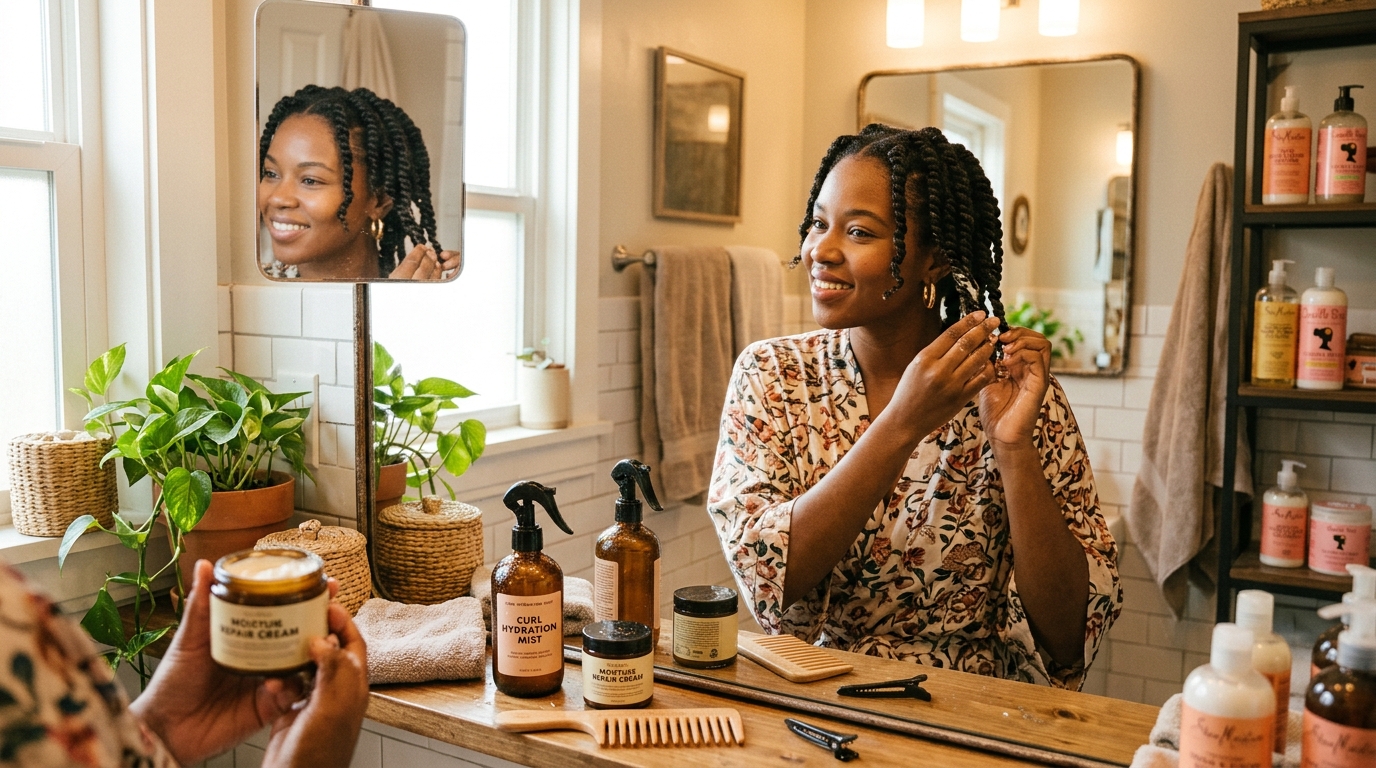
Your hair will need moisture between wash days. Keep a spray bottle with water and a small amount of leave-in conditioner. Spritz sections lightly, scrunch, and seal with a small amount of oil if needed. This is especially important in dry climates or during winter when indoor heating strips moisture from the air.
Deep Conditioning
Every wash day should include a deep conditioner. Apply it to clean, wet hair, section by section. Use a plastic cap or warm towel to help the product penetrate. Leave it on for 15 to 30 minutes. Deep conditioners with ingredients like glycerin, honey, aloe vera, and hydrolyzed proteins help restore moisture and strengthen strands.
Washing Type 4 Hair
Washing frequency for type 4 hair typically falls between once a week and once every two weeks. Your scalp will tell you what it needs. If it’s itchy or has buildup, it’s time.
Shampoo Strategy
Use a sulfate-free shampoo. Sulfates (sodium lauryl sulfate and sodium laureth sulfate) strip too much moisture from already-dry hair. A gentle, sulfate-free cleanser removes buildup without leaving your strands feeling like straw.
Between shampoo washes, co-washing (using conditioner only) is a popular option. It refreshes the hair and scalp without the stripping effect of shampoo. Some people alternate: shampoo one week, co-wash the next.
Refresh Type 4 hair between wash days by spritzing with a water and aloe vera mix rather than rewetting completely. Full rewetting and redrying causes hygral fatigue, which weakens the hair shaft over time.
Sectioning and Detangling
This is where technique matters more than product. Before you get your hair wet, divide it into at least four sections. Use clips or loose twists to keep them separated. This prevents the kind of tangling that leads to breakage and frustration.
Detangle with conditioner in your hair, never dry. Use your fingers first to remove the big tangles, then follow with a wide-tooth comb if needed. Start from the ends and work your way up to the roots. Ripping a comb through dry type 4 hair from root to tip is one of the fastest ways to cause breakage.
Detangle Type 4 hair only when it is saturated with conditioner, never dry. Work in small sections from ends to roots using a wide-tooth comb or your fingers. This single habit prevents more breakage than any product.
Protective Styling
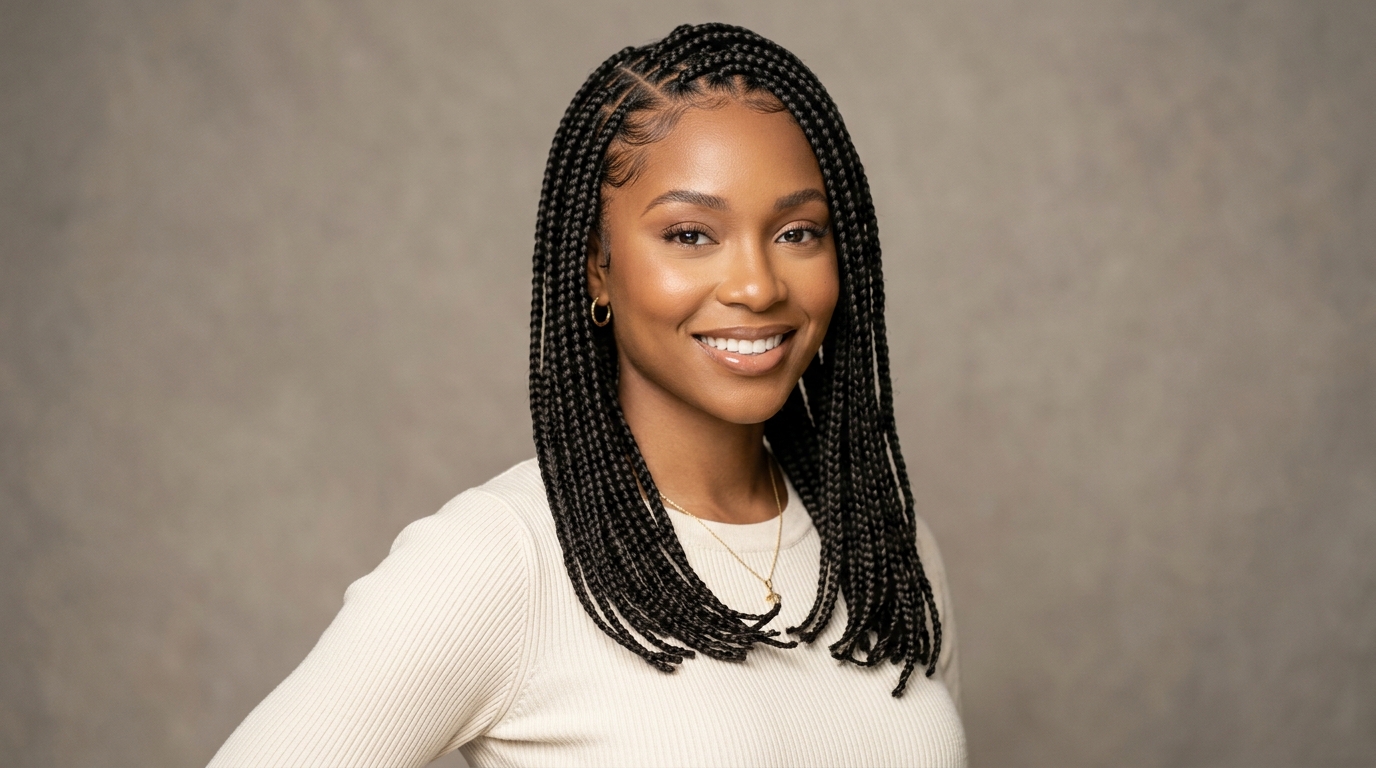
Protective styles keep your ends tucked away and shielded from friction, dryness, and manipulation. The ends of your hair are the oldest part of the strand and the most likely to break. Protective styling reduces how often you handle those fragile ends.
Popular protective styles for type 4 hair include box braids, cornrows, twists (two-strand and flat), buns, wigs, and crochet braids.
Timing and Maintenance
Keep installed protective styles (braids, twists, cornrows) in for four to six weeks maximum. Wigs are different: remove them daily if possible, and at least weekly, to let your scalp breathe and your hair get moisture. Beyond that, buildup, matting, and tangling at the roots can cause more damage than the style prevented. While the style is in, continue moisturizing. Spritz your scalp and the exposed parts of your hair with a water-based mixture. Oil your scalp lightly if it feels dry.
Tension and Traction Alopecia
This is serious. Styles that pull too tightly on the hairline, especially around the edges and temples, can cause traction alopecia. That’s permanent hair loss caused by sustained tension on the follicles. Research by Khumalo et al. has documented this extensively in populations that regularly wear tight braids and extensions.
If a style hurts when it’s first installed, it’s too tight. Pain is not “just part of getting braids.” Ask your stylist to redo any sections that cause discomfort. Your edges are not worth sacrificing for any hairstyle.
Common Misconceptions
“4C Hair Doesn’t Grow Long”
False. Hair growth rate is determined by your follicles, not your curl pattern. Research by Loussouarn et al. (2007) measured hair growth across ethnic groups and found that while there are some variations in growth rate, the differences are modest. Afro-textured hair grows approximately 4 to 6 inches per year on average.
What type 4 hair struggles with is length retention, not growth. The tight bends create fragile points. Dryness makes strands brittle. Rough handling causes breakage. When your hair breaks at the same rate it grows, it appears to not grow. Address breakage and moisture, and you’ll see the length your hair has been growing all along. Shrinkage hides the rest.
“Type 4 Hair Is Hard to Manage”
It’s different to manage. Once you learn the techniques (sectioning, detangling with conditioner, moisture layering, protective styling), the daily and weekly routines are no more time-consuming than caring for any other textured hair. The learning curve exists because most mainstream hair advice was not written for type 4 textures. That’s a gap in the industry, not a flaw in your hair.
“Type 4 Hair Needs to Be Straightened to Look Professional”
This is a cultural bias that has been challenged legally and socially. The CROWN Act (Creating a Respectful and Open World for Natural Hair) has been passed in multiple U.S. states specifically to address discrimination against natural hairstyles in workplaces and schools. Your hair in its natural state is professional. Full stop.
Products That Work for Type 4 Hair
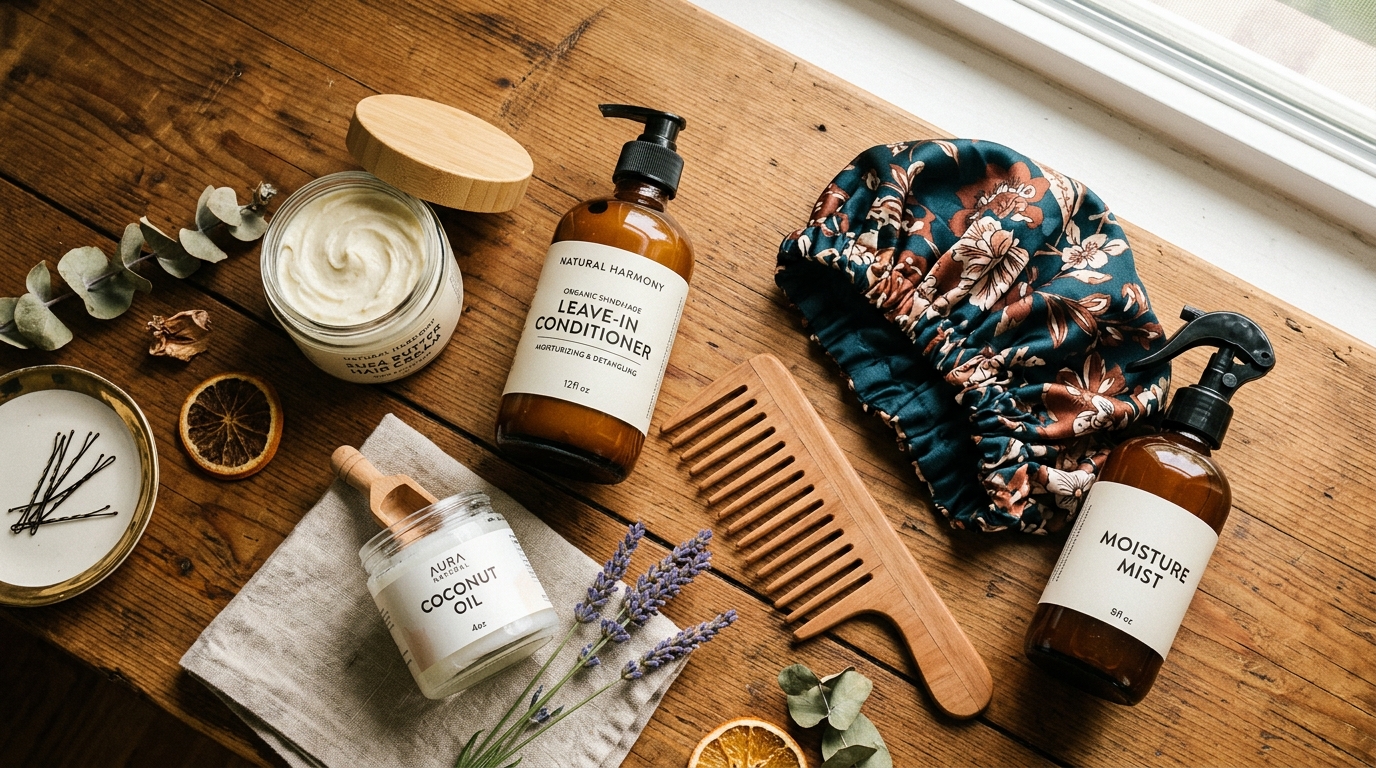
Type 4 hair thrives with heavy, rich products that coat and seal. Lightweight serums and thin lotions designed for type 2 waves are not going to cut it.
Butters: Shea butter and mango butter are staples. They’re thick enough to seal moisture and soft enough to work through coily strands. Use them as the final layer in your LOC/LCO routine or mix them with oils to create your own butter blend.
Creams: Look for thick leave-in creams with water as the first ingredient. Ingredients like coconut oil, jojoba oil, aloe vera, and glycerin are common in effective type 4 creams.
Oils: Castor oil (especially Jamaican black castor oil) is popular for scalp treatments and sealing. Olive oil, avocado oil, and sweet almond oil all work well for sealing moisture. Lighter oils like grapeseed or argan oil work for people who find castor oil too heavy.
Gels: For wash-and-go styles and finger coils, a strong-hold gel helps define the curl pattern. Flaxseed gel (which you can make at home) is a popular natural option. Commercial gels with no drying alcohols work too.
What to avoid: Check ingredient labels for isopropyl alcohol, SD alcohol 40, ethanol, and propanol. These are drying alcohols that strip moisture. Fatty alcohols like cetyl alcohol and cetearyl alcohol are fine. They’re actually moisturizing. Don’t confuse the two.
Key Takeaways
- Type 4 hair is the most versatile texture, capable of more styles than any other hair type
- 4A has defined S-coils, 4B has Z-shaped bends, 4C has the tightest pattern with the most shrinkage
- Shrinkage is a sign of healthy elasticity, not a problem to fix
- Moisture must be added externally because sebum can’t travel down tightly coiled strands
- The LOC or LCO method (Liquid, Oil, Cream) is the foundation of type 4 moisture care
- Always detangle with conditioner in, never dry, and always from ends to roots
- Keep protective styles for 6 weeks max and never tolerate painful tension
- Type 4 hair grows at the same rate as other types; breakage, not growth, is usually the issue
- Avoid products with drying alcohols; embrace heavy butters, thick creams, and natural oils
Frequently Asked Questions
Once a week is the most common frequency. Some people go up to two weeks between washes, especially in winter or if their scalp doesn’t produce much oil. Co-washing between shampoo sessions helps keep hair hydrated without stripping it. Let your scalp guide you. If there’s buildup or itching, it’s time to wash.
Yes. Type 4 hair grows approximately 4 to 6 inches per year, the same general range as other hair types. The challenge is length retention, not growth. Shrinkage hides length, and the strand’s tight bends make it more prone to breakage. With consistent moisture, gentle handling, and protective styling, many people with type 4 hair grow their hair to waist length and beyond.
Use a satin or silk pillowcase, or wrap your hair in a satin bonnet or scarf. Cotton pillowcases create friction that strips moisture and causes breakage. If your hair is longer, pineapple it (gather loosely at the top of your head with a satin scrunchie) to preserve curls and reduce tangles overnight.
Wet your hair and look at a single strand. If you can see a clear zigzag or Z-shaped bend pattern, it’s likely 4B. If the pattern is so tight that individual coils are hard to distinguish even when wet, it’s likely 4C. Many people have both on different parts of their head. The practical difference for care is that 4C generally needs more moisture and gentler handling because of its tighter pattern and increased fragility.
Occasional heat styling with proper heat protectant and moderate temperatures (under 375 degrees Fahrenheit) is fine for most people. The risk comes with frequent or high-heat straightening, which can cause heat damage. Heat damage permanently loosens your curl pattern in the affected areas, and it doesn’t come back. If you want to wear your hair straight regularly, consider a silk press from a professional who specializes in natural hair.
Sources & References
- Franbourg, A., Hallegot, P., Baltenneck, F., Toutain, C., & Leroy, F. (2003). Current research on ethnic hair. Journal of the American Academy of Dermatology, 48(6), S115-S119.
- Loussouarn, G., El Rawadi, C., & Genain, G. (2007). Diversity of hair growth profiles. International Journal of Dermatology, 44(S1), 6-9.
- McMichael, A. J. (2007). Hair breakage in normal and weathered hair: Focus on the Black patient. Journal of Investigative Dermatology Symposium Proceedings, 12(2), 6-9.
- Khumalo, N. P., Jessop, S., Gumedze, F., & Ehrlich, R. (2007). Hairdressing and the prevalence of scalp disease in African adults. British Journal of Dermatology, 157(5), 981-988.
- Andre Walker Hair Typing System. Referenced as the standard classification for hair texture types 1 through 4.
Try different hairstyles on yourself
Upload your photo and see how any hairstyle looks on you before committing.
Try HairStyleMojo Free