
Curly Hair Types: How to Tell the Difference Between 2A and 4C
You probably think you know your curl type. Maybe you picked one based on a Pinterest chart years ago. Maybe a stylist told you once.
Most people are wrong about their curl type, and it’s not their fault.
Most People Don’t Know Their Real Curl Type
Years of heat styling rewire your expectations. If you’ve been blow-drying and flat-ironing since high school, you’ve never actually seen what your hair does on its own. Heavy silicone-based products coat the strand and weigh down natural curl patterns. Brushing dry hair stretches waves into something straighter. Even the way you towel-dry can crush a wave pattern before it has a chance to form.
Never brush curly hair when dry. Always detangle in the shower with conditioner in, using a wide-tooth comb or wet brush. This preserves curl definition and prevents frizz.
This means millions of people are walking around with wavy or curly hair that presents as straight because they’ve been overriding their natural texture for years.
Switching products constantly because your curls look different each wash day is a common trap. Curl variation is normal and depends on humidity, water temperature, and application technique more than the product itself.
The quarantine curl discovery of 2020 was real. When salons closed and people stopped heat styling, social media flooded with “I had no idea my hair was curly” posts. People in their 20s, 30s, even 40s were seeing their natural pattern for the first time.
If you’ve never let your hair air dry without touching it, without brushing it, without loading it up with heavy products, you don’t know your curl type yet.
How to Do a Curl Reset
A curl reset strips everything away so your natural pattern can show itself. It’s simple, but you have to resist the urge to interfere.
Step 1: Wash with a clarifying shampoo. Not your usual gentle cleanser. A proper clarifying formula that strips silicone buildup, product residue, and mineral deposits.
Step 2: Apply a lightweight conditioner from mid-length to ends. Detangle with your fingers only. Rinse thoroughly.
Use the “squish to condish” technique on curly hair. After applying conditioner, cup your curls and squeeze upward repeatedly. This encourages curl clumping and helps product penetrate evenly.
Step 3: On soaking wet hair, apply a small amount of gel or lightweight mousse. Scrunch gently from the ends upward. Do not rake, twist, comb, or finger-coil. Zero manipulation.
Step 4: Do not touch your hair. Let it air dry completely. No diffuser, no towel-scrunching, no flipping. Hands off until it’s bone dry.
Diffuse on low heat and low speed, holding the diffuser underneath your curls rather than pressing it against them. Pressing scrunches the curl into an unnatural shape that dries as frizz.
What you see when it dries is your baseline curl pattern.
One wash might not be enough. If you’ve been heat styling heavily for years, heat damage can temporarily alter curl formation. It may take two or three wash cycles before your natural pattern fully recovers. Some severely damaged sections may never bounce back. That’s honest information worth having.
Type 2: Wavy
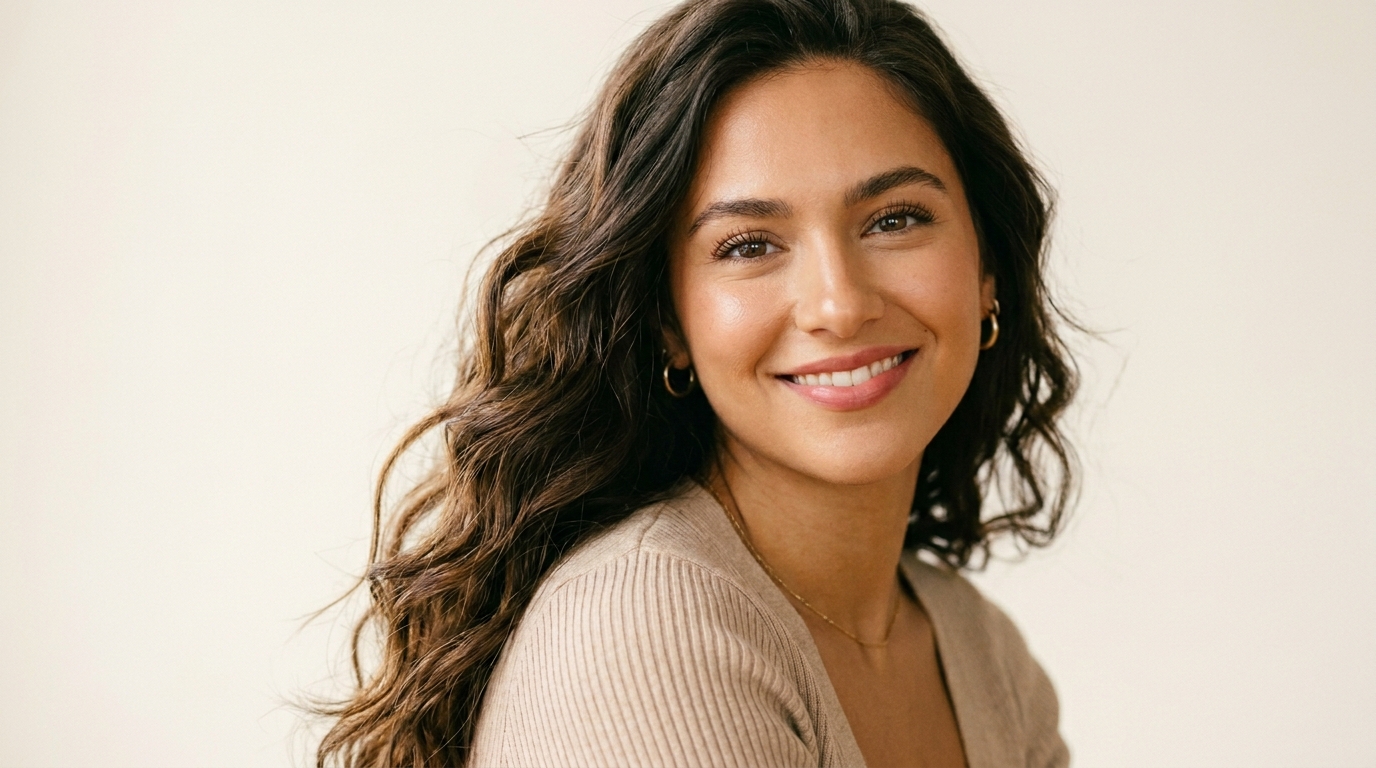
Wavy hair forms S-shaped bends without completing full spiral rotations. It sits between straight and curly, which is exactly why it gets misidentified so often.
2A: Barely-There Waves
The subtlest wave pattern. Hair is mostly straight at the roots with gentle S-waves appearing from mid-length down. Fine strands are typical. These waves are fragile. A heavy conditioner can flatten them. Sleeping on them wrong can erase them.
If your hair looks straight when you brush it but develops a slight bend when you leave it alone, you’re probably 2A.
2B: The Classic Wave
More defined S-waves that start closer to the roots. There’s noticeable body and movement. Frizz becomes a real factor here because the wave pattern creates enough cuticle disruption to let humidity in. The waves hold their shape through the day but may loosen overnight.
2B hair has enough texture to benefit from curl-specific techniques like scrunching and plopping, but it’s light enough that heavy curl creams will weigh it down fast.
2C: Waves That Want to Be Curls
Deep, dramatic waves that border on actual curls. Thick strands are common. The wave pattern is strong, starts at the root, and comes with serious volume. Frizz is almost guaranteed in humid conditions.
2C is the gateway to curly hair territory. Some 2C waves will tighten into 3A spirals with the right moisture and styling technique. The line between 2C and 3A is genuinely blurry.
See how different hairstyles look on you — upload your photo and try any style with our AI tool.
Try HairStyleMojo Free →Type 3: Curly
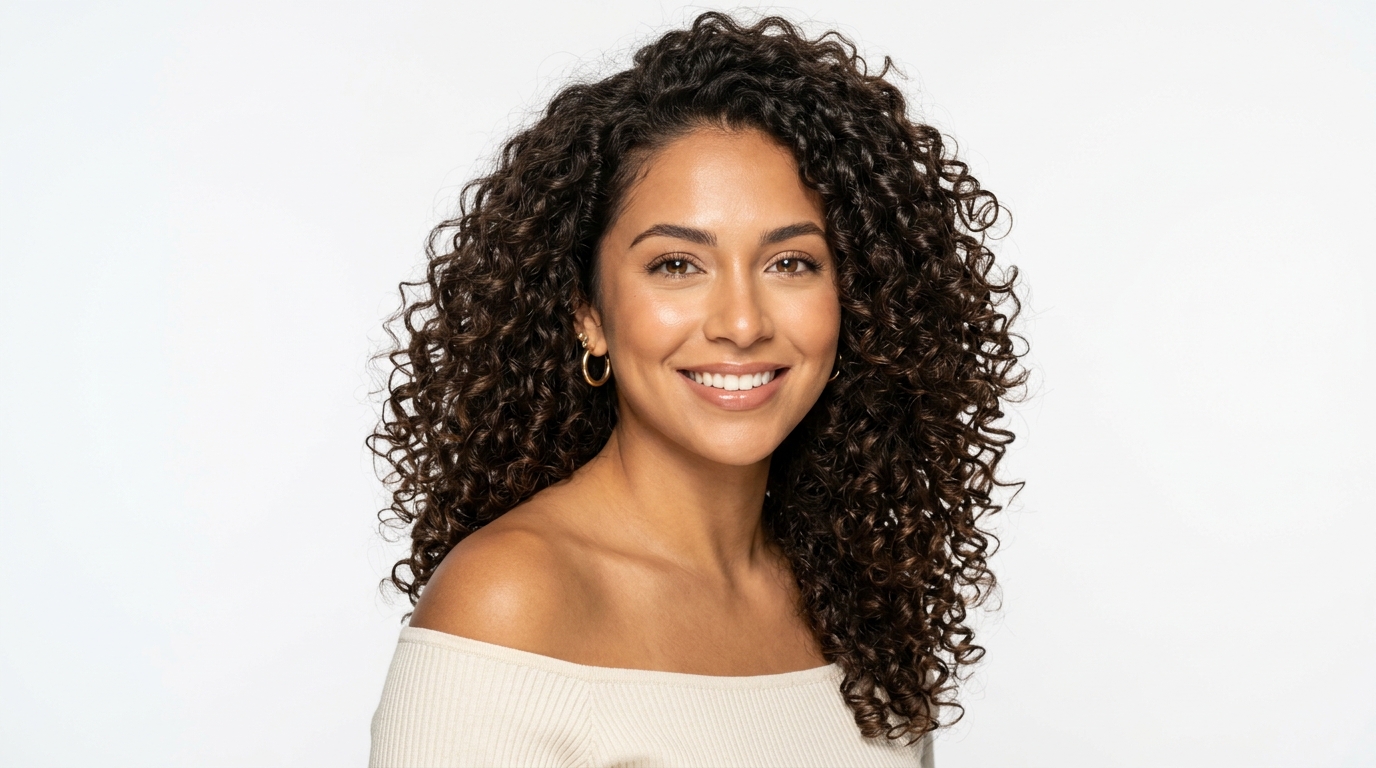
Curly hair forms complete spiral rotations. Stretch a strand and it springs back. That springiness is the defining characteristic.
3A: Loose Spirals
Big, bouncy ringlets roughly the diameter of a piece of sidewalk chalk. These curls are well-defined with a clear S-pattern that loops around itself. There’s shine because the curl is loose enough for light to reflect off the strand surface.
3A curls are the “beach curl” that straight-haired people spend 45 minutes creating with a curling iron. They’re naturally voluminous without being overwhelming. Shrinkage is moderate.
The biggest 3A challenge is maintaining definition without crunch. Too much gel creates a stiff cast. Too little product and curls separate into frizzy waves by afternoon.
3B: Medium Spirals
Tighter ringlets, roughly the diameter of a marker. More volume per square inch than 3A. More shrinkage too. Hair that reaches your shoulders when stretched might sit at your chin when curly.
3B curls are dense and have real personality. They clump naturally into defined ringlet groups. Dryness starts becoming a serious factor because the tighter the curl, the harder it is for sebum to travel down the strand. The oil gets stuck at the roots while the ends go thirsty.
Franbourg and colleagues documented in the Journal of the American Academy of Dermatology that curlier hair types have a flatter, more elliptical cross-section, contributing to both the curl pattern and increased fragility compared to straighter types.
3C: Tight Corkscrews
Pencil-diameter coils packed densely together. Significant shrinkage. Hair that’s 12 inches long stretched might look 6 inches in its natural state. The curls are tight, defined, and springy.
3C often gets confused with 4A because both have tight coils. The difference: 3C curls have a visible spiral shape. They wrap around themselves in a consistent corkscrew pattern. 4A coils are tighter with a more compressed spring shape.
3C hair is where moisture becomes non-negotiable. Not optional, not “nice to have.” Without consistent deep conditioning, 3C curls dry out, lose definition, and break.
Type 4: Coily
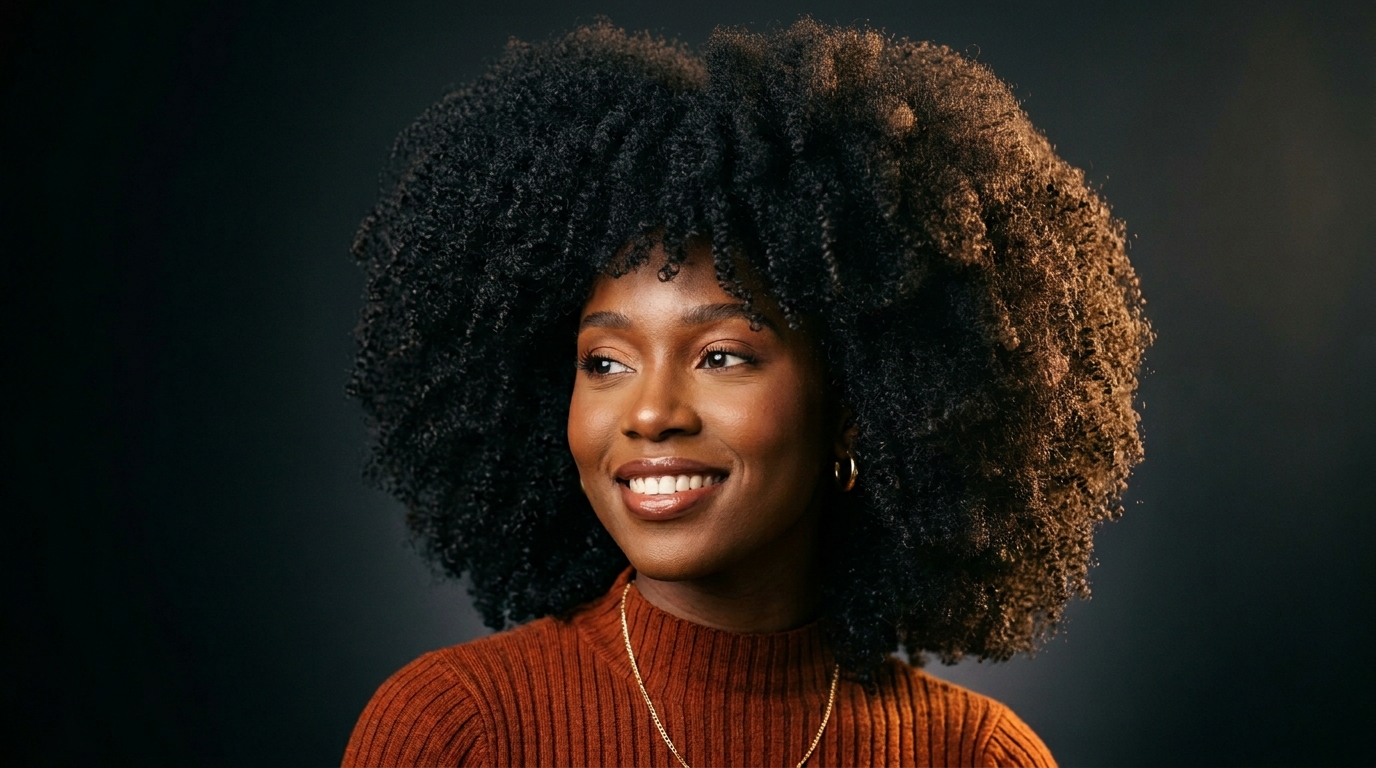
Coily hair has the tightest curl patterns. The coils are so compact that hair may appear to have less visible definition, especially when dry. The curl is there. It’s just wound so tightly that it compresses into dense, springy masses.
Type 4 hair is also the most fragile. The sharp angles of each coil create stress points along the strand where breakage can occur. Loussouarn and colleagues confirmed in the International Journal of Dermatology that the degree of curl correlates with strand fragility.
Curly hair is structurally weaker than straight hair at every point where the strand bends. These bend points are where breakage occurs most frequently, which is why gentle handling matters more for curly textures.
4A: Defined Coils
Tight, springy coils roughly pencil diameter. The S-pattern is visible. Pull a coil and it snaps back like a spring. 4A hair has the most definition of the Type 4 subtypes, with coils that clump together and maintain their shape when properly moisturized.
Shrinkage is significant. Your hair might appear half its actual length in its natural state. This is normal and a sign of healthy elasticity.
4B: Z-Pattern Bends
Instead of round coils, 4B hair bends in sharp, angular Z-shaped or zigzag patterns. Less defined curl shape when viewed from a distance. The bends are tight and close together.
Shrinkage can reach 75%. Hair that stretches to your bra strap might sit above your ears in its natural state. 4B hair feels cottony and soft to the touch. It’s dense and can hold elaborate styles that other types cannot support.
4C: The Tightest Coils
The tightest coil pattern that exists. Very little visible curl definition unless the hair is wet, freshly styled, or manipulated into shape. When dry and left alone, 4C hair shrinks into dense, compact clusters.
4C has the most shrinkage of any curl type. Hair that’s 16 inches long stretched may appear to be 4 inches in its natural state. This makes length retention one of the biggest challenges.
4C hair is also the most versatile type for styling. Its density and texture hold braids, twists, locs, bantu knots, and updos that would slide out of looser patterns within hours. Andre Walker’s original system included Type 4 but was notably dismissive of coily and kinky textures, recommending chemical relaxing rather than embracing them — something the natural hair community has rightly criticized. De la Mettrie and colleagues later formalized the full spectrum in their 2007 Human Biology study, establishing that the tightest coil patterns deserve the same recognition as any other type.
Why Your Curl Type Isn’t Everything
Here’s where the typing system breaks down. Two people with 3B curls can have completely different hair experiences because curl pattern is only one variable.
Strand thickness ranges from fine to coarse. A fine-strand 3B has thin, delicate curls that get weighed down by heavy creams and butters. A coarse-strand 3B has thick, robust curls that drink up those same heavy products and ask for more. Same curl pattern. Opposite product needs.
Porosity determines how your hair absorbs and retains moisture. Low porosity hair resists moisture. High porosity hair absorbs it instantly but loses it just as fast. A high-porosity 2C might need heavier products than a low-porosity 3C.
Density is how many individual hairs grow per square inch of scalp. You can have fine strands but high density (lots of thin hairs) or coarse strands with low density (fewer thick hairs). Density affects product amounts, drying time, and how styles hold.
The typing system is a starting point, not a complete picture. Knowing you’re 3B tells you something useful about your curl pattern. But understanding your strand thickness, porosity, and density tells you what to actually do about it.
Mixed Curl Patterns Are Normal
If you’ve been trying to figure out your “one true curl type” and getting frustrated because different parts of your head don’t match, stop. You’re normal.
Most people have two or three different curl types across their head. The hairline is often looser, sometimes a full type looser than the rest. The crown tends to be tighter. The nape can be its own planet entirely, with a texture that bears little resemblance to the top.
Hair follicle shape varies across the scalp. The follicles at your temples sit at a different angle than those at your crown. Different follicle geometry produces different curl patterns.
The shape of your hair follicle determines your curl pattern. Round follicles produce straight hair, oval follicles produce wavy hair, and asymmetrical follicles produce coily hair. This is determined entirely by genetics.
Identify the pattern that covers the majority of your head and call that your primary type. Then acknowledge the outlier zones and treat them accordingly. The back of your head might need a different product application than the front. That’s not complicated. It’s just information.
Quick Care Guide by Type
Type 2 (Wavy): 2A through 2C
Lightweight products only. Gels, mousses, and sea salt sprays work. Heavy creams and thick oils will flatten your waves.
Scrunch, don’t brush. Apply products to soaking wet hair by scrunching upward. Brushing dry wavy hair separates wave clumps and creates frizz.
Diffuse on low heat or air dry. A diffuser on a cool setting helps waves set while maintaining their shape.
Type 3 (Curly): 3A through 3C
Moisture-focused routine. Curly hair is structurally prone to dryness because the curl pattern prevents scalp oils from reaching the ends. Use a sulfate-free shampoo, a rich conditioner, and a leave-in as your baseline.
Finger detangle wet hair with conditioner in it. Never detangle dry. Work through knots gently from ends to roots.
Gel for definition. Apply to soaking wet curls, scrunch, and let dry completely. Once dry, “scrunch out the crunch” to break the gel cast for soft, defined curls.
Type 4 (Coily): 4A through 4C
Heavy moisture. The LOC method (Liquid, Oil, Cream) layers moisture and seals it in. Start with a water-based leave-in, follow with an oil, finish with a cream to lock everything down.
Protective styling preserves length. Braids, twists, and updos reduce manipulation and protect fragile ends. Rotate styles every two to four weeks.
Deep condition weekly. Not monthly. Weekly. Type 4 hair loses moisture faster than any other type. A weekly deep conditioner with slip maintains elasticity and reduces breakage.
Key Takeaways
- Most people have never seen their true curl pattern because heat styling, heavy products, and brushing override natural texture
- A curl reset (clarifying wash, lightweight conditioner, gel, air dry with zero manipulation) reveals your baseline pattern
- The Andre Walker system classifies curls from Type 2 (wavy) through Type 4 (coily), with A-C subtypes from loosest to tightest
- Curl type alone doesn’t determine your care routine. Strand thickness, porosity, and density matter just as much
- Mixed curl patterns across your head are normal, not a problem to solve
Frequently Asked Questions
Do a curl reset at home. Wash with clarifying shampoo, apply lightweight conditioner, add a small amount of gel to soaking wet hair, and air dry without touching it. Compare the result to a reference chart showing Types 2A through 4C. Your dominant pattern is your primary curl type. It may take two or three washes for an accurate read if you’ve been heat styling regularly.
Your genetic curl pattern stays the same, but hormones, medications, aging, and damage can alter how it presents. Pregnancy commonly changes curl pattern temporarily. Menopause can too. Heat damage can loosen curls permanently in affected sections. Some people notice their curls tightening or loosening in their 30s and 40s with no clear cause.
Both are tight coils, which is why they get confused constantly. 3C curls have a visible corkscrew spiral pattern. 4A coils are tighter with a more compressed spring shape that bounces back sharply when stretched. 3C generally has more visible definition from a distance, while 4A coils appear denser. In practice, many people sit right on the border.
Not necessarily different products, but potentially different application techniques. Apply lighter amounts to looser sections and more product to tighter sections that need extra moisture. Some people use a lighter gel on their looser hairline and a heavier cream on their tighter crown. If the variation is subtle, one product applied strategically is usually enough.
It’s useful but incomplete. Walker’s system categorizes curl pattern well, but it says nothing about porosity, strand thickness, or density. The system also marginalized Type 4 hair and originally omitted the 4C subcategory entirely, which earned valid criticism from the natural hair community. De la Mettrie and other researchers have since expanded and formalized the classification. Use it as a starting point, then layer in porosity and thickness assessments for the complete picture.
Sources & References
- Walker, A. Andre Talks Hair. Simon & Schuster, 1997.
- De la Mettrie, R., Saint-Leger, D., Loussouarn, G., Garcel, A., Porter, C., & Langaney, A. “Shape variability and classification of human hair: a worldwide approach.” Human Biology, 79(3), 265-281, 2007.
- Loussouarn, G., El Rawadi, C., & Genain, G. “Diversity of hair growth profiles.” International Journal of Dermatology, 44(s1), 6-9, 2007.
- Franbourg, A., Hallegot, P., Baltenneck, F., Toutain, C., & Leroy, F. “Current research on ethnic hair.” Journal of the American Academy of Dermatology, 48(6), S115-S119, 2003.
- Robbins, C.R. Chemical and Physical Behavior of Human Hair. 5th ed., Springer, 2012.
See also: The Best 26 Short Curly Hairstyles for Black Women
Try different hairstyles on yourself
Upload your photo and see how any hairstyle looks on you before committing.
Try HairStyleMojo Free