
How to Fix Frizzy Hair: What Actually Works According to Science
You’ve tried the expensive serums. You’ve watched the YouTube tutorials. You’ve blasted your hair with a flat iron until it submitted. And yet, every time you step outside on a humid day, your hair puffs up like it has a personal vendetta against you.
Apply your anti-frizz serum or oil to soaking wet hair, not damp or towel-dried hair. The water on the strand acts as a vehicle that carries the product deeper into the cuticle before evaporating.
Here’s the thing. Most anti-frizz advice treats the symptom and ignores the cause. Once you understand what frizz actually is at a structural level, the fixes become obvious. And most of them are cheap.
What Frizz Actually Is (and Why Your Hair Does It)
Frizz is not a hair type. It’s a symptom.
Your hair is covered in a layer of overlapping scales called the cuticle. Think of it like roof shingles. When those shingles lie flat, your hair looks smooth and shiny because light reflects evenly off the surface. Run your fingers down a strand of healthy hair and it feels slick. That’s the cuticle doing its job.
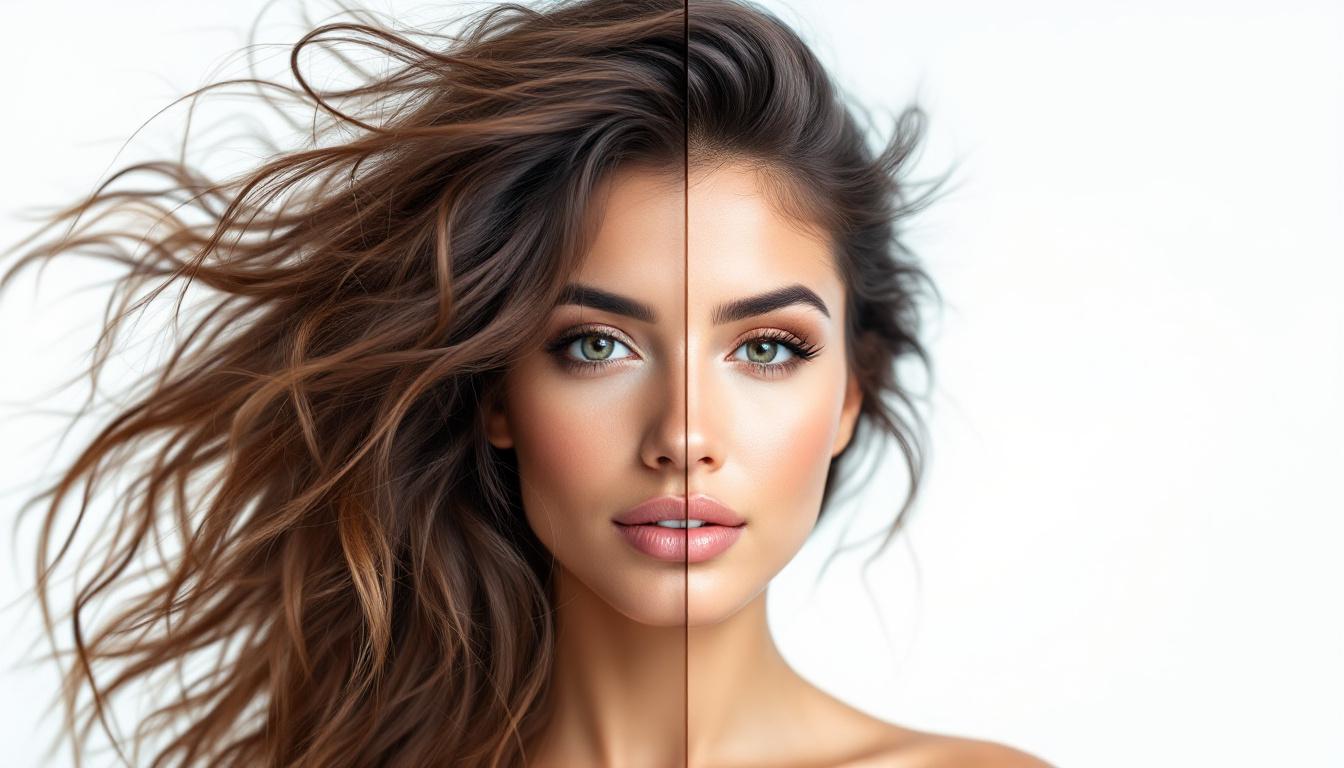
When cuticles are raised, damaged, or missing pieces, two things happen. First, your hair absorbs moisture from the air unevenly, causing individual strands to swell at different rates. Some strands puff up while others stay put, and the result is that chaotic, undefined texture we call frizz. Second, light scatters instead of reflecting, so hair looks dull and rough even when it’s clean.
Research published in the International Journal of Cosmetic Science has mapped this process in detail. The cuticle layer is only about 0.5 micrometers thick, but it’s the entire barrier between your hair’s inner structure and the outside world. When that barrier breaks down, everything goes sideways.
Humidity makes frizz worse because there’s more moisture in the air for those raised cuticles to absorb. But humidity isn’t the cause. The damaged cuticle is. Plenty of people walk through humid weather with smooth hair. The difference is cuticle integrity.
Frizz is technically just hair strands that have separated from the main curl clump. Each individual strand is responding to humidity independently rather than moving as a group, which creates the chaotic appearance.
One distinction matters here. Naturally curly and coily hair has a natural “halo” of frizz because the curl shape prevents cuticles from lying completely flat along the strand. That’s texture, not damage. You don’t need to “fix” that unless you want to. More on this later.
The Real Causes of Frizz (Not Just Humidity)
If frizz is the symptom, these are the diseases. Most people have at least two or three of these working against them simultaneously.
1. Heat Damage
Flat irons and blow dryers above 300°F (150°C) melt the protein bonds in the cuticle. Literally melt them. The cuticle is made of hardened keratin protein, and excessive heat breaks the disulfide bonds that hold the structure together. Once those bonds break, the cuticle can’t lie flat anymore. The damage is permanent on that section of hair. You can mask it with products, but the structure itself won’t repair.
A 2001 study by Ruetsch et al. in the Journal of Cosmetic Science documented the secondary structure changes in hair keratin after thermal treatments. The protein denaturation is real and measurable.
2. Overwashing
Shampoo strips your hair’s natural sebum coating. Sebum is your hair’s built-in anti-frizz serum. It’s an oily substance your scalp produces that coats the hair shaft, smooths the cuticle, and creates a moisture barrier. Washing daily removes it faster than your scalp can replace it. Your hair spends most of its time unprotected.
3. Wrong Towel Technique
Cotton bath towels have a rough loop texture called terry cloth. Rubbing wet hair against cotton causes friction damage, and wet hair is when your cuticles are most vulnerable. Water makes them swell and open, exposing the soft inner cortex. Every rub lifts cuticle edges. Do this daily for a year and you’ve created thousands of micro-abrasions across every strand.
Switch from a cotton towel to a microfiber towel or old cotton t-shirt for drying. Cotton terry cloth creates friction that roughens the cuticle, while microfiber glides over the surface without lifting scales.
4. Hard Water
Mineral deposits from hard water (calcium, magnesium, iron) build up on the hair shaft and wedge cuticle scales open. The minerals bond to the hair’s surface and create a rough, uneven coating that prevents products from absorbing properly. If your water leaves white residue on faucets, it’s doing the same thing to your hair.
5. Chemical Damage
Bleach, permanent color, relaxers, and perms all work by breaking into the cortex through the cuticle. They force the cuticle open to deliver chemicals to the inner structure of the hair. The cuticle never fully recovers from this forced entry, often leading to high porosity hair that absorbs and loses moisture unpredictably. Repeated chemical treatments compound the damage with each application.
6. Brushing Dry Curly or Wavy Hair
This one is specific to textures with a wave or curl pattern. Brushing disrupts the curl clump and separates individual strands, creating visible frizz. Curly and wavy hair should only be detangled wet with conditioner providing slip. A wide-tooth comb or fingers work best.
7. Sleeping on Cotton Pillowcases
Same friction problem as towels, but for 8 hours straight. You toss, you turn, your hair grinds against rough cotton fibers all night. By morning, the cuticle damage has added up. Multiply that by 365 nights a year.
Fixes That Actually Work
Each of these targets the cuticle directly. That’s why they work. Anything that smooths, coats, or protects the cuticle will reduce frizz. Anything that doesn’t is just marketing.
1. Switch to a Microfiber Towel or Old T-Shirt
Microfiber has a smoother fiber structure than cotton terry cloth. The reduced friction means fewer cuticle scales get lifted when you dry your hair. Squeeze water out gently instead of rubbing. Scrunch if you have curls.
A microfiber hair towel costs $5 to $10. An old cotton t-shirt works nearly as well because t-shirt jersey is a flat knit, not a looped pile. This is one of the cheapest and most effective changes you can make.
2. Use a Silicone-Based Serum or Oil on Damp Hair
Silicones like dimethicone and cyclomethicone form a thin, transparent coating over the cuticle. They physically prevent moisture from getting in. They essentially replace the smooth surface that damaged cuticles can’t provide on their own.
Silicone-based serums work by creating a hydrophobic barrier around each strand that physically blocks humidity from entering. They do not repair the cuticle, but they are extremely effective at preventing frizz in humid conditions.
Research in the Journal of Cosmetic Science has documented how dimethicone forms a uniform film along the hair shaft, reducing both friction and moisture uptake. The effect is immediate and visible.
A note on the “silicone-free” trend. This is a marketing movement, not a science-based recommendation. Silicones are one of the most studied and effective anti-frizz ingredients in hair care. They don’t build up the way people claim as long as you wash your hair with regular shampoo, which removes water-insoluble silicones effectively. If your hair responds well to silicone serums, use them without guilt.
Apply a pea-sized amount to damp (not soaking wet) hair, focusing on mid-lengths and ends.
3. Deep Condition Weekly
Regular conditioner deposits a thin layer of cationic (positively charged) surfactants on the hair surface. These molecules are attracted to the negatively charged damaged areas of the cuticle, so they concentrate exactly where repair is needed most. They smooth cuticle edges and reduce friction between strands.
Deep conditioners have higher concentrations of these ingredients, and the extended processing time allows more deposit on the hair shaft. Apply to mid-lengths and ends, never roots. Leave on for 5 to 10 minutes minimum with a shower cap. Your body heat creates a warm, humid environment under the cap that helps the conditioning agents absorb more effectively.
4. Turn Down the Heat
Temperature guidelines based on hair thickness:
- Fine hair: Stay below 300°F (150°C)
- Medium hair: Stay below 375°F (190°C)
- Coarse hair: Stay below 400°F (200°C)
Always use a heat protectant spray before any hot tool. Heat protectants contain silicones or polyquaterniums that form a heat-resistant barrier on the hair shaft. They don’t make heat styling safe, but they reduce the damage significantly.
Air dry when possible. If you blow dry, use a diffuser attachment on medium heat. The diffuser disperses the airflow so it doesn’t blast concentrated heat at one spot, and it preserves curl pattern instead of blowing strands apart.
Touching your hair while it dries is one of the biggest frizz triggers. Every time you touch drying hair, you break the gel cast or product seal forming around each curl, letting humidity back in.
5. Sleep on Silk or Satin
Silk and satin have smooth, low-friction surfaces. Your hair slides across them instead of catching and grinding like it does on cotton. Eight hours of reduced friction every night adds up fast. Many people notice a difference within the first week.
Satin pillowcases work just as well as silk and cost a fraction of the price. Silk is a natural fiber with inherent smoothness. Satin is a weave pattern that can be made from polyester, and it achieves the same low-friction surface for $10 instead of $50.
For curly and coily hair, a satin bonnet or silk scarf is even better because it keeps hair contained and prevents tangles while you sleep.
6. Install a Shower Filter (If You Have Hard Water)
A shower filter removes mineral deposits before they reach your hair. A quality one costs $20 to $40 and the cartridge lasts about 6 months.
Signs you need one: your hair feels straw-like regardless of what products you use, conditioner doesn’t seem to absorb or make a difference, and you see a white film on shower glass or fixtures. If you’ve moved to a new area and your hair suddenly got worse, hard water is the likely culprit.
7. Stop Washing Every Day
Most hair types do best with washing 2 to 3 times per week. Coily hair can go even longer, sometimes a week or more between washes. This gives your scalp time to produce sebum and distribute it down the hair shaft, restoring that natural protective coating.
Between washes, use dry shampoo at the roots if oiliness is a concern. Dry shampoo absorbs excess oil and adds volume without stripping the sebum from your lengths and ends where you need it.
The transition period can be rough. Your scalp has been overproducing oil to compensate for daily stripping. Give it 2 to 3 weeks to recalibrate. It will.
8. Use Anti-Humectant Products in Humid Weather
This one is underrated. Humectants are ingredients that attract moisture from the environment. Glycerin, honey, aloe vera, and propylene glycol are common ones. They’re great in dry climates because they pull moisture into the hair from the air. In humid weather, they’re a disaster. They pull too much moisture into already-porous hair, swelling the strands and puffing up the cuticle.
In humid conditions, switch to products with anti-humectant ingredients: beeswax, petroleum-based products like pomades, and heavier oils like castor oil that coat and seal the hair shaft. These create a physical barrier that blocks ambient moisture from getting in.
Read your product labels. If glycerin is in the top five ingredients and you live somewhere humid, that product is working against you.
See how different hairstyles look on you — upload your photo and try any style with our AI tool.
Try HairStyleMojo Free →What About Keratin Treatments?
Keratin treatments (sometimes marketed as Brazilian blowouts) coat hair in a layer of keratin protein that’s sealed into place by a flat iron. The added protein fills in gaps in the damaged cuticle, and the heat seals it smooth. The result is dramatically reduced frizz that lasts 3 to 6 months.
They work. That’s not debatable. The question is whether the trade-offs make sense for you.
The cost runs $200 to $450 per treatment at a salon. Some formulations contain formaldehyde or formaldehyde-releasing chemicals, which pose health concerns for both the client and the stylist. If you go this route, look for formaldehyde-free options and ask your stylist directly about the ingredients. The effect is also temporary. As new hair grows in and you wash the treatment out over time, frizz returns.
For chronic frizz from accumulated damage, a keratin treatment buys you time while you grow out healthier hair. Think of it as a bridge, not a destination. Pair it with the prevention strategies above and your new growth will need less intervention.
Frizz You Shouldn’t Try to Fix
If you have naturally curly or coily hair (Type 3 or Type 4 on the curl pattern spectrum), some frizz is just your texture. The individual strands around your hairline and crown that don’t clump with the rest are normal. The slight halo of flyaways around defined curls is normal.
“Anti-frizz” marketing aimed at curly hair often means “straightening” in disguise. Products that promise to eliminate all frizz on curly hair are usually just weighing the curl down or coating it so heavily that the natural pattern is suppressed.
If your goal is smooth, well-defined curls with minimal flyaways, the techniques in this article help. Deep conditioning, silicone serums, satin pillowcases, and proper detangling all support curl definition without fighting against your texture.
Use the “praying hands” technique to apply products. Sandwich a section of hair between your palms and slide down. This smooths every strand in the same direction and coats evenly without disrupting curl formation.
But if you’re trying to make curly hair look straight, you’re working against your hair’s biology. The cortex of curly hair has an asymmetric cross-section that causes it to bend as it grows. No amount of product changes that. Forcing straightness through heat or chemicals creates the exact cuticle damage that causes worse frizz over time. It’s a cycle that only ends when you stop fighting your pattern.
The goal should be healthy hair that behaves like your texture, not someone else’s.
Where to Go from Here
Your next step depends on your specific situation:
- Frizz is your main complaint: Read Why Is My Hair So Frizzy? for a deeper diagnostic breakdown.
- Your hair is damaged beyond frizz: Read How to Repair Damaged Hair for a full recovery protocol.
- Considering a keratin treatment: Read Keratin Treatment: Honest Pros and Cons before booking.
- Not sure about your hair’s porosity: Take The Hair Porosity Test to understand how your hair absorbs and retains moisture.
Key Takeaways
- Frizz happens when damaged or raised cuticles absorb moisture from the air unevenly. The cuticle is the root cause. Humidity just makes it visible.
- Microfiber towels, silicone serums, and deep conditioning are the highest-impact, lowest-cost fixes.
- Lower your heat tool temperature and always use heat protectant. This alone prevents future damage.
- Silk or satin pillowcases reduce overnight friction damage for pennies per night over their lifespan.
- Hard water causes frizz through mineral buildup on the hair shaft. A $20 shower filter can solve this.
- Stop washing every day. Your hair needs its natural sebum coating.
- Some frizz on curly and coily hair is natural texture, not a problem to solve.
Frequently Asked Questions
It can. Coconut oil is one of the few oils that actually penetrates the hair shaft rather than just sitting on top. Research shows it reduces protein loss from the cortex, which helps maintain cuticle integrity over time. Apply a small amount to damp hair, focusing on ends. Fair warning: coconut oil is heavy. Fine hair may feel weighed down or greasy. Start with a very small amount and see how your hair responds.
Damage. If your cuticle is compromised from heat, chemicals, or mechanical friction (rough towels, aggressive brushing), your hair will frizz in any environment. Damaged cuticles don’t need high humidity to let moisture in. Even normal indoor air contains enough moisture to swell a compromised hair shaft unevenly.
Only by growing new, undamaged hair. Every strand on your head right now is dead tissue. It can’t heal or regenerate. Treatments like keratin smooth the existing damage temporarily by coating the surface, but the underlying cuticle structure doesn’t change. Prevention is the real fix. Protect the hair you’re growing now, and over time (hair grows about 6 inches per year) you’ll replace damaged lengths with healthier ones.
Not always. Naturally curly and coily hair has some frizz that’s inherent to the texture. The curl shape prevents cuticle scales from lying as flat as they do on straight hair. That’s structural, not damage. But sudden or increasing frizz in hair that was previously smooth usually signals damage. If your frizz has gotten worse over time, look at your heat use, chemical treatments, and washing habits.
On dry curly or wavy hair, absolutely. Brushing separates curl clumps and raises the cuticle, creating visible frizz instantly. Anyone with curly hair has experienced the “brush poof.” Use a wide-tooth comb on wet, conditioned hair instead. The conditioner provides slip that protects the cuticle during detangling. For straight hair, brushing is less problematic, but aggressive brushing with the wrong tool can still cause cuticle damage over time. Use a boar bristle brush or wide-tooth comb, and always start detangling from the ends, working your way up.
Sources & References
- Ruetsch, S.B. et al. “Photodegradation of Human Hair: An SEM Study.” Journal of Cosmetic Science, 51(2), 2001, pp. 103-125.
- Seshadri, I.P. & Bhushan, B. “Effect of Ethnicity and Treatments on in situ Tensile Response and Morphological Changes of Human Hair.” Acta Materialia, 56(4), 2008, pp. 774-781.
- Robbins, C.R. Chemical and Physical Behavior of Human Hair, 5th ed. Springer, 2012.
- American Academy of Dermatology. “Tips for Healthy Hair.” aad.org.
- McMichael, A.J. “Hair Breakage in Normal and Weathered Hair: Focus on the Black Patient.” Journal of Investigative Dermatology Symposium Proceedings, 12(2), 2007, pp. 6-9.
- Gavazzoni Dias, M.F. “Hair Cosmetics: An Overview.” International Journal of Trichology, 7(1), 2015, pp. 2-15.
Try different hairstyles on yourself
Upload your photo and see how any hairstyle looks on you before committing.
Try HairStyleMojo Free