30 Faux Hawk Haircuts For Men
30 Faux Hawk Haircuts For Men If you’re looking for an edgier, more interesting haircut…
The Modern Men's Hair Revolution Men's hairstyles have undergone a revolution in the past decade.
Start with a subcategory below. Each section groups styles with similar maintenance, length behavior, and finish so you can compare quickly.
Men's hairstyles have undergone a revolution in the past decade. The old playbook - short back and sides, done - has been replaced by a spectrum of cuts and styles that give men the same creative freedom women have always had. From textured crops and messy fringes to precise fades and modern pompadours, there's no longer a default "men's haircut." The barbershop has become a style destination, not just a maintenance stop.
The fade is the foundation of modern men's cutting. Low, mid, or high - the fade determines how dramatically your hair transitions from short to long. A skin fade goes down to bare scalp at the sides. A taper fade is subtler and more professional. Where the fade starts and how gradually it blends is what separates a $15 budget cut from a $50 precision job. Most men benefit from visiting a barber every 2-3 weeks to keep a fade looking clean. Let it go past 4 weeks and it starts looking grown-out rather than intentional.
On top, the options have exploded. Textured crops work on almost every face shape and hair type. Quiffs and pompadours add height for round faces. Side parts are back in a big way (modern, not your grandfather's). Medium-length styles - enough to push back but not quite man-bun territory - are the sweet spot for guys who want versatility. And yes, longer men's styles (past the ears) are fully mainstream, from the curtain cut to the full shoulder-length flow.
Black men's hair deserves its own conversation. The versatility of textured hair opens up options that straight-haired men simply don't have: fades with defined curl patterns, lineup precision that becomes an art form, waves achieved through brushing and du-rag compression, and longer styles like twists, braids, and locs that carry deep cultural significance. Finding a barber who specializes in Black hair textures is important - the cutting technique, product knowledge, and style awareness are fundamentally different from general barbering. A great Black barber shapes the hairline with surgical precision.
The product game matters more than most men realize. The difference between "just rolled out of bed" and "intentionally messy" is usually one product: a matte paste, a sea salt spray, or a clay. Start with less than you think you need (a pea-sized amount for short hair), work it between your palms until it disappears, then distribute through damp or towel-dried hair. Heavy gels and wet-look products are mostly dead - the modern aesthetic is texture, separation, and movement. Understanding your hair texture makes choosing the right product significantly easier.
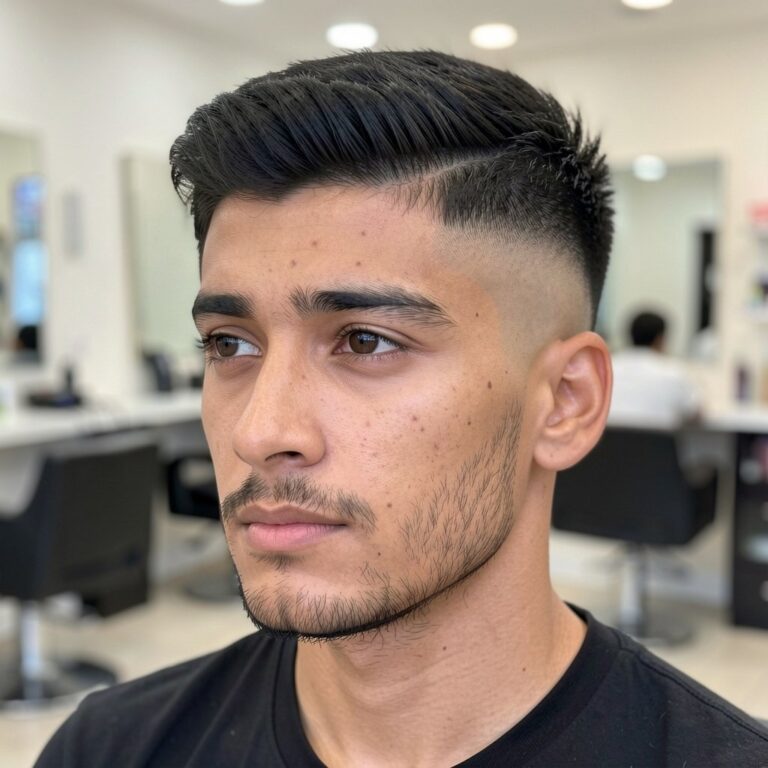
The faux hawk is one of the most adaptable men's styles, working for both casual and professional settings. Shows the full range from subtle to bold.
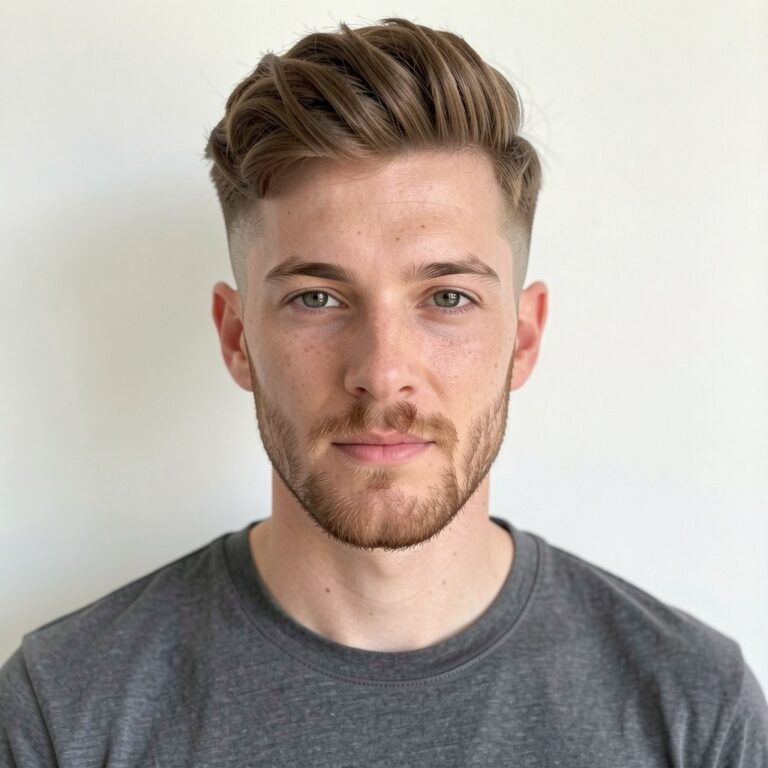
The quiff remains one of the most classic and widely flattering men's hairstyles. A strong foundational reference for anyone new to styled men's hair.
30 Faux Hawk Haircuts For Men If you’re looking for an edgier, more interesting haircut…
20 Quiff Haircuts As a messy hairstyle with vintage roots, the quiff is a close…
Skin fades and tight crops need a barber visit every 2-3 weeks — the fade line grows out roughly 1/2 inch and loses its sharp gradient within 10-14 days. Traditional short cuts like crew cuts and textured crops hold their shape for 3-4 weeks. Medium-length mens hairstyles (quiffs, side parts, slick-backs) look intentional for 4-6 weeks between trims.
Pomade delivers a wet, high-shine finish with strong hold — it is the right product for slicked-back mens hairstyles, pompadours, and classic side parts. Oil-based pomades (like Suavecito or Layrite) hold all day but require multiple shampoos to remove. Water-based pomades wash out easily but lose hold in humidity. Clay provides a matte, textured finish with medium to strong hold and is ideal for crops, messy styles, and natural-looking volume — Hanz de Fuko Claymation and Baxter of California Clay Effect are reliable picks.
A textured crop with a mid or high fade is the most effective mens hairstyle for thinning hair. The short, choppy pieces on top — cut with point-cutting or a razor — create the illusion of density because uneven ends scatter light instead of revealing scalp. The faded sides draw attention to the contrast and structure rather than the thin top. Avoid growing the top long to cover sparse areas: longer hair lies flat and makes thinning more visible, not less.
Fades look excellent on curly hair — the contrast between skin-tight sides and textured curls on top creates more visual impact than the same fade on straight hair. Keep the curls on top at least 2-3 inches so they have room to spring and show their full pattern. A mid fade or low fade works best because it preserves a natural transition zone where the curl pattern gradually tightens into the fade. High fades with curly tops create a dramatic, editorial look but require more frequent barber visits (every 2 weeks).
Identify your face shape by pulling your hair back and tracing your outline in a mirror. Oval faces suit almost any mens hairstyle — this is the most versatile shape. Round faces need height on top and shorter sides to elongate: pompadours, quiffs, and high fades work well — avoid flat crops. Square faces look strong with textured crops, side parts, and mid fades that soften the angular jawline. Long/oblong faces need width at the sides and less height on top: side-swept styles, medium fades, and styles with lateral volume balance the length.
Start with towel-dried, damp hair — about 80% dry. Apply a pea-sized amount of product (clay, pomade, or paste depending on your desired finish) by rubbing it between your palms until evenly distributed, then work through the hair from back to front. For volume, blow dry on medium heat while directing hair upward at the roots with a round brush or your fingers for 2-3 minutes. For a textured, natural look, skip the blow dryer and let air dry with product in. Finish by using your fingertips — not a comb — to place individual pieces where you want them.
Bring a reference photo — this eliminates 90% of miscommunication. Show 2-3 pictures from similar angles (front, side, back) of the mens hairstyle you want. Tell the barber three things: the length you want on top (in inches or finger-widths, not guard numbers), the type of fade or taper on the sides (skin fade, mid fade, low taper, scissor taper), and where you want the fade line to start (above the ear, at the temple, near the crown). Mention your hair texture and any problem areas — cowlicks, thinning spots, or uneven growth.
Growing out mens hairstyles to shoulder length or beyond takes 12-18 months from a standard short cut. Wash every 2-3 days with sulfate-free shampoo and always condition the mid-lengths and ends — skipping conditioner causes tangles and split ends. Get a shaping trim every 8-10 weeks to clean up split ends and keep the shape intentional. Use a wide-tooth comb on wet, conditioned hair starting from the ends and working upward to avoid snapping strands. A leave-in conditioner or light oil (argan or jojoba, 2-3 drops) controls flyaways and adds moisture.
Surveys and dating-app data consistently rank clean, well-maintained styles highest — the specific cut matters less than the grooming. The common thread is intentionality: it looks like you chose the style rather than just letting your hair grow. A fresh fade with clean edges reads as put-together. Messy, air-dried texture reads as effortlessly confident when the underlying cut is solid. Avoid extremes: very long unkempt hair and overly sculpted, product-heavy styles both rank lower. The most attractive element is a mens hairstyle that fits your face shape and that you maintain regularly — consistency signals self-care.