
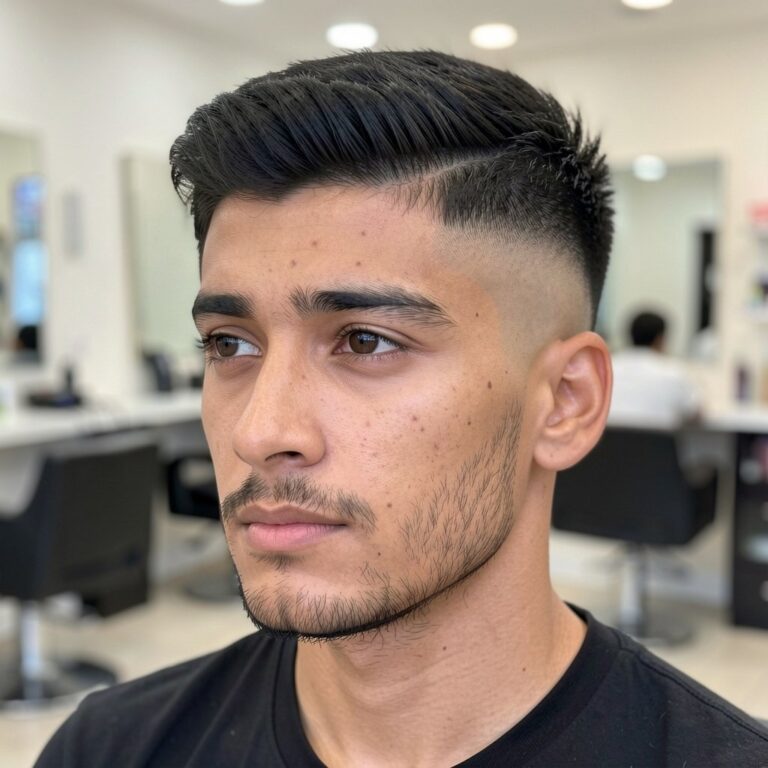
30 Faux Hawk Haircuts For Men
30 Faux Hawk Haircuts For Men If you’re looking for an edgier, more interesting haircut…
Finding the Right Cut and Barber Men's haircuts have exploded beyond the traditional short-back-and-sides.
Men's haircuts have exploded beyond the traditional short-back-and-sides. The modern barbershop offers a menu of cuts that ranges from precision fades to textured crops to medium-length styles that blur the old line between "men's cuts" and "unisex styling." The key is finding a barber who can execute the specific style you want - not every barber can do a perfect skin fade, and not every stylist understands how to cut thick, curly men's hair.
The fade remains the backbone of modern men's cutting. A low fade keeps things subtle and professional. A mid fade offers balance. A high fade creates maximum contrast between the short sides and longer top. The taper - a less aggressive version of the fade - works better in conservative environments where a skin fade might raise eyebrows. Drop fades follow the ear line and add visual interest. Burst fades radiate around the ear for a more creative look. Each variation changes the silhouette dramatically, even when the top length stays the same.
On top, the textured crop has become the go-to for its versatility and low maintenance. It works on straight, wavy, and curly hair, requires minimal product (just a matte paste or clay), and looks good messy or styled. For men who want more drama, the quiff pushes volume upward for a classic-meets-modern look. The pompadour takes it further with even more height and sleekness. Side parts - both hard-line and soft - are having a comeback, especially the "gentleman's cut" pairing a side part with a mid fade. Men who prefer a sharper contrast between top and sides should also consider undercut hairstyles, which disconnect the lengths entirely.
Longer men's styles require a different approach entirely. The curtain cut (center-parted, ear-length or longer) needs layering to avoid looking like a wig. The man bun requires at least 8-10 inches of length and a hair tie that won't cause traction damage. Grown-out styles work best when you commit to regular trims during the awkward phase - your barber can clean up the neck and sides while the top keeps growing, maintaining shape throughout the transition. Most men give up during the 3-5 month awkward phase; the ones who push through end up with genuinely great hair.
Frequency matters. Fades need a touch-up every 2-3 weeks to look sharp. Textured crops can go 4-5 weeks. Longer styles need trims every 6-8 weeks to maintain shape. The biggest mistake is waiting until a cut looks noticeably bad before going in - by then, it's been looking suboptimal for a week or two already. Think of barber visits as maintenance, not repair. For men with textured or coily hair, specialized barbers who understand the cutting technique and product needs make all the difference.
Demonstrates the full range of the faux hawk from workplace-friendly to weekend-bold, with clear examples of how fade grades change the overall feel of the cut.
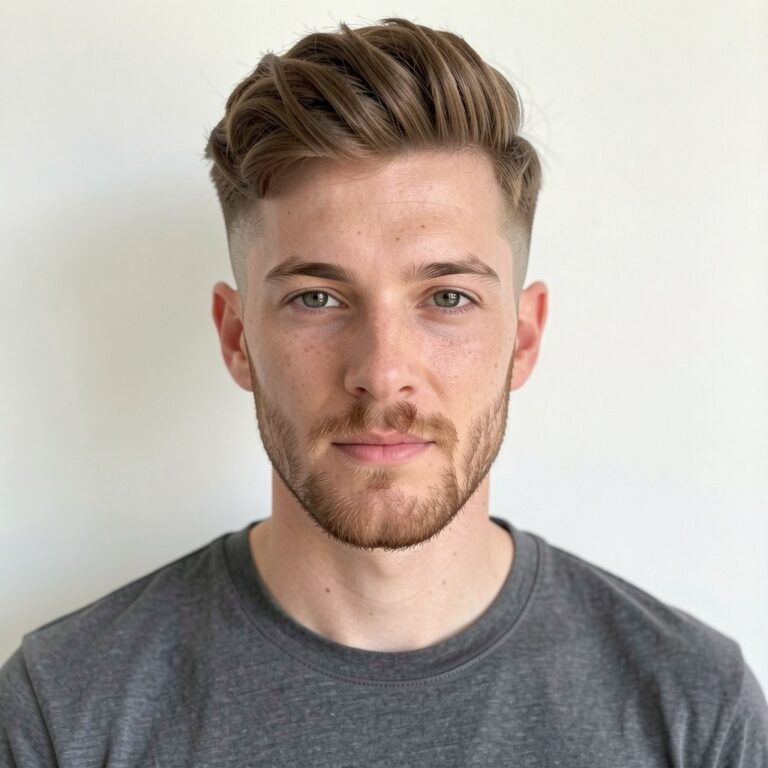
The quiff is the most versatile volume-forward men's cut and the easiest structured style for beginners to maintain. A strong starting point for anyone looking to upgrade from a basic cut.
30 Faux Hawk Haircuts For Men If you’re looking for an edgier, more interesting haircut…
20 Quiff Haircuts As a messy hairstyle with vintage roots, the quiff is a close…
A taper gradually shortens hair from the top downward and ends at the natural hairline with some visible length remaining — typically a #2 or #3 guard at the lowest point. A fade takes that gradation all the way down to skin (a #0 or bare blade) for sharper contrast. Within fades, a low fade starts the skin right at the ear, a mid fade hits the temple area, and a high fade begins near the top of the head about 2 inches from the crown. Tapers suit conservative workplaces and men who want 3-4 weeks between cuts.
Guard 0 (no guard) is skin — used for the base of a skin fade. Guard 1 leaves 3mm, showing a visible shadow that is the standard fade base for men haircuts that are not skin-tight. Guard 2 is 6mm and the most popular side length for classic fades — short but still has coverage. Guard 3 is 10mm, a visible short crop that works as a standalone buzz cut length. Guard 4 (13mm) and above look like a full short head of hair.
The awkward stage of growing out men haircuts hits between months 3-5, when your hair is too long for its previous shape but too short to push back or tie up. Keep visiting the barber every 5-6 weeks for shaping trims that remove bulk at the sides and neckline while preserving every millimeter of length on top. A medium-hold matte product keeps the top pushed back or to the side. Headbands work well once the front reaches eyebrow length (around month 4). The sides look the worst — ask your barber to keep them tapered while letting the top grow.
The individual barber's skill matters far more than the shop's price tag. A $25 barber who has cut 10,000 fades will outperform a $60 barber fresh out of school. jumping straight in), use sharper and better-maintained tools, and often include extras like hot towel neck treatments, beard line-ups, and detailed edge work. The best approach for men haircuts is finding one skilled barber and staying with them — they learn your head shape, cowlick patterns, growth direction, and preferred length over 3-4 visits.
The average man visits a barber every 3-5 weeks, but the ideal frequency depends entirely on the style. Skin fades and tight crops lose their clean lines within 2-3 weeks — the fade grows out roughly half an inch and the gradation blurs. Classic men haircuts like crew cuts and side parts hold shape for 3-4 weeks. Textured crops look good up to 4-5 weeks. If you are growing your hair out, trim every 6-8 weeks to maintain shape. Budget around $25-50 per visit depending on your area, which works out to $300-800 per year.
A standard men's haircut at a chain salon (Great Clips, Sport Clips, Supercuts) runs $18-28 before tip. Independent barbershops charge $25-45 in most cities, with high-end shops in New York, LA, or Miami reaching $50-80+. The price typically includes the cut, a neck shave or trim, and basic styling. Add-ons like beard trims ($10-15), hot towel treatments ($5-10), or hair washing ($5) increase the total. Tipping 15-20% is standard — on a $30 cut, that is $5-6.
Match your men haircut to your face geometry for the most flattering result. Round faces: add height on top with a textured crop, pompadour, or quiff paired with a high or mid fade — avoid buzz cuts that emphasize roundness. Square faces: textured side parts, medium-length crops, and mid fades complement the strong jawline without competing with it. Oval faces: the most versatile shape — nearly any cut works, from buzz cuts to flow hairstyles. Long/rectangular faces: keep the sides slightly fuller (a low taper or scissors-only sides) and avoid excessive height on top.
Standard tipping for men haircuts is 15-20% of the service price. On a $30 cut, that means $5-6. For exceptional service — your barber spent extra time on a difficult style, fixed a previous bad cut, or accommodated a last-minute appointment — 25% ($7-8 on a $30 cut) is appropriate. If you are a regular who books the same barber every 2-3 weeks, consistent 20% tips build loyalty and often get you priority scheduling, extra attention, and flexibility on timing. At chain salons, tip the individual stylist directly in cash when possible so it is not split or taxed.
A layered men's haircut uses scissors (not clippers) to cut hair at different lengths throughout the top and sides, creating movement, texture, and volume. Unlike a uniform-length buzz cut or a blended fade, layers allow pieces of hair to sit at different heights so the style looks fuller and more dynamic. Layers work especially well on thick or wavy hair because they reduce bulk without removing length — the hair feels lighter and falls more naturally. Your barber cuts layers by holding sections of hair at 45-90 degree angles and point-cutting or slide-cutting through them.