
The Hair Porosity Test: 3 Easy Methods You Can Do at Home
You bought the same conditioner your friend swears by. She has bouncy, hydrated curls. You have a greasy, limp mess. Same product, completely different results.
The problem isn’t the product. It’s porosity.
Hair porosity describes how well your hair absorbs and retains moisture. It’s determined by the condition of your cuticle layer, the outermost part of each strand. Think of the cuticle as overlapping shingles on a roof. When those shingles lie flat, moisture has a hard time getting in. When they’re lifted or damaged, moisture rushes in but escapes just as fast.
Test strands from at least three different areas of your head: the crown, nape, and sides. Porosity often varies across different sections, and knowing this helps you customize your routine by zone.
Here are three tests you can do right now with things already in your house.
Why Porosity Matters More Than You Think
Most people choose hair products based on texture or curl pattern. That’s only half the picture. Two people can have the exact same curl pattern but completely different porosity levels, and they need completely different routines.
Repeat the porosity test every 6 months. Chemical treatments, heat styling, and even seasonal sun exposure can change your porosity over time, and your routine should adjust accordingly.
Porosity determines three things:
- How your hair absorbs moisture. Low porosity hair resists water. High porosity hair drinks it up instantly.
- How long moisture stays in. High porosity hair absorbs fast but loses moisture just as quickly. Low porosity is slow to hydrate but holds onto it.
- How products behave on your hair. Heavy butters sit on top of low porosity hair. Lightweight sprays evaporate off high porosity hair before they do anything.
That product your friend loves? It probably works for her porosity level, not yours. Once you know your porosity, product choices stop being guesswork.
Test 1: The Float Test
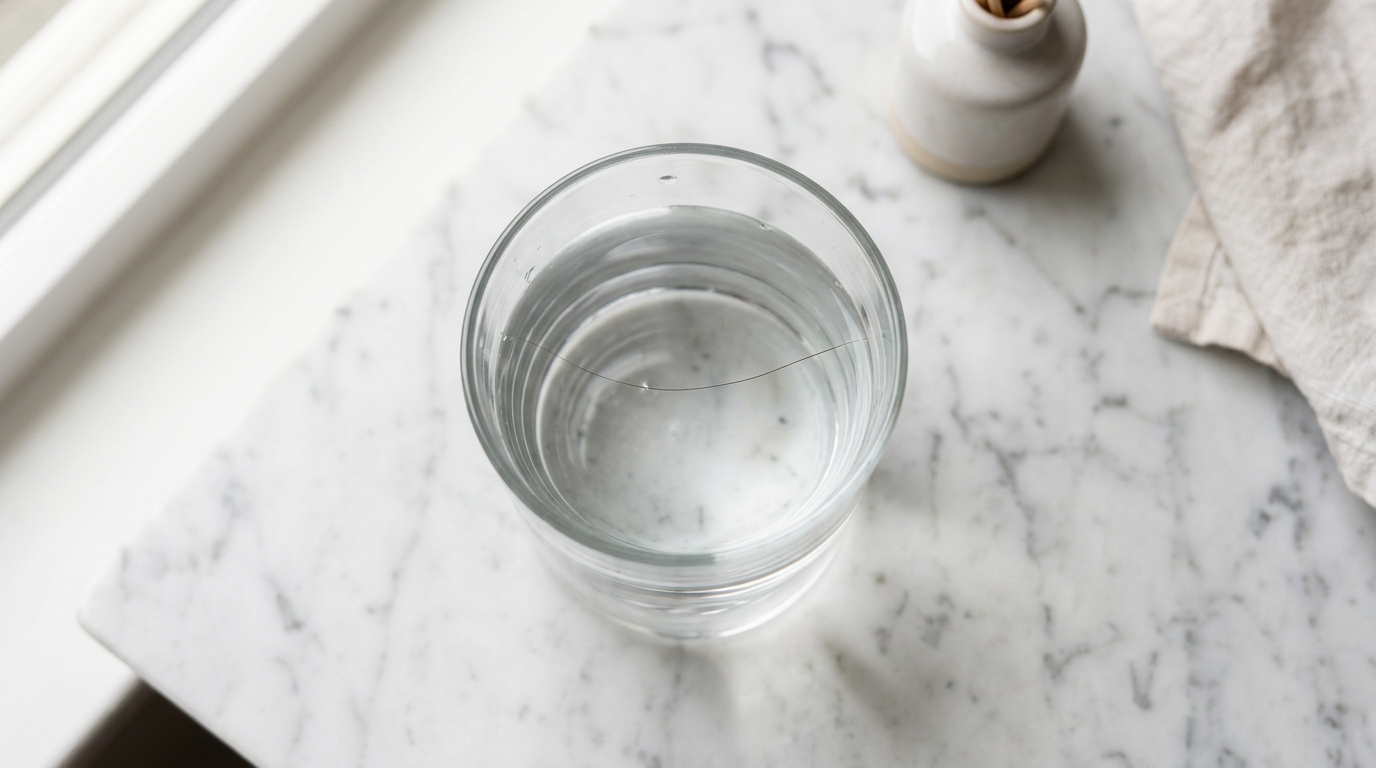
This is the most well-known porosity test.
What you need: A glass of room-temperature water and a strand of shed hair.
How to do it:
- Collect a strand of hair that has naturally shed. Check your brush or your shower drain.
- Fill a clear glass with room-temperature water. Not hot, not cold.
- Drop the strand onto the surface of the water.
- Wait 2 to 4 minutes. Don’t touch it, don’t swirl the glass.
Reading your results:
- Hair floats on top after 4 minutes: Low porosity. The cuticle is so tightly sealed that water can’t penetrate the strand.
- Hair sinks slowly to the middle: Normal porosity. The cuticle allows a balanced amount of water in.
- Hair sinks to the bottom quickly: High porosity. The cuticle has gaps or damage that let water flood in, making the strand heavy.
The catch: If there’s any product residue on the strand, it changes the result. Oils and silicone buildup make hair float regardless of porosity. You need genuinely clean hair for this to work.
The float test is a decent starting point, but don’t rely on it alone.
Run the float test on clean, product-free hair. Even a small amount of oil or leave-in conditioner will affect how the strand interacts with water and give you a false result.
Test 2: The Spray Test
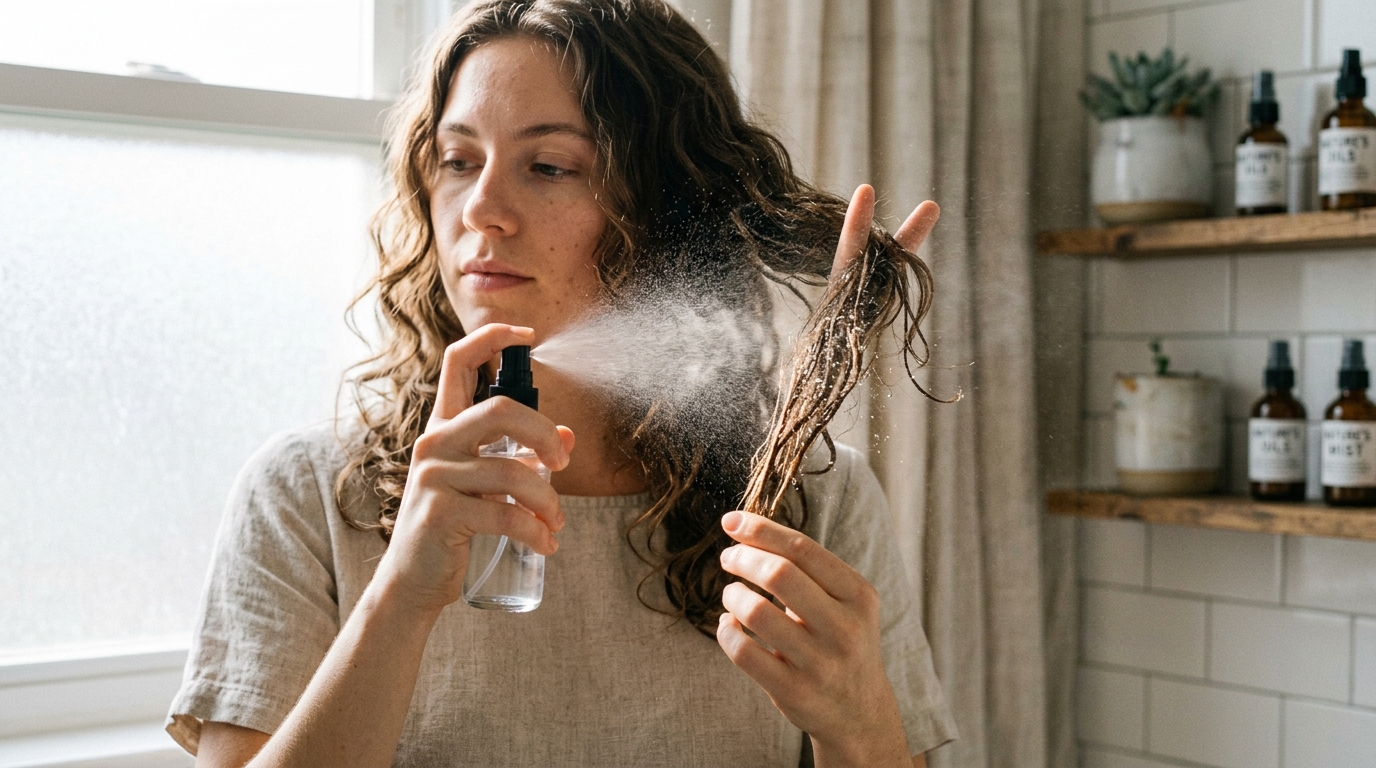
This one is more reliable because you’re testing hair that’s still on your head, behaving the way it normally does.
What you need: A spray bottle filled with plain water.
The spray bottle test is actually the most reliable at-home porosity method. Mist a section of clean hair and watch how fast the water absorbs. Instant absorption means high porosity, beading means low.
How to do it:
- Start with clean, completely dry hair. No leave-ins, no oils, no styling products.
- Take a small section of hair and hold it out from your head.
- Mist it with 2 to 3 sprays of water.
- Watch what happens in the first 10 seconds.
Reading your results:
- Water beads up and sits on the surface: Low porosity. Your cuticle is acting like a raincoat. The water rolls around without being absorbed.
- Water absorbs within a few seconds: Normal porosity. The cuticle allows water in at a steady, moderate pace.
- Water disappears instantly and the hair darkens right away: High porosity. The cuticle is open, and moisture rushes in with no resistance.
Why this test is better: You’re observing your hair in its natural state, attached to your head, at its actual temperature. The float test isolates a single shed strand in artificial conditions.
Pay attention to different sections of your head. It’s common to have mixed porosity. The hair around your temples might behave differently from the hair at your nape.
See how different hairstyles look on you — upload your photo and try any style with our AI tool.
Try HairStyleMojo Free →Test 3: The Slide Test
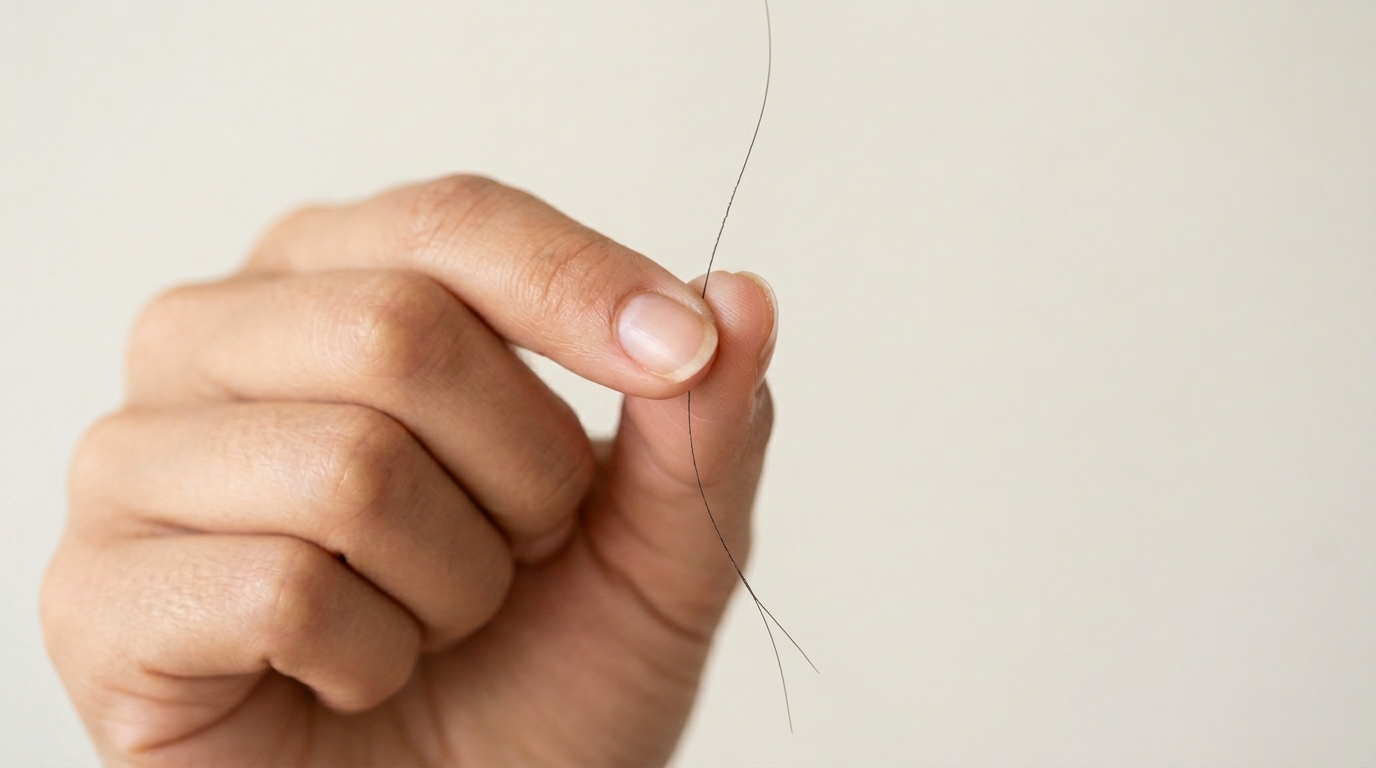
This test measures the physical texture of your cuticle directly. No water involved.
What you need: A single strand of hair and your fingers.
How to do it:
- Take a single strand of hair between your thumb and index finger.
- Pinch lightly.
- Slide your fingers from the tip of the strand up toward the root. You’re going against the direction of growth, against the grain.
- Pay attention to what you feel.
Reading your results:
- Feels smooth and glassy: Low porosity. The cuticle is lying flat. Your fingers glide over it without catching.
- Feels slightly textured, mild roughness: Normal porosity. The cuticle has a natural, subtle texture.
- Feels rough, bumpy, or catches on your fingers: High porosity. The cuticle is lifted or has gaps. Your fingers snag on the raised edges.
Important note: If your hair is chemically treated, bleached, or heat-damaged, this test will skew toward high porosity in those areas. That’s actually accurate. Chemical and heat damage raises the cuticle, which is literally what high porosity is.
Using hair from your brush for the float test gives unreliable results. Shed hair has been exposed to more friction and product than hair still on your head. Always pull a fresh strand for testing.
Try this on multiple strands from different parts of your head for consistent results.
What Your Results Mean
Look at the overall pattern across all three tests.
Low Porosity
Your cuticle is tightly sealed. Moisture has a hard time getting in, but once it’s there, it stays.
Common signs: Hair takes a long time to get fully wet in the shower. Products sit on top rather than absorb. Hair takes hours to air dry. Color processes slowly.
What to focus on: Lightweight, water-based products. Heat (warm water, a hooded dryer, a warm towel) helps open the cuticle so moisture can penetrate. Avoid heavy butters and oils that cause buildup.
Normal Porosity
Your cuticle is balanced. It accepts moisture readily and retains it well.
Common signs: Hair dries in a reasonable time. Holds styles well. Takes color evenly.
What to focus on: Maintenance. A solid routine with regular conditioning keeps you in good shape. Don’t over-process or over-heat, and your porosity will stay balanced.
High Porosity
Your cuticle has gaps, either from genetics or damage. Moisture gets in fast but escapes just as quickly.
Common signs: Hair dries very fast. Gets frizzy in humidity. Color fades quickly. Tangles easily.
What to focus on: Sealing moisture in. Use richer products, butters, and oils that coat the strand and close the cuticle. Protein treatments help fill gaps temporarily. Deep conditioning is essential.
The Honest Truth About Home Tests
Let’s be real: these tests are directional, not diagnostic.
A trichologist can measure porosity under a microscope. Home tests give you a reasonable estimate, and for most people, that’s enough to make better product choices.
Professional trichologists use a tool called a moisture meter to measure porosity precisely. The at-home tests give you a general range, which is enough to guide product choices.
Combine your test results with behavioral observation. Ask yourself:
- Does your hair take forever to dry, or does it dry in under an hour?
- When you apply conditioner, does it absorb or just sit on the surface?
- Does hair color last for months or fade within weeks?
- Does your hair puff up in humidity or stay relatively flat?
- After you wash your hair, does it feel moisturized the next day, or is it dry again by morning?
Those behavioral patterns are often more reliable than any single home test. If all three tests point in the same direction AND your daily experience matches, you can be confident in your porosity type.
One more thing: porosity can change. Sun exposure, heat styling, and chemical treatments all raise the cuticle over time. Your porosity at 20 might not be your porosity at 35. Retest once a year or whenever your products suddenly stop working.
What to Do Next
Here’s where to go next:
- Low porosity? Read our [complete guide to low porosity hair](/learn/hair-types/low-porosity-hair/) for product recommendations and technique tips.
- High porosity? Our [high porosity hair guide](/learn/hair-types/high-porosity-hair/) covers sealing methods, protein treatments, and the best ingredients for your hair type.
- Normal porosity? Basic maintenance keeps things running smoothly. Focus on not damaging what you’ve got.
- Want to understand the differences? Our [porosity comparison guide](/learn/hair-types/porosity-comparison/) breaks down all three types side by side.
Key Takeaways
- Hair porosity describes how your hair absorbs and retains moisture, and it’s key to choosing the right products.
- The float test, spray test, and slide test each take under five minutes with household items.
- No single home test is perfectly reliable. Look at the pattern across all three.
- Behavioral signs (dry time, product absorption, color retention) are often more telling than any individual test.
- Porosity can change over time from damage, chemical treatments, and aging. Retest periodically.
Frequently Asked Questions
Once a year is a good baseline. Also retest after a major chemical treatment (bleaching, relaxing, perming) or if products that used to work suddenly don’t.
Yes, and it’s more common than people realize. The hair around your face and temples often has different porosity than the hair at the nape. Sun exposure, heat styling habits, and even how you sleep can create uneven porosity.
Yes. Low porosity hair benefits from warm water (heat opens the cuticle) and a cool rinse at the end. High porosity hair does better with lukewarm water throughout, since hot water raises the cuticle further.
Not necessarily. Some people are genetically high porosity and their hair is perfectly healthy. It only becomes a problem when damage leads to excessive dryness, breakage, or frizz. The goal isn’t to change your porosity. It’s to work with it.
You can’t permanently lower high porosity, but you can manage it. Protein treatments temporarily fill gaps in the cuticle. Acidic rinses (like diluted apple cider vinegar) help flatten it. You can’t permanently raise low porosity either, but heat and steam help open the cuticle during product application.
Sources & References
- Robbins, C.R. (2012). Chemical and Physical Behavior of Human Hair (5th ed.). Springer-Verlag.
- Gavazzoni Dias, M.F.R.G. (2015). Hair cosmetics: An overview. International Journal of Trichology, 7(1), 2-15.
- Gavazzoni Dias, M.F. (2015). Hair porosity: Validation of measurement techniques and clinical relevance. International Journal of Cosmetic Science, 37(S2), 2-10.
- Ruetsch, S.B., et al. “Secondary ion mass spectrometric investigation of penetration of coconut and mineral oils into human hair fibers: relevance to hair damage.” Journal of Cosmetic Science, vol. 52, no. 3, 2001, pp. 169-184. PMID: 11413497.
- Syed, A.N. & Ayoub, H. (2002). Effect of hair porosity on tensile properties and moisture regain. Journal of the Society of Cosmetic Chemists, 53(3), 165-175.
See also: The Complete Guide to Hair Types: From Straight to Coily
See also: High vs Low Porosity Hair: What the Difference Actually Means
See also: The Complete Guide to Hair Health
Try different hairstyles on yourself
Upload your photo and see how any hairstyle looks on you before committing.
Try HairStyleMojo Free