
Protective Hairstyles: What They Are and Which Ones Actually Protect
The term “protective style” gets thrown around loosely. Waist-length box braids? Protective. Slicked ponytail? Protective. Crochet locs with four pounds of synthetic hair pulling on your edges? Somehow also protective.
But a hairstyle isn’t protective just because someone on the internet called it that. Some of the most popular “protective” styles are actively damaging hair. The difference between a style that retains length and one that destroys your hairline comes down to a few specific things.
Here’s how to tell the difference.
What Makes a Hairstyle “Protective”
A truly protective hairstyle meets three criteria. Not one, not two. All three.
Your ends are tucked away. The ends of your hair are the oldest, most fragile part of every strand. They’ve been through years of washing, heat, weather, and friction against clothes, pillows, and seat backs. When your ends are exposed, they split, snap, and break off. Tucking them away removes that constant wear and tear. This is the single biggest factor in length retention.
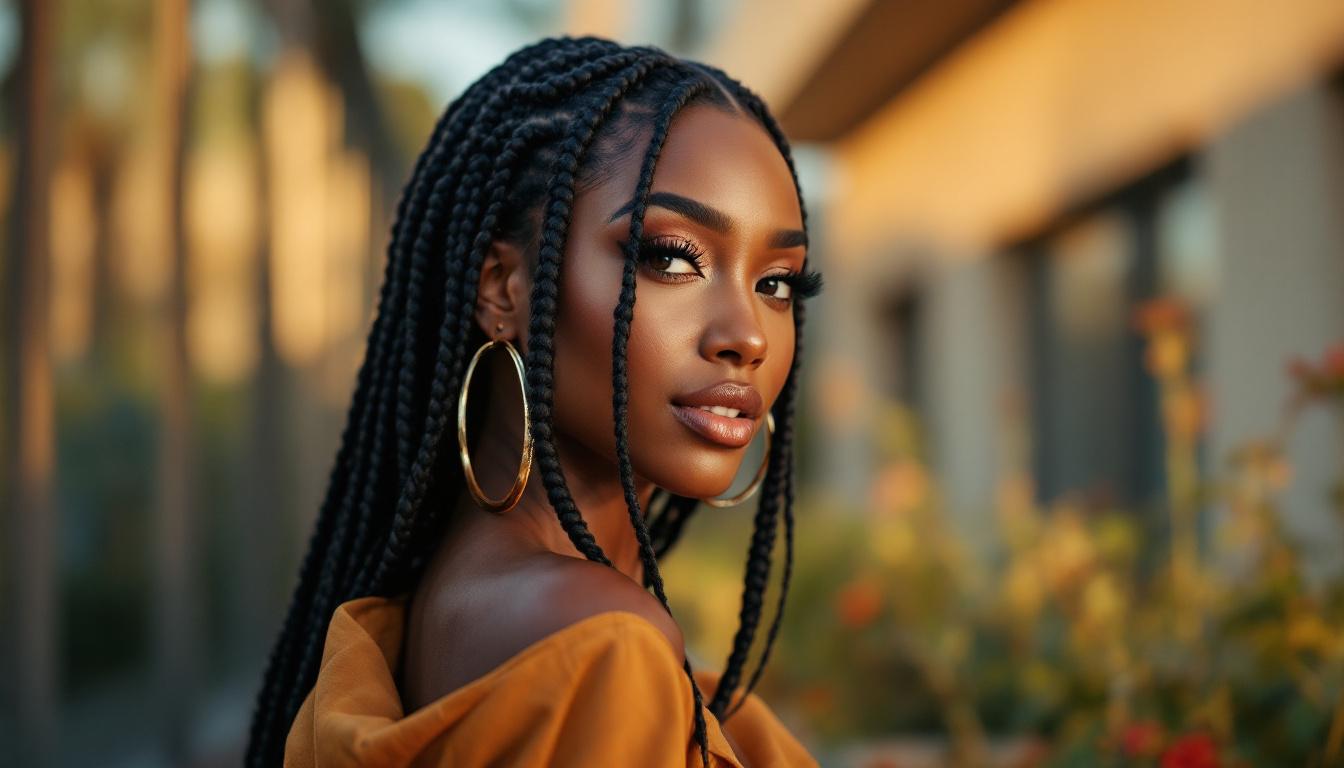
Low tension on your hairline and edges. Your hairline hairs are the finest, thinnest hairs on your head. They cannot handle the same pulling force as the hair at your crown. A style that yanks on your edges is not protective. Full stop.
The golden rule of protective styling is zero tension at the hairline. If you feel pulling, the style is too tight. Traction alopecia from tight styles is the leading cause of preventable hair loss in women with textured hair.
Low daily manipulation. Every time you restyle, detangle, brush, or adjust your hair, you create friction and stress on the strands. A protective style should let you leave your hair alone for days or weeks at a time. If you’re restyling it every morning, it’s just a regular hairstyle with extra steps.
Do not keep protective styles in for longer than 6-8 weeks maximum. Beyond that, shed hair accumulates and tangles within the style, causing matting that leads to significant breakage during takedown.
That’s it. Ends tucked, low tension, low manipulation. Any style that hits all three is genuinely protective. Any style that misses one or more is borrowing the label.
Styles That Actually Protect
Twists
Two-strand twists and flat twists are the workhorse of protective styling. They’re low tension, the ends are tucked and sealed at the bottom of each twist, and they can be done entirely on your natural hair without extensions.
Flat twists work especially well for shorter hair since they sit close to the scalp. Two-strand twists give you more versatility. Both last one to three weeks depending on your hair texture and how well you maintain them at night.
The best part: you can install them yourself. No six-hour salon appointment. No $200 price tag.
Braids
Box braids and cornrows are effective protective styles when done correctly. The key word is “correctly.”
Box braids should be medium-sized or larger. The smaller the braid sections, the more tension on each parting. Keep the length reasonable. Braids that hang past your bra strap start adding weight that your follicles have to support all day and all night.
Cornrows are excellent for laying hair flat under wigs or as a standalone style. Feed-in cornrows, where hair is gradually added to reduce bulk at the root, are gentler than traditional cornrows that start thick at the hairline.
One rule for all braided styles: if it hurts during installation, it’s too tight. Pain is not “just part of the process.” Pain is your scalp telling you the tension is damaging your follicles.
Buns and Updos
A loose low bun is one of the simplest protective styles you can do. Gather your hair, twist it, pin it. Ends are hidden, tension is minimal, and you don’t need to touch it again until wash day.
High puffs work too, but use a satin scrunchie or a soft hair tie. Regular elastic bands create a pressure point that breaks hair right at the tie line. You’ll notice it as a ring of short, broken hairs around your ponytail area.
The goal with buns is “secure but not tight.” It should stay in place without giving you a headache.
Wigs
Wigs offer some of the best hair protection available because your natural hair is completely covered and unexposed. No friction, no weather, no manipulation.
But wig protection only works if you get the foundation right. Your natural hair underneath should be braided flat or twisted down, moisturized, and covered with a breathable wig cap. If the cap is too tight, you’re just trading one source of tension for another.
Moisturize your hair thoroughly before installing any protective style and continue moisturizing weekly while the style is in. Braids and twists hide your hair from view, which makes it easy to neglect moisture.
Wig glue and adhesive along the hairline deserve a mention here. Daily application and removal of glue on your edges is not protective. If you wear wigs regularly, use adjustable straps or combs instead of adhesive whenever possible.
Bantu Knots
Bantu knots are sections of hair twisted tightly into small, flat coils against the scalp. The ends are fully tucked inside each knot, manipulation is minimal, and they work on almost every length of natural hair.
They double as a styling tool. Take them out after a day or two and you get a defined knot-out with curls and waves. Wear them as-is for a bold, sculptural look.
The key is not making the sections too small or twisting too tightly at the root. Medium-sized sections, comfortable tension.
Styles That Look Protective but Cause Damage
Too-Tight Braids
Traction alopecia is real, it’s common, and it’s serious. Repeated tight pulling on hair follicles causes inflammation, scarring, and eventually permanent hair loss. If you’re already dealing with damage from tight styles, our damaged hair recovery plan can help. The hairline recedes. The temples thin out. And once the follicles are scarred shut, that hair does not grow back.
Hair does not actually grow faster in protective styles. What happens is that the ends are tucked away and protected from daily friction and manipulation, so you retain more of the length you grow.
Research published in the Journal of the American Academy of Dermatology found that traction alopecia is one of the most common forms of hair loss in Black women, directly linked to high-tension hairstyling practices (Khumalo et al.).
If your braids give you bumps along your hairline, cause headaches, or hurt when you move your head, they are causing damage. Period. No hairstyle is worth permanent hair loss.
Protective styling has roots in African and African diaspora cultures going back thousands of years. Braiding patterns in some West African traditions communicated social status, age, and tribal affiliation.
Heavy Extensions
The weight of extensions matters more than most people realize. Jumbo box braids that hang to your waist might look incredible, but every ounce of that synthetic or human hair is pulling on your roots. Gravity works 24 hours a day.
Lighter extensions, shorter lengths, and fewer packs of hair reduce the load on your follicles significantly. If you love long braids, consider knotless braids with a gradual feed-in technique. They distribute weight more evenly and put less stress on the root.
Keeping Styles In Too Long
There’s a widespread belief that leaving braids or twists in longer means more protection. The opposite is true past a certain point.
After six to eight weeks, hair that’s been locked in a braided pattern starts to mat at the roots. New growth tangles around the base of each braid. Product buildup accumulates on the scalp. And when you finally take the style down, all of that matting and tangling leads to significant breakage.
The takedown ends up undoing whatever length you retained during the weeks the style was in. Worse, the scalp buildup can cause irritation, flaking, and folliculitis.
Slicked-Back Ponytails
A sleek low ponytail looks polished. But wearing one daily puts constant tension on the exact same spot, every single day. The hair at your temples and along your hairline takes the worst of it, especially if you’re using edge control or gel to lay everything flat.
Occasional slicked styles are fine. Daily ones are a traction alopecia risk.
See how different hairstyles look on you — upload your photo and try any style with our AI tool.
Try HairStyleMojo Free →How Long to Keep Protective Styles In
Every protective style has a shelf life. Going past it turns a protective style into a destructive one.
| Style | Recommended Duration | Absolute Maximum |
|---|---|---|
| Braids with extensions | 4-6 weeks | 8 weeks |
| Twists without extensions | 2-4 weeks | 4 weeks |
| Cornrows | 2-4 weeks | 4 weeks |
| Wigs | Remove daily if possible | Weekly removal minimum |
| Bantu knots | 1-2 weeks | 2 weeks |
One thing people skip: you have to moisturize your hair while it’s in the protective style. Your hair doesn’t stop needing moisture just because it’s braided. A light oil or leave-in conditioner applied to your scalp and the length of each braid every few days keeps your hair from drying out and becoming brittle under the style.
“Set it and forget it” does not work. Neglected hair under a protective style comes out drier and more damaged than hair that was never styled at all.
Installing protective styles on dirty or product-laden hair traps bacteria and buildup against the scalp for weeks. Always start with freshly washed, deep-conditioned hair for any long-term protective style.
Protecting Your Edges
Your edges are the canary in the coal mine. They’re the first area to show damage from tension, and by the time you notice thinning, the damage has been building for a while. This is especially critical for those with type 4 hair, where the fine strand structure is particularly vulnerable to tension.
Signs of traction alopecia to watch for:
- Thinning at the temples
- A hairline that seems to be moving backward
- Small bumps or pimples along the hairline after tight styling
- Broken, short hairs along the front that never seem to grow
Prevention is straightforward:
Leave the first row of braids or cornrows slightly loose. Your stylist might resist this because it looks less “neat.” Insist anyway. Neatness is not worth bald temples.
Stop slicking your edges down with gel every day. Edge control products combined with brushing and tension create a perfect storm for hairline damage. Save the laid edges for special occasions, not daily wear.
Use satin-lined headbands and bonnets instead of tight elastic bands. Cotton and elastic create friction and tension. Satin reduces both.
If you notice thinning, stop the style immediately. Don’t wait until the braids “need” to come out. Take them out now. The earlier you catch traction alopecia, the more likely the hair will recover. Wait too long and the loss becomes permanent (Haskin & Aguh, Dermatologic Clinics, 2017).
Nighttime Protection
Even a protective style needs protection while you sleep. We cover this in detail in our guide to protective hairstyles for sleeping.
Cotton pillowcases create friction against your braids, twists, and locs all night long. That friction causes frizz on the style itself and stress on the hair underneath. Over weeks, it adds up.
A satin bonnet or satin pillowcase solves this. The smooth surface lets your style glide instead of catching and pulling. Bonnets are better for keeping styles contained. Pillowcases are better if you can’t keep a bonnet on through the night (no shame, bonnets have a mind of their own at 3 AM).
If you wear wigs, remove the wig at night, wrap your natural hair in a satin scarf or bonnet, and let your scalp breathe. Sleeping in a wig traps heat and moisture against your scalp and accelerates buildup.
Takedown Tips
How you remove a protective style matters as much as how you install it. Rushing the takedown is where most of the breakage happens.
Go slow. Budget at least an hour for braids, more for smaller styles. Put on a movie. This is not a speed event.
Add slip. Apply coconut oil, olive oil, or a silicone-based conditioner to each braid before unraveling. The lubricant reduces friction between tangled strands and makes it easier to separate them without snapping.
Finger detangle first. Before any comb or brush touches your hair, separate the sections with your fingers. Work from the ends upward. Most tangles are at the root where new growth has coiled around the base.
Expect shed hair. You’ll see what looks like a frightening amount of hair coming out. Don’t panic. You naturally shed 50 to 100 hairs per day. During four to six weeks of protective styling, those shed hairs had nowhere to go. They’ve been trapped in the braids. What you’re seeing is accumulated normal shedding, not damage. If the shed hair has white bulbs at the root end, it’s natural shedding. If the strands are broken at various lengths with no bulb, that’s breakage.
Deep condition immediately. Your hair just spent weeks without its usual washing and conditioning routine. Give it a thorough wash, a deep conditioning treatment, and let it rest before installing another style.
Key Takeaways
- A style is only protective if it tucks your ends, uses low tension, and requires minimal daily manipulation
- Box braids and cornrows work well when they’re not too tight and not left in too long
- Traction alopecia from tight styles can cause permanent hair loss; pain during installation is a red flag
- Keep braids in for 4-6 weeks maximum, not 12
- Moisturize your hair while it’s in the protective style; “set it and forget it” leads to dryness and breakage
- Protect your edges by keeping the first row of braids loose and limiting daily gel use
- Sleep with a satin bonnet or on a satin pillowcase, even with protective styles in
- Take your time during takedown; use oil for slip and finger detangle before combing
Frequently Asked Questions
Protective styles benefit natural hair the most because curly and coily hair textures are more prone to dryness and breakage at the ends. But the principles apply to all hair types. Anyone can benefit from reducing manipulation and tucking away fragile ends. Relaxed hair, transitioning hair, and even straight hair retain more length when the ends are protected from daily wear.
Yes, and you should. Dilute your shampoo with water and apply it directly to your scalp between the braids. Gently squeeze the suds through the lengths. Rinse thoroughly and follow with a lightweight conditioner or oil. Focus on the scalp. Buildup, sweat, and product residue don’t stop accumulating just because your hair is braided.
If you feel pain during installation, the braids are too tight. If you see small raised bumps along your hairline afterward, the braids are too tight. If you get headaches in the first few days, the braids are too tight. Properly installed braids should feel secure but comfortable from the moment you leave the chair. The idea that “they’ll loosen up in a few days” is how traction alopecia starts.
No. Protective styles don’t change your hair growth rate. Your hair grows at roughly the same speed regardless of styling. What protective styles do is reduce breakage, which means you retain more of the length your hair grows. Growth rate minus breakage equals the length you actually see. Protective styles work on the breakage side of that equation.
Two-strand twists. They’re easy to install yourself, require no extensions, work on most lengths of natural hair, and are simple to take down. They also give you a built-in twist-out style when you unravel them. Start with medium-sized sections. As you get comfortable with the technique, you can experiment with size and patterns.
Sources & References
- Khumalo, N.P., et al. “Traction alopecia: How to translate study data for public education.” Journal of the American Academy of Dermatology, 2012.
- McMichael, A.J. “Hair and scalp disorders in ethnic populations.” Dermatologic Clinics, 21(4), 2003, pp. 629-644.
- Haskin, A. & Aguh, C. “All hairstyles are not created equal: What the dermatologist needs to know about black hairstyling practices and the risk of traction alopecia.” Journal of the American Academy of Dermatology, 75(3), 2016, pp. 606-611.
- American Academy of Dermatology. “Hair loss: Tips for managing.” aad.org.
Try different hairstyles on yourself
Upload your photo and see how any hairstyle looks on you before committing.
Try HairStyleMojo Free