
Hair Gloss Treatment: What It Is and Whether You Need One
Your color looked incredible walking out of the salon. Six weeks later, it looks like a faded version of what you paid for. Familiar?
Glosses last 4-6 weeks on average but fade gradually and gracefully, unlike permanent color which can develop harsh lines of demarcation at the roots.
A hair gloss treatment is one of the simplest ways to bring that salon-fresh look back. It adds shine, corrects unwanted tones, and makes your hair feel smoother. No bleach, no ammonia, no commitment beyond a few weeks.
The terminology is confusing, the price range is wide, and it is not a miracle product. Here is what a gloss does, what it costs, and whether it makes sense for your hair.
Gloss vs. Glaze vs. Toner: Clearing Up the Confusion
Walk into one salon and you will hear these three words used interchangeably. Walk into another and they will tell you they are completely different things. The truth is in the middle.
A gloss is a semi-permanent or demi-permanent treatment that deposits sheer color pigments onto the hair while adding shine. It can be clear (no color change, just shine) or tinted (shifts or corrects your tone slightly).
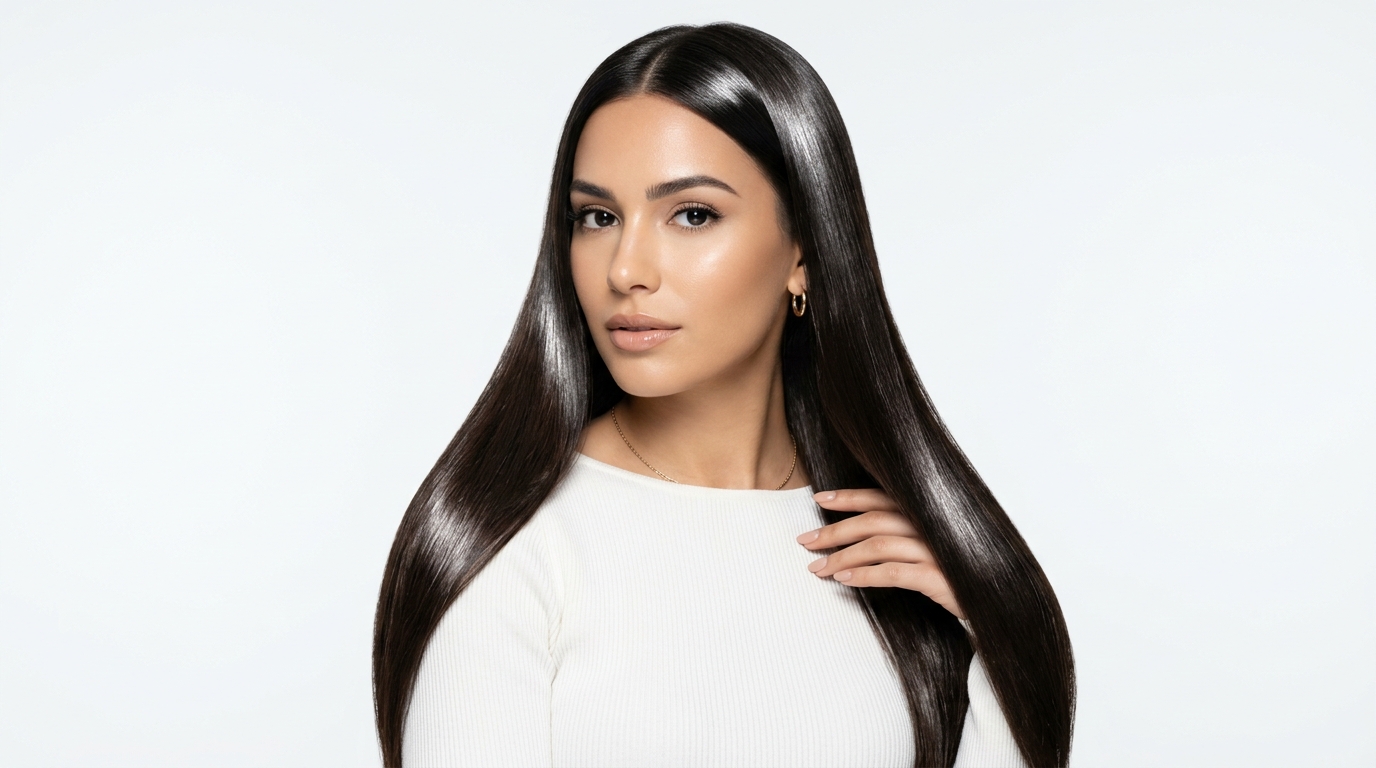
A glaze is the same product under a different brand name. The formulation and results are nearly identical. If your stylist offers a glaze, you are getting a gloss with different packaging.
A toner works the same way but has a more specific job: neutralizing unwanted undertones, especially the yellow and orange brassiness that shows up in blonde and lightened hair. Think of a toner as a gloss with a targeted mission.
All three coat or slightly penetrate the hair cuticle with color pigments and shine-enhancing ingredients. The differences are mostly marketing, not chemistry.
For the rest of this article, “gloss” covers all three.
How a Gloss Works
A gloss is similar to a demi-permanent hair color but sheerer. Where a demi-permanent deposits noticeable color, a gloss lays down a thinner, more translucent layer.
The formula contains low-concentration pigments in an acidic base. That acidic pH does the heavy lifting for shine. It closes and smooths the hair cuticle, the outer layer of overlapping scales on each strand. When the cuticle lies flat, light bounces off it evenly. That is what makes hair look glossy and feel silky.
A hair gloss works at a much lower pH than permanent color, typically around pH 3-4 versus pH 9-10. This acidic environment actually closes and smooths the cuticle rather than opening it.
The salon process is straightforward:
- Hair is shampooed and towel-dried.
- The colorist mixes the gloss, customizing it to your tone needs.
- Applied evenly from roots to ends.
- Processes for 5 to 20 minutes.
- Rinsed out, sometimes followed by conditioner.
The whole appointment takes 30 to 45 minutes.
A clear gloss deposits no color. It seals the cuticle and adds reflectivity. A tinted gloss does the same while layering in pigment to shift, correct, or deepen your existing shade.
A clear gloss adds shine and smoothness without changing your color at all. It is the easiest, lowest-commitment treatment you can get and works on every hair color and type.
Who Benefits Most
Not everyone needs a gloss treatment. But certain hair situations make it a near-perfect solution.
Color-treated hair that has gone brassy. The most common use case. If your highlights or balayage looked cool-toned leaving the salon but now pull warm and yellow, a tinted gloss neutralizes that shift without re-coloring.
Blonde hair with yellow or orange tones. Blondes fight brassiness constantly. A violet or blue-tinted gloss counteracts warmth and brings back that clean, bright tone.
Natural hair that looks dull. You do not need colored hair to benefit. A clear gloss on virgin hair adds a noticeable shine boost, especially if your hair tends to look flat or matte.
Hair recovering from chemical treatments. Perms, relaxers, and repeated coloring rough up the cuticle. A gloss smooths it back down. Cosmetic, not structural repair, but the difference is real.
Faded color that needs a refresh. If your red has gone copper or your brunette has lost its richness, a tinted gloss brings back depth without the commitment of a full color service.
If your hair already looks shiny and your color is exactly where you want it, you probably do not need one.
See how different hairstyles look on you — upload your photo and try any style with our AI tool.
Try HairStyleMojo Free →Salon Gloss vs. At-Home Gloss
You have two paths here, and the right one depends on what you are trying to accomplish.
Salon Gloss
A professional gloss treatment runs $40 to $80 at most salons. Some high-end salons charge more if it is bundled with a blowout or other services.
What you get for that price: a colorist who custom-mixes the formula to match your exact tone needs. If you are correcting brassiness or blending out a color that did not land right, the salon route is significantly more precise. The colorist adjusts pigment ratios, processing time, and application based on what your hair actually needs.
Salon glosses last 4 to 6 weeks before fading.
At-Home Gloss
At-home glosses cost $10 to $25 and come pre-formulated. Apply in the shower, leave on for a few minutes, rinse.
You can do an at-home gloss treatment with products like Kristin Ess or dpHUE for under $15. Apply to clean, damp hair, wait 10-20 minutes, and rinse. Salon-quality shine for a fraction of the price.
Solid at-home options include:
- Kristin Ess Signature Hair Gloss (clear and tinted options, widely available)
- dpHue Color Boosting Gloss (good shade range, great for maintaining color between visits)
- John Frieda Luminous Glaze (budget-friendly, available at most drugstores)
At-home glosses last 2 to 4 weeks since the formulas are gentler and less concentrated.
Which Should You Choose?
Go salon if you need corrective work. If your color pulled too warm, too cool, or too dark, a colorist can fix that with a custom gloss. At-home products cannot adjust to your specific situation.
Go at-home if you want to maintain shine between appointments. They keep your color fresh and your hair smooth for a fraction of the salon price.
Many people do both: salon gloss every 6 to 8 weeks for precision toning, at-home treatments in between for upkeep.
What a Gloss Can and Cannot Do
This is where expectations need to be realistic. A gloss is a cosmetic enhancement, not a color transformation.
What a gloss CAN do:
- Add significant shine. The acid-based formula seals the cuticle, and the difference in light reflection is visible immediately.
- Correct brassiness. Tinted glosses neutralize unwanted warm tones in blonde, brunette, and red hair.
- Deepen existing color. A tinted gloss makes your current shade look richer and more dimensional.
- Refresh faded color. Brings back vibrancy without the damage of a full color appointment.
- Smooth the cuticle. Hair feels softer and tangles less. For more dramatic smoothing, a keratin treatment lasts longer but involves a more intensive process. A gloss, especially on porous or chemically treated hair.
What a gloss CANNOT do:
- Lighten your hair. A gloss deposits pigment. It does not lift. Going lighter requires bleach or permanent color.
- Cover gray completely. Too sheer for full gray coverage. It can blend a few stray grays into your base, but anything beyond 25% gray needs demi-permanent or permanent color.
- Make dramatic color changes. Going from brunette to red, or warm to icy platinum, is beyond what a gloss can do.
- Repair structural damage. A gloss makes damaged hair look and feel better by sealing the cuticle, but it does not rebuild broken bonds. For that, you need bonding and repair treatments like Olaplex.
Think of a gloss like a top coat on a manicure. It makes everything look polished and last longer, but it is not the color.
How Often to Gloss
Frequency depends on the product type and whether your gloss is clear or tinted.
Salon glosses: Every 4 to 6 weeks is the standard recommendation. Many people schedule their gloss to coincide with a root touch-up or trim to combine appointments.
Schedule a gloss treatment 2 weeks after coloring to refresh vibrancy and extend the life of your color. The gloss deposits a fresh layer of tone without the ammonia exposure of a full color service.
At-home glosses: Every 1 to 2 weeks. Most formulas are gentle enough for weekly use, especially clear ones.
Watch for buildup
Here is the one real risk with glossing too often: tinted glosses build up over time. Each application deposits a thin layer of pigment. After several back-to-back applications, those layers stack and your hair can end up darker or muddier than intended.
This happens most often with at-home tinted glosses used frequently without adjusting for the cumulative effect.
Clear glosses carry less buildup risk since there is no pigment involved. If you want to gloss frequently for shine, clear formulas are the safer choice.
A good rule: if your color starts looking darker or flatter than you want, skip a cycle or switch to clear. The excess pigment fades out on its own within a few washes.
Key Takeaways
- A hair gloss is a low-commitment treatment that adds shine and corrects tone without ammonia or damage
- Gloss, glaze, and toner are functionally the same type of product with different marketing names
- Salon glosses ($40-$80) offer custom toning and last 4-6 weeks; at-home options ($10-$25) are great for maintenance
- Glosses cannot lighten hair, fully cover gray, or repair structural damage
- Tinted glosses can build up with overuse, so alternate with clear or skip a cycle if color gets too dark
Frequently Asked Questions
No. A gloss uses an acidic formula that closes the cuticle rather than opening it. Unlike permanent color or bleach, it does not penetrate deep into the hair shaft or break down its structure. Most people find their hair feels softer after a gloss, not worse.
A salon gloss lasts 4 to 6 weeks. At-home glosses last 2 to 4 weeks. Both fade gradually with each wash. Sulfate-free shampoo and less frequent washing will extend the life of your gloss.
Wait at least 48 to 72 hours after any color service before applying an at-home gloss. Your cuticle needs time to close and stabilize after coloring. Applying too soon can interfere with color longevity. If you want a gloss right after coloring, have your stylist do it in the same appointment.
Not fully. A gloss can blend scattered grays into your base color and reduce their contrast, but if you have more than 25% gray, you will still see them through the gloss. For full coverage, you need demi-permanent or permanent color.
Expecting a gloss to cover gray hair is a common misconception. Glosses deposit translucent tone, not opaque pigment. They can blend grays slightly but will not provide full coverage.
A clear gloss adds shine and smooths the cuticle without changing your color. Works on any hair color with almost no risk of unwanted results. A tinted gloss does the same but deposits sheer pigment to shift, correct, or enhance your existing shade. Choose clear for pure shine. Choose tinted to address brassiness or refresh faded color.
Sources & References
- Draelos, Z.D. Hair Care: An Illustrated Dermatologic Handbook. Taylor & Francis, 2005.
- Robbins, C.R. Chemical and Physical Behavior of Human Hair. 5th ed. Springer, 2012.
- American Academy of Dermatology. “Hair Dye and Hair Relaxers.” AAD.org, 2023.
- Bouillon, C., and Wilkinson, J. The Science of Hair Care. 2nd ed. CRC Press, 2005.
Try different hairstyles on yourself
Upload your photo and see how any hairstyle looks on you before committing.
Try HairStyleMojo Free