Little Girl Updos
Little girl updos have gone quite a long way from how it was a few…
Hair evolves with you.

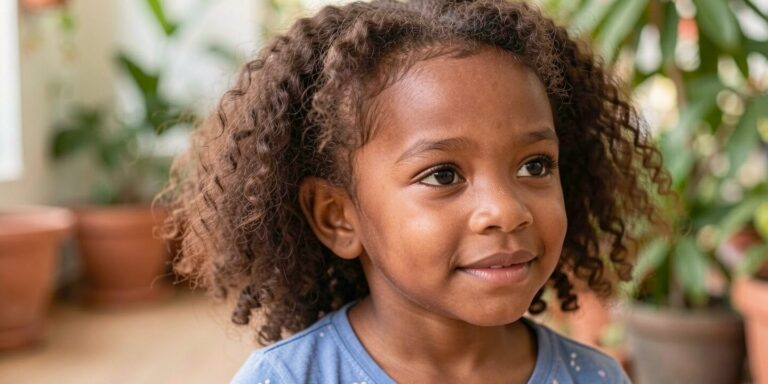

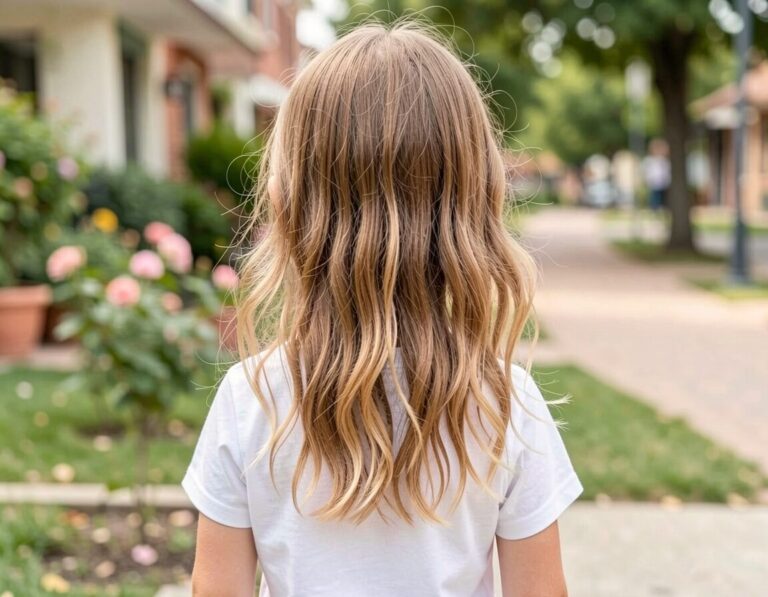
Start with a subcategory below. Each section groups styles with similar maintenance, length behavior, and finish so you can compare quickly.
Hair evolves with you. The thick, unruly mane you had at 20 won't be the same hair you have at 50, and the styles that suit each phase of life are different too - not because of arbitrary rules about what's "age-appropriate," but because texture, density, and lifestyle change genuinely over time. The best hairstyle at any age is the one that works with your current hair reality and makes you feel like yourself.
Children's hair has its own universe of considerations. Kids need styles that are comfortable, low-maintenance, and can survive a day of running, climbing, and rolling around. For young girls, braids, ponytails, and half-up styles that keep hair out of the face dominate. For boys, short cuts that require zero styling are king. The key is not traumatizing kids with painful detangling sessions - invest in a good detangling spray and a wet brush, and make hair care a calm routine rather than a battle. Little girls with natural hair benefit from protective styles that reduce daily manipulation.
In your 20s and 30s, hair is typically at its densest and most resilient. This is the time to experiment - bold colors, dramatic cuts, heat styling - because your hair can take it. Damage is more forgivable when new growth comes in thick and fast. However, this is also when many people develop heat damage habits that catch up with them later. Building good hair care practices now pays dividends in your 40s and 50s.
After 40, most people notice changes: hair gets thinner, grows slower, and may start going gray. Perimenopause and menopause accelerate these changes for women. The response isn't to cling to the same style you've worn for 20 years - it's to evolve. Shorter, layered cuts often work better with thinning hair because they create the illusion of fullness. Embracing gray (or going to a skilled colorist for a graceful transition) opens up an entirely new style chapter. After 50 and 60, the priority shifts to cuts that look polished with minimal effort, because the reality of daily styling patience usually decreases with age. That's not giving up - it's efficiency. The right cut at 60 can look more intentional and stylish than the wrong cut at 30.
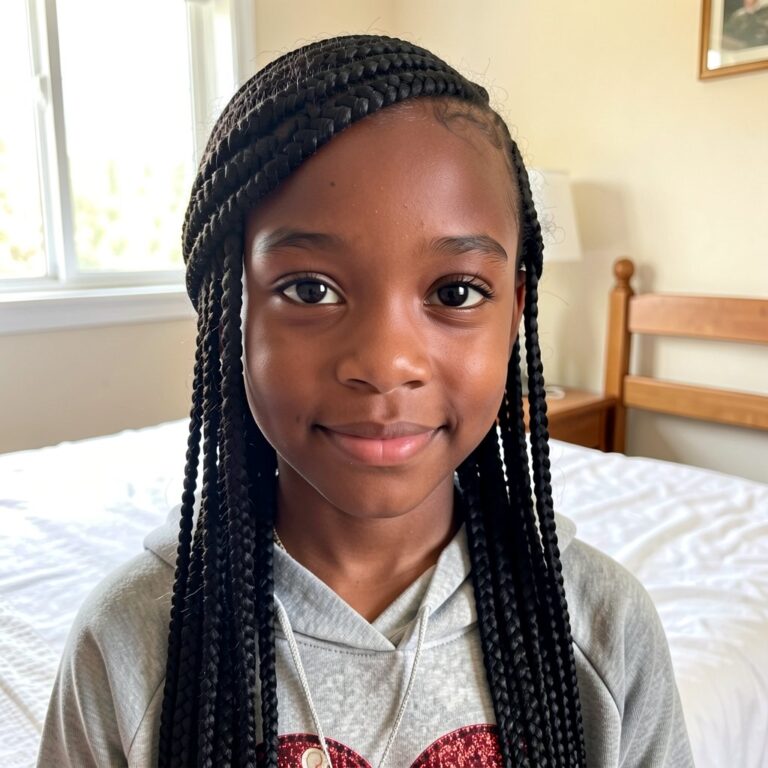
[POST: 56 Natural Hairstyles for Black Girls] The most comprehensive gallery for natural hair on young girls — covers age-appropriate protective styles, quick school-morning options, and special occasion looks.
[POST: 35 Wonderful Ideas For Little Girl Haircuts with Bangs] Bangs on kids are a whole different conversation than bangs on adults. This guide addresses the practical side — growth speed, maintenance, and age-appropriate cuts.

[POST: 30 Toddler Boy Haircuts] Parents searching for boy haircut inspiration need something practical. This collection covers everything from first haircuts to structured fades with realistic age expectations.
Little girl updos have gone quite a long way from how it was a few…
35 Wonderful Ideas For Little Girl Haircuts with Bangs Having a little girl is such…
Cute Little Girls Hairstyles When it comes to hairstyles for little girls, there are so many…
Cute Kids Hairstyles for Girls When I was a little girl, some of my favourite…
Braided Hairstyles for Little Girls My mum had a pretty hard time with me as…
30 Toddler Boy Haircuts Choosing a haircut for any kid can be tough, and when…

Cute Hairstyles for Picture Day There is only one year in age between me and…

30 Cute And Easy Little Girls Hairstyles If you’re the parent of a girl, you…
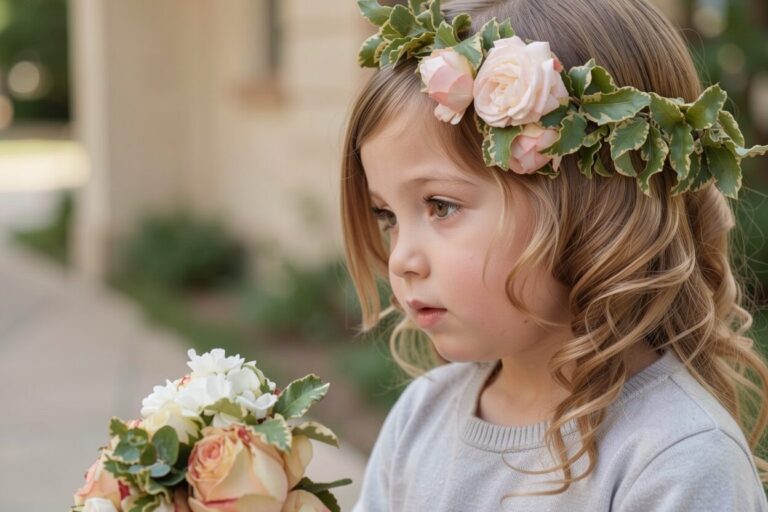
Flower Girl Hairstyles When it comes to choosing hairstyles for the big day, you can’t…
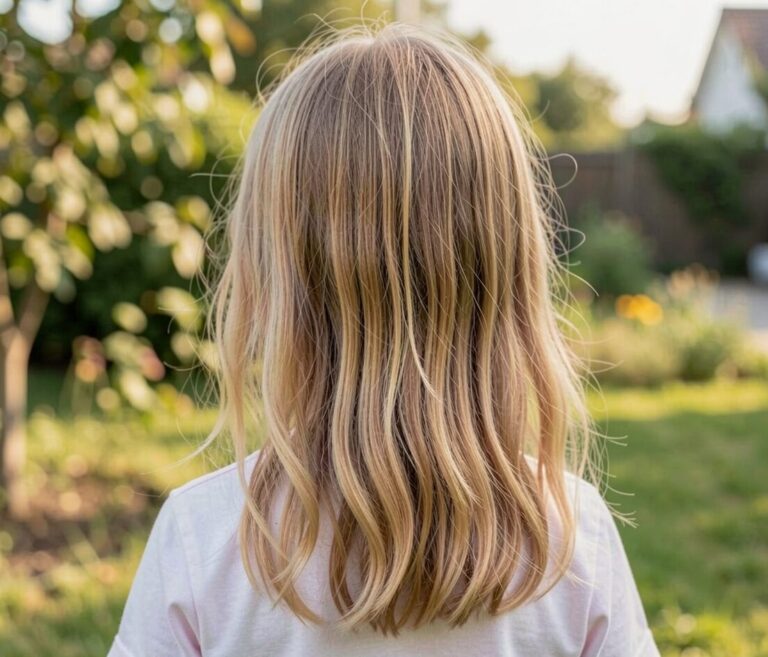
Braids For Girls Parents are often stuck between wanting their kids to look cute and…
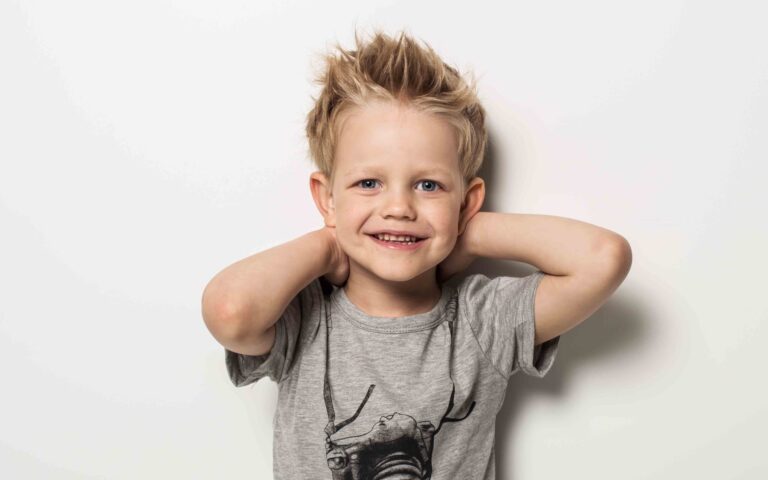
30 Little Boy Haircuts Finding the right haircut for your little boy can be tricky.…
Most children's hair can handle gentle braiding by age 3-4, once it's at least 2 inches long and past the baby-fine stage. Keep tension light — if the scalp shows redness or the child complains of pain, it's too tight. Avoid micro braids or tight cornrows on children under 7. Their hairlines are still developing and excessive tension can cause traction alopecia that may never recover. Stick to medium-to-large braids with no extensions until age 5-6.
Boys with short cuts need a trim every 3-4 weeks, especially fades which grow out noticeably after 2 weeks. Girls with longer hair can go 8-12 weeks between trims. Bangs need trimming every 3-4 weeks because even half an inch of growth is noticeable at eye level. Kids' cuts run $15-$35 at most salons. Some parents handle trims at home with decent shears ($20-$40) — fine for maintenance, but leave structured cuts to a professional.
Two-strand twists done on a Sunday night last the whole school week with minimal touch-ups. Simple cornrows in 4-6 straight-back rows take 30-45 minutes to install and last 1-2 weeks. For non-braided options: two low pigtails, a single French braid, or a slicked-back puff take under 5 minutes. Prep the night before — detangle, moisturize, and loosely braid or twist. Morning becomes just re-forming the style rather than starting from scratch. Edge control ($6-$12) keeps flyaways neat for school photos.
Not always. Kids' scalps are more sensitive, so avoid products with high alcohol content, strong fragrances, or harsh sulfates. A mild shampoo ($8-$14), lightweight conditioner, and natural oil like coconut or jojoba are all most kids need. Skip heavy gels, strong-hold hairsprays, and edge controls with alcohol — these can dry out and irritate young scalps. A light edge control and leave-in conditioner handle most children's styling needs.
Mixed-texture hair often has different curl patterns across the head — tighter curls at the nape, looser waves at the crown. Treat each section according to its own texture rather than forcing one routine on everything. Use a wide-tooth comb on wet, conditioned hair only. A curl-defining cream ($10-$18) helps all the textures clump and define together. Never brush mixed-texture hair dry — it separates curl patterns and creates frizz. Braids and twists work well across mixed textures.