
Hair Type Analyzer
Answer 6 questions about how your hair behaves and discover your exact hair type on the Andre Walker scale, from 1A to 4C.
Your hair type is the key to unlocking the right products, techniques, and styles. But most people guess their type wrong because they have never seen their hair in its fully natural state. This quiz analyzes how your hair actually behaves — not how it looks after styling — to give you an accurate Andre Walker type from 1A to 4C.
The questions focus on observable behaviors: what happens when you air dry, how a strand feels between your fingers, how your hair reacts to humidity and brushing. These behavioral markers are more reliable than visual assessment alone because they reveal the underlying structure of the hair shaft. After analyzing thousands of hair transformations in our gallery, we have refined this quiz to match professional assessment accuracy. Your result includes not just your type, but a personalized care routine and styling tips designed for your specific pattern.
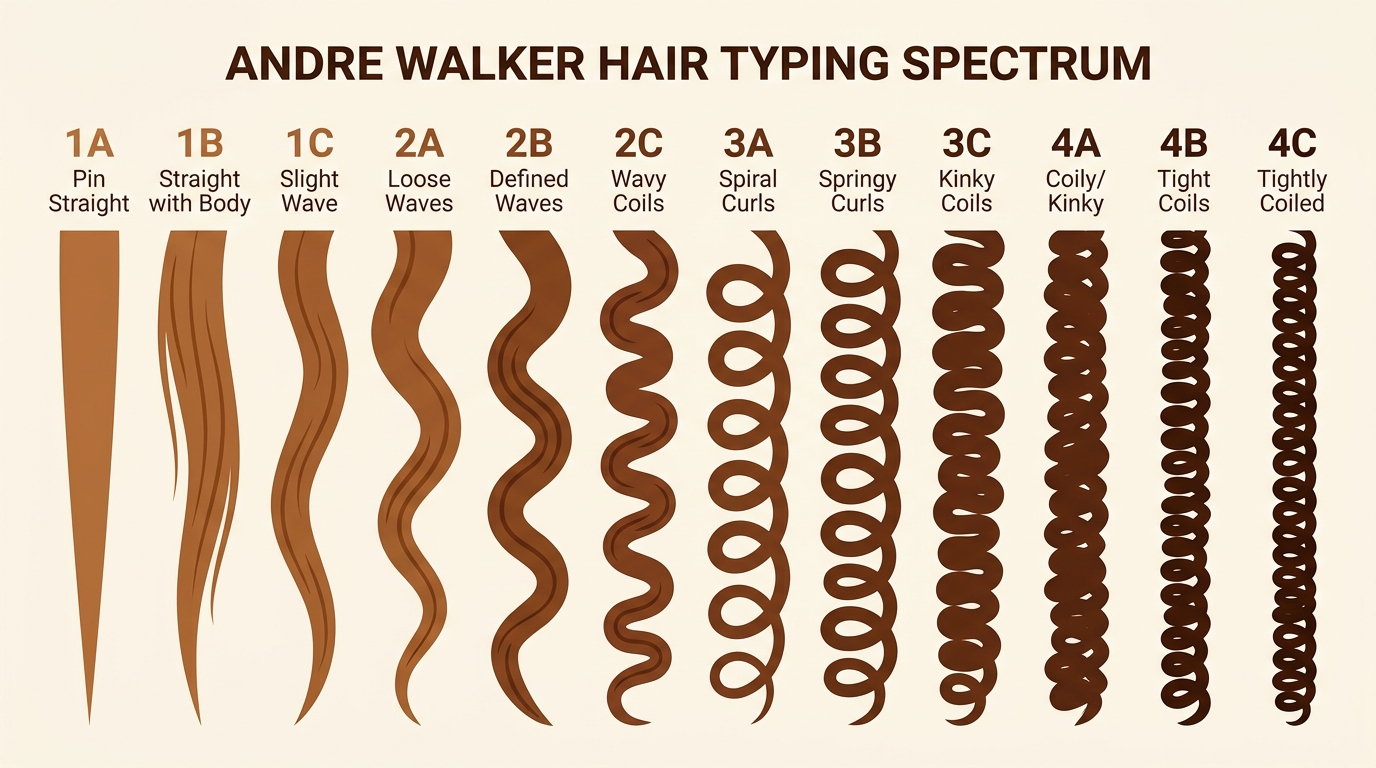
This quiz is based on the Andre Walker Hair Typing System, the most widely used hair classification method. It analyzes your hair's natural behavior — how it dries, responds to humidity, and holds shape — to determine your type on a scale from 1A (pin-straight) to 4C (tight coily). Each answer is weighted by relevance: air-dry pattern carries the most weight (3x), followed by strand feel and overnight behavior (2x each).
When your hair is wet and you let it air dry, what happens?
How does a single strand feel between your fingers?
What does your hair do overnight?
How much volume does your hair have naturally?
How does your hair react to humidity?
What happens when you brush dry hair?
The Andre Walker Hair Typing System Explained
In the 1990s, Andre Walker — Oprah Winfrey's hairstylist for 25+ years — created a simple system to classify hair. Four types, based on the natural shape of the hair shaft as it grows from the follicle. It's become the universal language of hair care. When someone says "I'm a 3B," everyone in the natural hair community instantly knows what that means. Here's the breakdown.
Type 1: Straight. Hair falls directly down with no wave, curl, or bend. Totally smooth shaft. Tends to be the oiliest type because sebum has a frictionless highway from root to tip — great for natural shine (Type 1 reflects more light than any other type), annoying for second-day hair. Subtypes range from pin-straight (1A) to straight with body (1B) to straight with slight bends (1C).
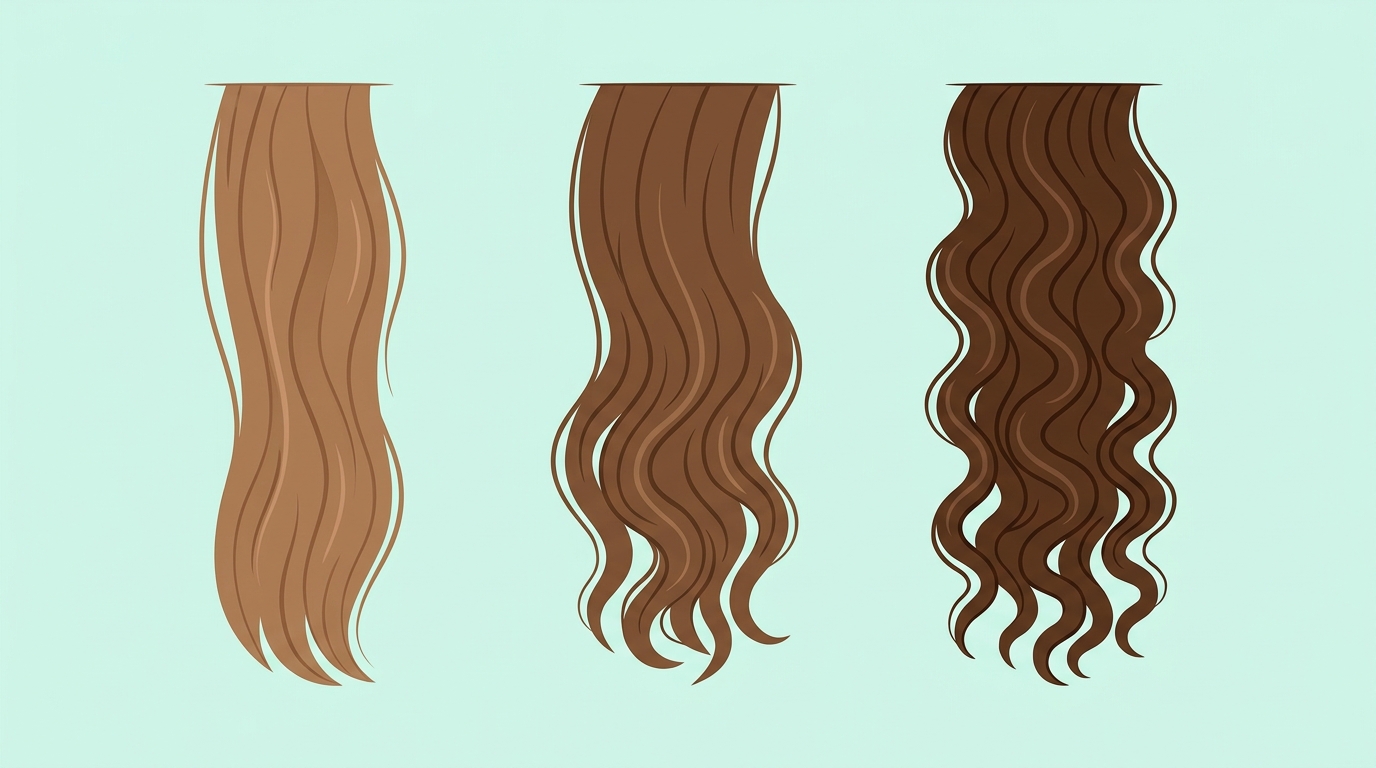
Type 2: Wavy. The S-wave crew. Not straight, not curly — somewhere in between, and the most chameleon-like type because you can style it convincingly in either direction. 2A is fine, loose waves you might not even notice on a dry day. 2B has more definition and medium texture. 2C is thick, pronounced waves that are basically curl-adjacent — and frizz is a daily conversation.
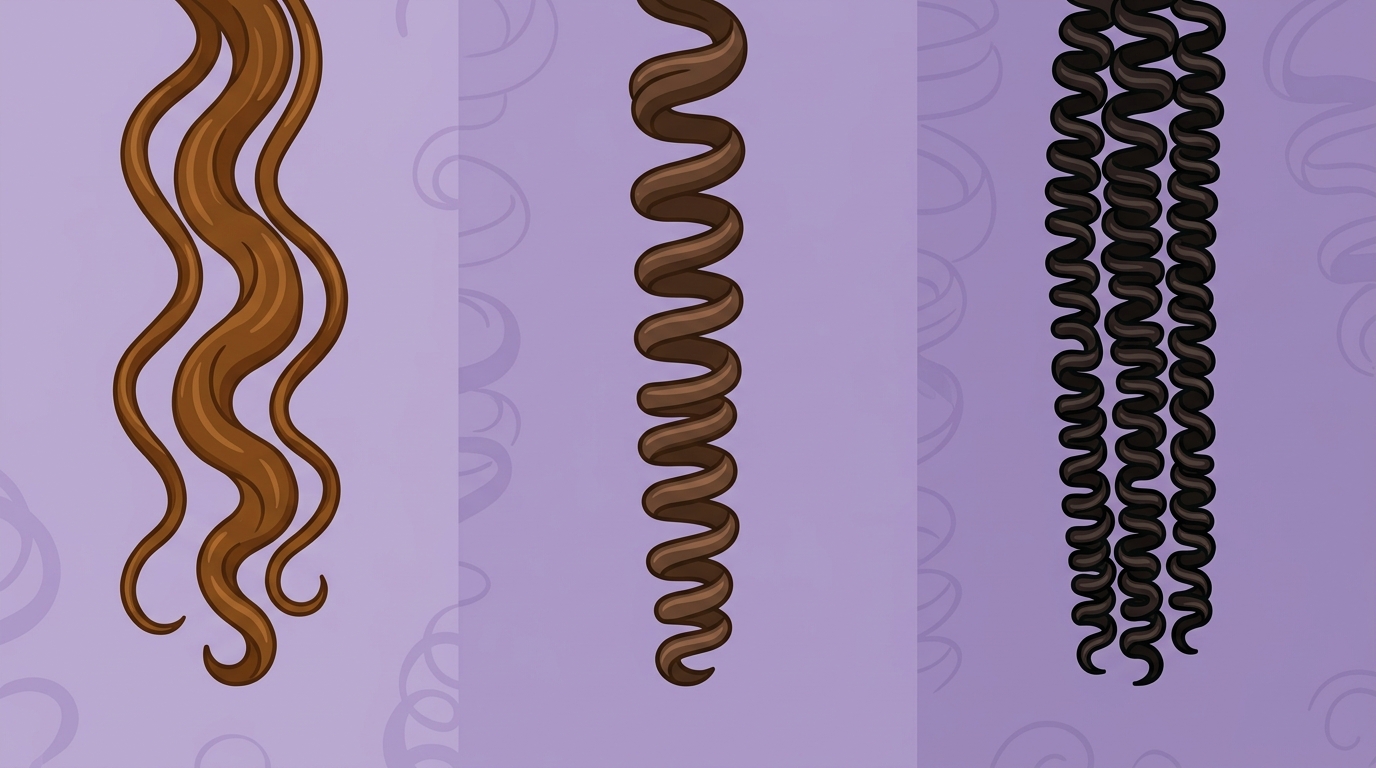
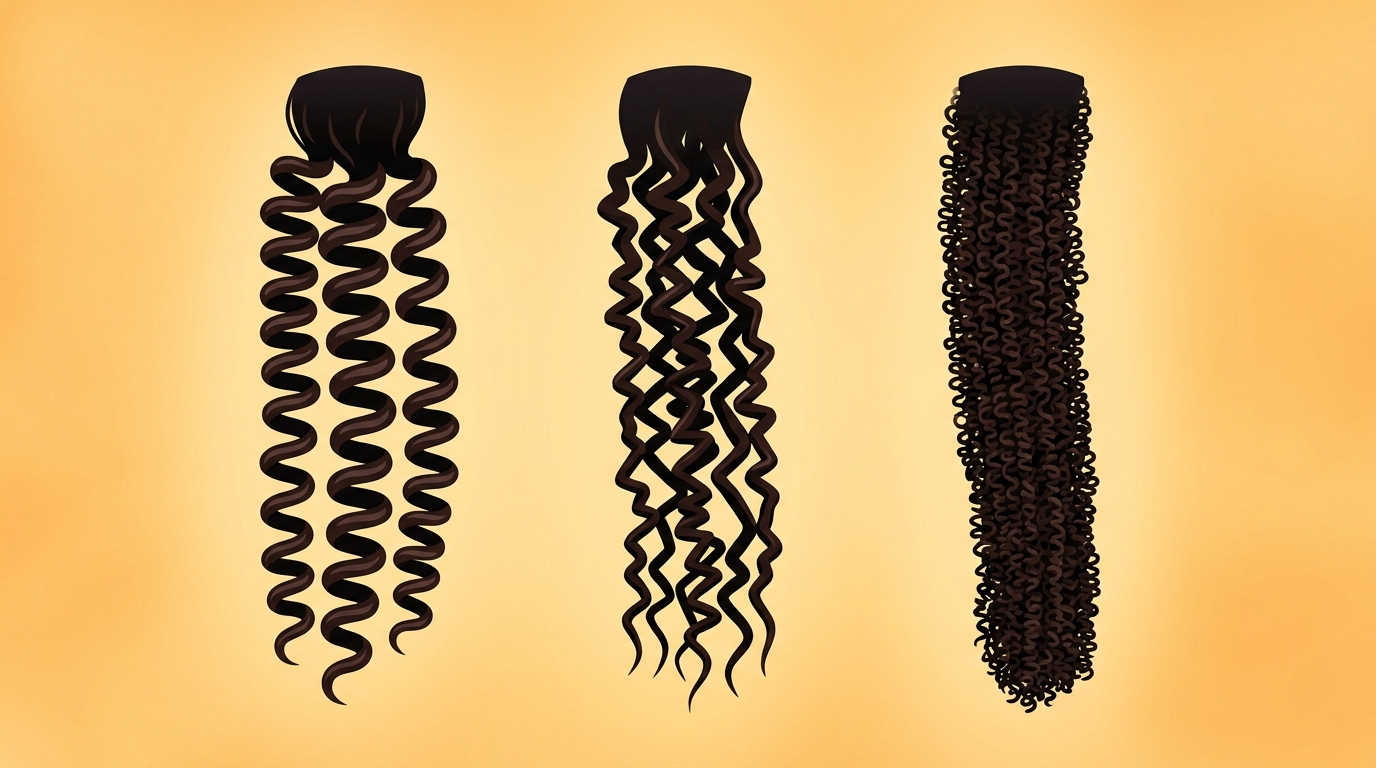
Type 3: Curly. Definite spiral curls and ringlets that are visible even soaking wet. 3A has big, loose curls roughly the diameter of sidewalk chalk. 3B? Springy ringlets about the size of a marker. 3C is tight corkscrew curls the width of a pencil or smaller. Curly hair runs dry because those bends in the shaft create friction that blocks sebum from reaching the ends. If your conditioner disappears into your hair like water into a sponge, you're probably here.
Type 4: Coily. The tightest patterns — often Z-shaped rather than S-shaped. 4A has defined coils about the size of a crochet needle. 4B has Z-shaped bends with less visible curl definition. 4C? The tightest pattern of all, with coils so small they can appear almost textureless when dry. Type 4 hair experiences the most shrinkage (up to 75% — twelve inches of stretched hair can look like three) and is the most delicate. Gentle handling isn't optional. It's everything.
The difference between subtypes within Type 2 (wavy) is more dramatic than most people expect. 2A barely holds a wave without product, while 2C has waves so defined they border on curls. This matters because 2A and 2C need completely different styling approaches and products.
Type 3 curls show even more variation across subtypes. 3A curls are loose and bouncy — think big, soft spirals. 3B curls are tighter and springier, about the diameter of a Sharpie marker. 3C curls are tight corkscrews that pack a lot of density into a smaller space.
The Limitations of Hair Typing
I'm going to be straight with you: the Walker system is helpful, but it's not the whole picture. And treating it like gospel can actually lead you astray. Here's why.
It only measures one thing — curl pattern. That's it. It tells you nothing about porosity (does your hair absorb moisture or repel it?), elasticity (how much can it stretch before snapping?), density (are you working with a thick head of hair or a sparse one?), or strand width (fine, medium, coarse). Two people can both be "3B" and have completely different care needs. Fine, high-porosity 3B and coarse, low-porosity 3B are basically different hair — but the typing system calls them the same thing.
You're probably not just one type. Most people have multiple patterns on their head. Your crown might be 3A, your nape 3C, and your edges something else entirely. Picking one type and applying it to your whole head means you're getting some sections right and others wrong. Treat different zones differently.
Real talk: the system was created to sell products. Andre Walker launched it alongside a product line. That doesn't make it useless — it's genuinely helpful as a communication shorthand. But it's not a scientific taxonomy and it shouldn't be treated as your hair's identity. Your hair is more complex than a number-letter combination.
All that said, hair typing is still worth knowing. It gives you a common vocabulary (invaluable when watching tutorials or asking for recommendations), helps you filter product reviews that are relevant to you, and connects you with people who share your specific care challenges. Just don't let it become a box.
Texture vs. Type vs. Density — What is the Difference?
These three terms get mixed up constantly, and using them interchangeably is how you end up buying completely wrong products. Let's sort this out once and for all.
Hair TYPE = curl pattern. Straight, wavy, curly, coily. That's the Andre Walker system. It describes the shape of the shaft, which comes from the shape of your follicle. Round follicles = straight hair. Oval follicles = waves and curls. Highly asymmetrical follicles = coils. This is genetic and permanent (you can temporarily alter it with heat or chemicals, but it always grows back the way your follicles are shaped).
Hair TEXTURE = strand thickness. How wide is a single strand? Fine strands are thinner than sewing thread — almost invisible individually. Medium strands match thread width. Coarse strands are noticeably thick and often feel wiry. This matters because fine hair gets weighed down by heavy products, while coarse hair barely notices them. Fine hair heats faster (lower iron temps needed), coarse hair resists styling (higher temps, more product). Same type, different textures = different product needs.
Hair DENSITY = how many strands per square inch. This is the mind-bender: you can have fine hair with HIGH density (tons of thin strands = looks thick overall) or coarse hair with LOW density (fewer thick strands = looks thinner than you'd expect). Density affects how much product you need, how long your hair takes to dry, and how you section it for styling. Check yours: can you easily see your scalp through your hair? Lower density. Can't see scalp at all? High density.
For the full picture of your hair, you need all three. Our quiz handles type. For texture, pull out a single strand and roll it between your fingers — if you can barely feel it, it's fine; if it feels like wire, it's coarse. For density, look at your natural part — lots of visible scalp means lower density, barely any scalp visible means high density. Now you've got the complete profile.
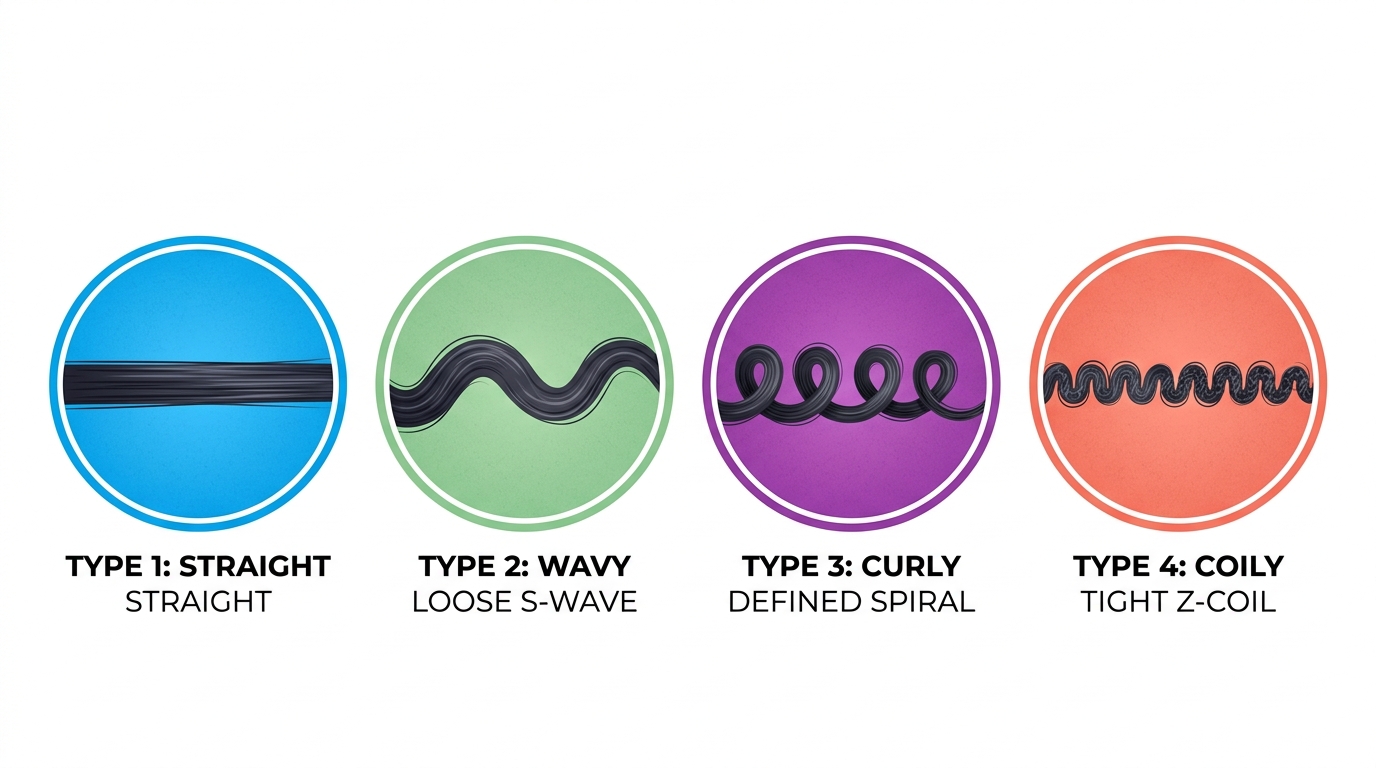
Type 4 hair has the most variation and is often the most misunderstood. 4A has clearly defined coils, 4B bends in sharp Z-shaped angles rather than spirals, and 4C has the tightest pattern with coils so small they may not be visible without close inspection. All three subtypes share one thing: incredible versatility in styling.
Frequently Asked Questions
Now that you know your hair type, see how different styles look on you.
Try On Hairstyles