
Hair Growth Calculator
See exactly how long it will take to reach your dream length — personalized to your hair type.
If you've ever stared at your hair wondering "when will this grow out?" — we built this for you. Hair growth isn't one-size-fits-all. Your genetics, hair type, age, and habits all play a role. The average rate is about half an inch per month, but that number can vary wildly.
Type 4 coily hair, for example, may appear to grow slower because of shrinkage — the strand is growing, it just coils up tighter. Straight hair shows its length immediately. This calculator uses growth rates adjusted for hair type, so you get a realistic timeline, not a generic estimate. We also factor in common setbacks like heat damage and chemical processing that can slow growth. The result? A personalized timeline that actually matches reality. I've been tracking hair growth data across thousands of transformations in our gallery, and the patterns are clear: patience plus proper care equals results. This tool gives you the numbers so you know what to expect.
This calculator uses clinically established average hair growth rates adjusted by hair type and health. Straight hair (Type 1) grows approximately 0.5 inches per month, wavy hair (Type 2) at 0.48 inches, curly hair (Type 3) at 0.45 inches, and coily hair (Type 4) at 0.42 inches. A health modifier reduces the effective growth rate for damaged hair. The calculator divides the difference between your current and target length by your adjusted monthly rate to estimate months to goal.
Your Hair Growth Timeline
Growth Timeline
Tips for Your Hair Type
How Hair Actually Grows — The Science
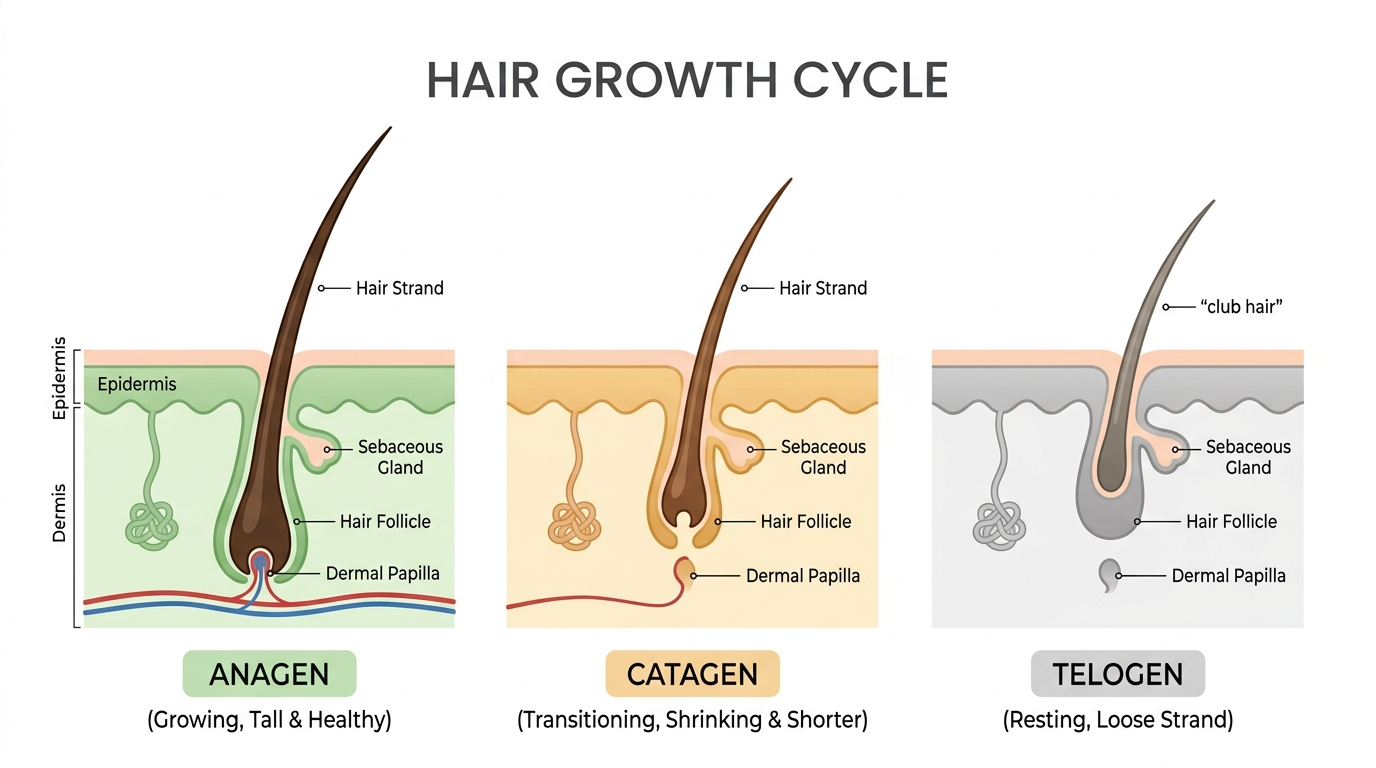
Every single hair on your head is living through a three-act cycle right now. Understanding this cycle explains everything — why hair grows at the speed it does, why some people hit waist-length effortlessly while others can't seem to get past their shoulders, and why your grandmother's advice about "making hair grow faster" is mostly wrong.
Anagen Phase (Active Growth): 2-7 Years
This is the main event. Cells in your hair bulb are dividing like crazy, pushing the shaft longer every day. Here's the critical part: how long your anagen phase lasts is mostly genetic, and it's the single biggest factor in how long your hair can actually get. Quick math — if your anagen lasts 2 years and you grow 6 inches per year, your max length is about 12 inches. If you got lucky with a 7-year anagen phase? That's 42 inches of potential length. Right now, 85-90% of the hair on your head is in anagen. The rest is taking a break.
Catagen Phase (Transition): 2-3 Weeks
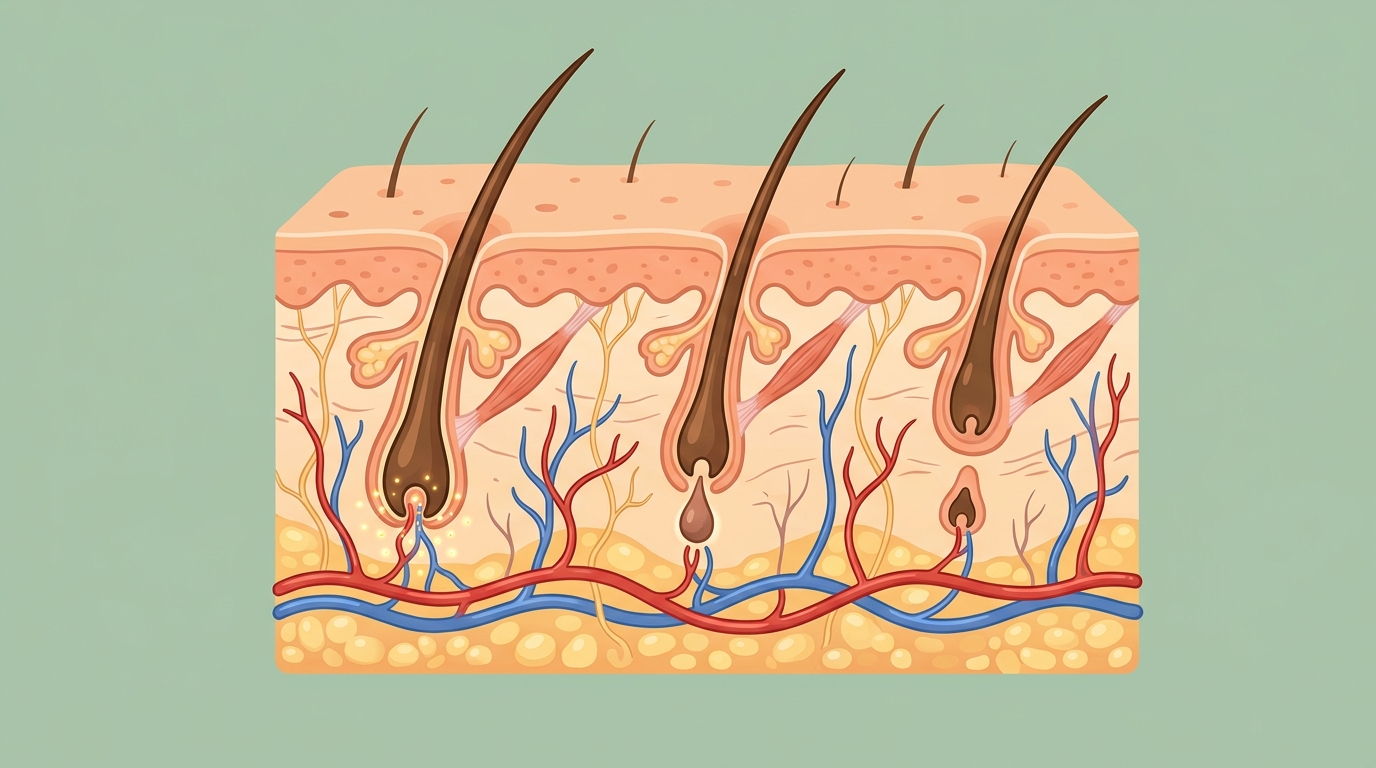
When a hair finishes growing, it enters catagen — basically, the follicle hits the reset button. The follicle shrinks, the hair disconnects from its blood supply, and growth stops cold. Only about 1% of your hair is in this phase at any given time. It's quick, quiet, and you'll never notice it happening.
Telogen Phase (Rest and Shed): 3-4 Months
The hair hangs out in the follicle for a few months, then falls out. If you're finding 50-100 hairs on your pillow or in your shower drain — relax, that's completely normal telogen shedding. After the old hair drops, the follicle fires back up into anagen and a new hair starts growing. About 10-15% of your hair is resting at any time.
So what's terminal length? It's your growth rate multiplied by how long your anagen phase lasts. That's your genetic ceiling. You can't extend it with products or supplements. But here's what you absolutely can control: whether you reach that ceiling. Most people fall short not because their hair won't grow, but because it breaks before it gets there. Healthy hair that doesn't break = hitting your full potential.
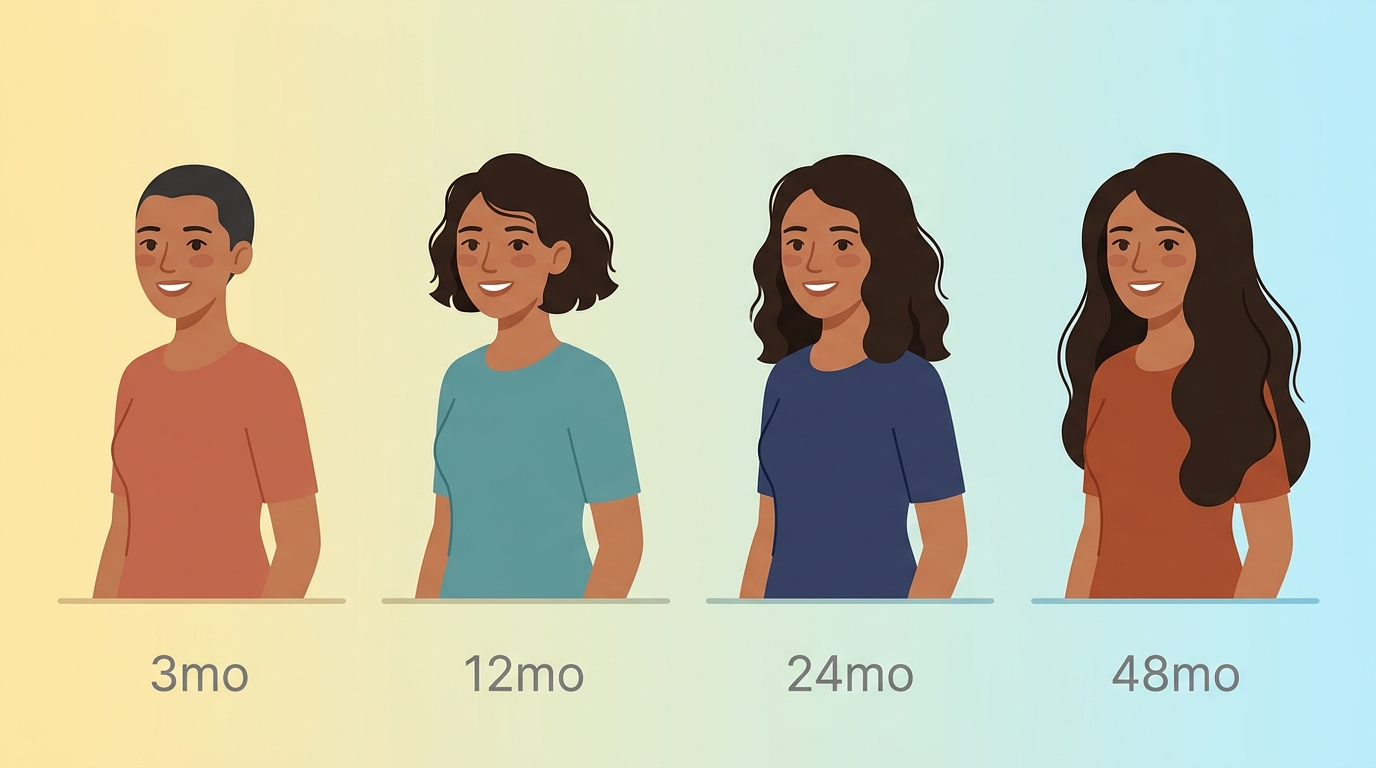
Average growth rate: about 6 inches (15 cm) per year. But "average" masks a wide range — some people grow 4 inches, others grow 8. Genetics, hormones, nutrition, ethnicity, and age all play a role in where you land.
Factors That Affect Your Growth Rate
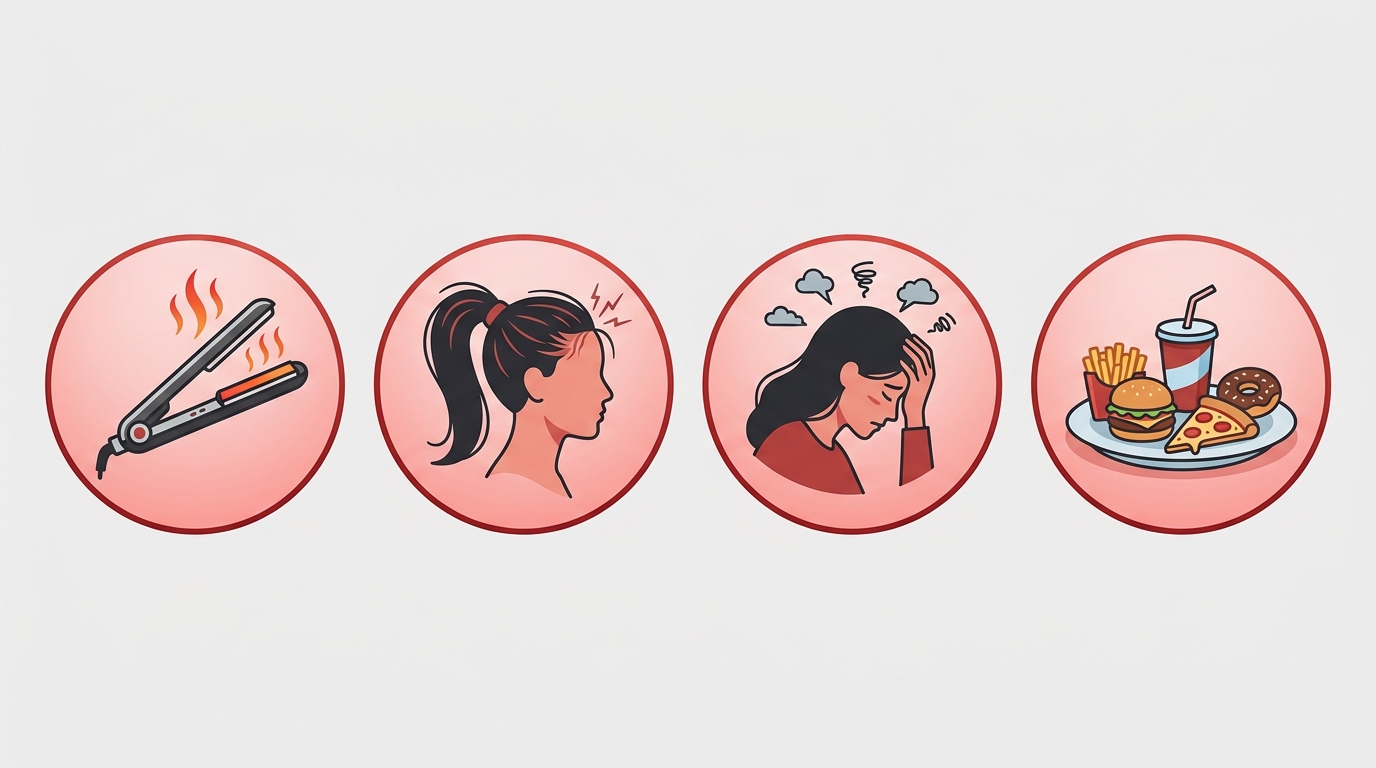
Genetics set the baseline, but they're not the whole story. A bunch of factors — some you can control, some you can't — determine whether you're growing 4 inches a year or 8. Some of these habits are sneaky growth killers that most people don't even realize they're doing.
Genetics
The biggest factor, full stop. Your DNA determines your anagen phase length, strand thickness, follicle density, and baseline growth rate. Look at your parents and grandparents — if they grew long hair easily, odds are you can too. If long hair has always been a struggle in your family, you might have a shorter anagen phase. That's not a problem to solve, it's just biology. Work with what you've got.
Age
Growth peaks in your teens and twenties, then gradually slows. After 30, anagen phases may start shortening. After 50, the slowdown becomes more noticeable, and individual strands often get finer. This is why hair that reached your waist at 20 might max out at your shoulders at 55. Totally normal — but good nutrition and care can help you squeeze every bit of growth potential out of your genetics at any age.
Nutrition
Your hair is basically made of protein (keratin), so not eating enough protein literally starves your follicles. The key nutrients: iron (delivers oxygen to follicles), biotin/B7 (fuels keratin production), zinc (tissue repair), vitamin D (follicle cycling), and omega-3s (scalp health). Here's the thing nobody talks about — crash diets are one of the fastest ways to trigger massive hair shedding. Severe caloric restriction can push hundreds of follicles into telogen simultaneously. If you've ever lost a ton of hair 2-3 months after a strict diet, that's why.
Heat and Chemical Damage
Flat irons, blow dryers, curling wands, relaxers, bleach, permanent color — they all weaken the shaft. Important distinction: this damage doesn't slow growth at the root. Your hair is still growing at the same rate. But it's snapping off before it can accumulate length. Think of it like filling a bathtub with the drain open. Keep heat below 350F (175C), always use a protectant, and air-dry when you can.
Scalp Health
Your scalp is where hair is born. Clogged follicles, crusty buildup, dandruff, inflammation — all of these can choke off growth before it starts. Think of it as soil quality for a plant. Regular washing, occasional scalp exfoliation, and not drowning your roots in heavy products keeps the environment clean.
Stress
Chronic stress can trigger telogen effluvium — a fun medical term for "a ton of your hair simultaneously decides to fall out." It usually shows up 2-3 months after a major stressor (job loss, breakup, illness, grief). Terrifying when it happens, but the good news: it's almost always temporary. Once stress normalizes, the follicles restart and hair grows back.
Hormones
Pregnancy hair is the real deal — elevated estrogen keeps more follicles in anagen, which means thicker, more voluminous hair for nine months. The downside? Post-partum shedding, when all those "extra" hairs finally enter telogen at once. It looks dramatic but it's your body resetting to baseline. Thyroid disorders, PCOS, and menopause can also significantly alter growth patterns — if you notice sudden changes, talk to your doctor before blaming your shampoo.
Hair Growth by Type — What to Expect
Type 1 — Straight Hair
Straight hair is the easiest to measure and track because what you see is what you get — zero shrinkage. Hair hangs straight down, showing every millimeter of growth. At about 0.5 inches per month, expect roughly 6 inches of visible new length per year. Sebum glides down the smooth shaft easily (great for moisture, annoying for oil control), and tangling is minimal. Length retention is usually the least stressful with straight hair — the structure just doesn't fight itself.
Type 2 — Wavy Hair
Wavy hair grows at nearly the same rate — about 5.8 inches per year — with barely noticeable shrinkage (5-10% from those gentle S-waves). For practical purposes, tracking growth is almost identical to straight hair. The main challenge? Frizz. Frizzy hair tangles, tangled hair breaks, broken hair doesn't retain length. Keep the moisture balanced, use a wide-tooth comb (never brush wavy hair dry), and you'll keep that length.
Type 3 — Curly Hair
Here's where the "my hair won't grow" myth starts to creep in. Type 3 curly hair grows at the exact same cellular rate as straight hair. The difference is shrinkage — curls hide 20-30% of your true length. Pull a 10-inch curl straight and it looks 10 inches. Let it spring back and it looks 7. That's not slow growth, that's geometry. The real enemy is dryness. That spiral shape makes it tough for sebum to travel from root to tip, so ends get dry, brittle, and snap off. Deep conditioning is non-negotiable. Leave-ins are your daily essential. The LOC method (liquid, oil, cream) locks in moisture where you need it most.
Type 4 — Coily Hair
Let's kill this myth right now: Type 4 hair grows at the same rate as every other type. The reason it doesn't seem like it? Shrinkage. Up to 75% shrinkage in tight 4C patterns. That means 12 inches of stretched hair might look like 3 inches when coiled up. Three inches. If you're only judging by how your hair looks in the mirror, you're underestimating your growth dramatically. Always measure stretched length. The other reality: Type 4 is the most fragile texture. Those tight coils create stress points where breakage loves to happen. Low-manipulation is the name of the game — protective styles (braids, twists, locs), satin pillowcases and bonnets, minimal heat, generous moisture. People who think their Type 4 hair "won't grow past a certain point" are almost always dealing with breakage, not slow growth. Fix the breakage and watch the length accumulate.
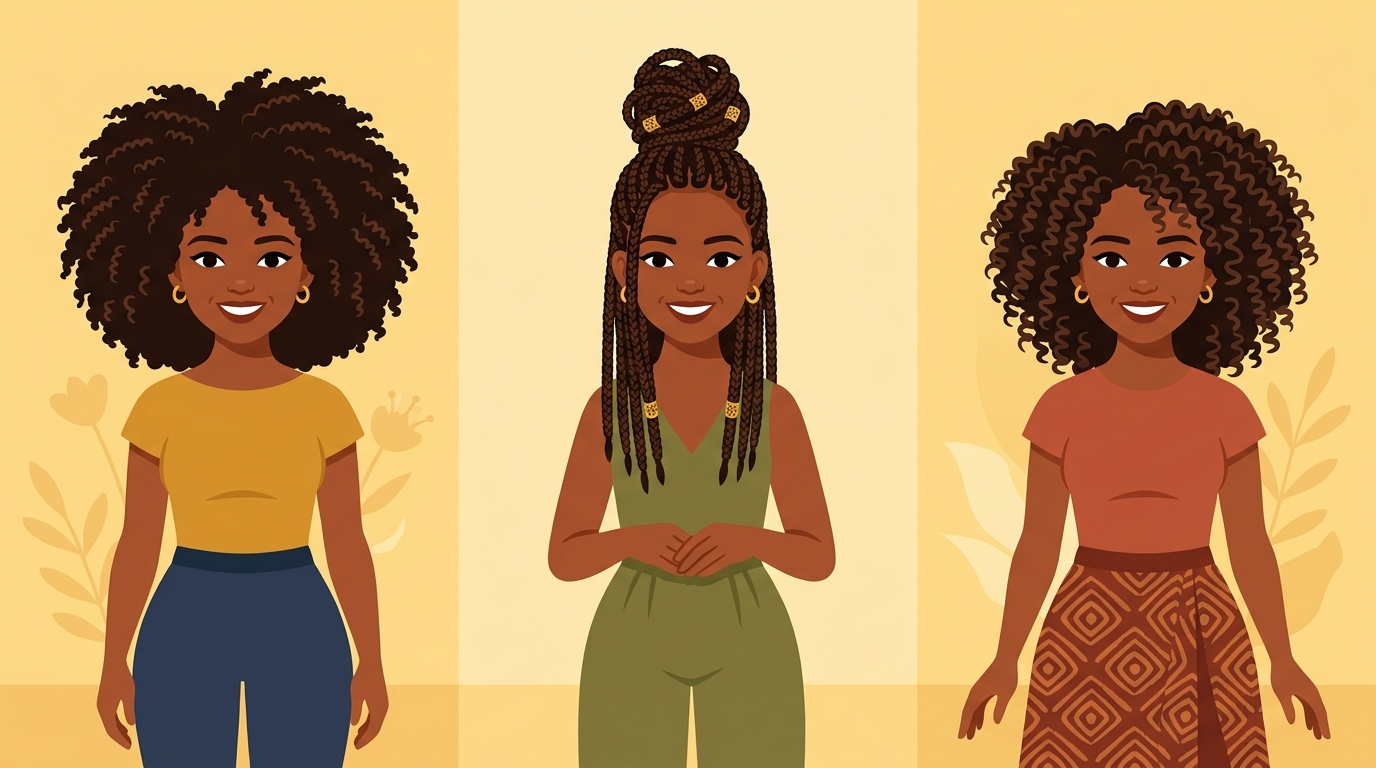
For Type 3 and especially Type 4 hair, protective styling is the single most effective strategy for length retention. Braids, twists, and updos tuck fragile ends away from friction, weather, and daily manipulation — letting your hair accumulate length instead of losing it to breakage.
7 Evidence-Based Tips to Maximize Growth
- Massage your scalp daily (4-5 minutes). This is the most underrated growth hack. Gentle circles with your fingertips boost blood flow to follicles, delivering more oxygen and nutrients. A 2016 study published in Eplasty found thicker hair after just 24 weeks of 4-minute daily massage. Skip the expensive scalp massager gadgets — your fingers work perfectly fine.
- Ditch the heat (or at least protect against it). Every time you flat-iron above 350F (175C), you're literally forming tiny bubbles inside the hair shaft that weaken its structure. Always use a heat protectant — it's not optional, it's insurance. And here's the uncomfortable truth: air drying is always safer. If you can do it, do it.
- Try protective styling. Braids, twists, buns, bantu knots — anything that tucks your ends away from friction and the elements. This is especially huge for Type 3 and 4 hair, where daily combing and detangling can cause real breakage. One warning: keep it loose. Too-tight braids cause traction alopecia, which is permanent hair loss at the edges. Snug, not tight.
- Balance protein and moisture. Hair needs both — protein for strength, moisture for elasticity. The symptoms are opposite: too much protein = straw-like, snappy, brittle hair. Too much moisture = limp, gummy, stretchy hair that breaks differently. Quick diagnostic: if it feels like straw, add moisture. If it feels like overcooked spaghetti when wet, add protein.
- Switch to a satin or silk pillowcase. This single change can make a dramatic difference in length retention, especially for textured hair. Cotton creates friction that roughs up the cuticle every night for 8 hours. Satin or silk lets hair glide. A satin bonnet works too. This is the highest-ROI habit change on this entire list — cheap, easy, zero effort.
- Trim strategically. Sounds backward, but hear me out. A quarter-inch trim every 10-12 weeks keeps split ends from traveling up the shaft and causing bigger breaks. Skip trims for a year and you'll often need to cut 2-3 inches at once — erasing months of growth. Think of trims as maintenance, not loss.
- Eat for your hair. Biotin sources: eggs, nuts, sweet potatoes. Iron: spinach, lentils, red meat. Omega-3s: salmon, walnuts, flaxseed. And don't skimp on protein — keratin is a protein, and your body will divert amino acids away from hair growth if you're not eating enough. Supplements can fill gaps if you have a diagnosed deficiency, but real food is always better. Talk to your doctor before popping pills.
Common Hair Growth Myths — Busted
"Cutting hair makes it grow faster"
Nope. Not how it works. Growth happens at the follicle, which is buried under your scalp. The follicle has no idea what's happening at your tips — it can't tell if you trimmed yesterday or three years ago. So why do stylists keep pushing trims? Because trimming removes split ends before they travel up the shaft and cause worse breakage higher up. Trims help you keep more length, but they don't create new length. Your hair grows at the exact same rate whether you trim it religiously or never touch it.
"Hair grows faster in summer"
There's actually a tiny grain of truth buried in this one. Warmer temperatures increase blood circulation, which could marginally boost nutrient delivery to follicles. A few studies show slightly higher growth rates in summer. But we're talking fractions of a millimeter per month — so small it's basically irrelevant for planning. You're not going to grow an extra inch by spending August at the beach. What you will notice seasonally is shedding patterns — many people shed more in fall as hairs that entered telogen during summer finally drop.
"Prenatal vitamins make hair grow faster"
This is a misattribution. Prenatal vitamins contain biotin, folic acid, and iron — all great for hair. If you're deficient in any of those, supplements will help. But if your diet's already solid, popping extra biotin won't speed up your follicles. The gorgeous thick hair pregnant women get? That's not the vitamins — it's elevated estrogen keeping more hairs in anagen simultaneously. After delivery, those hairs exit anagen all at once, which is why post-partum shedding feels so alarming. It's not damage. It's just delayed normal shedding happening all at once.
Frequently Asked Questions
The average rate is about 0.5 inches (1.25 cm) per month, or roughly 6 inches per year. However, this varies significantly between individuals based on genetics, age, health, and hair care practices. Some people grow as little as 4 inches per year while others can grow up to 8 inches.
All hair types grow at roughly the same cellular rate. The difference is in apparent length gain. Straight hair (Type 1) shows its full length immediately, while coily hair (Type 4) can experience up to 75% shrinkage, making it appear to grow much slower. When stretched, Type 4 hair is often much longer than it appears.
You cannot change your genetics, but you can remove barriers to healthy growth. Focus on scalp health, minimize heat damage, maintain a balanced diet rich in protein, iron, and biotin, reduce stress, and protect your hair from breakage. These steps won't speed up growth beyond your natural rate, but they prevent the damage that makes hair appear to grow slowly.
Our estimates are based on clinical averages adjusted for hair type and health condition. Individual results may vary by 10-20% depending on factors like genetics, age, nutrition, and hair care routine. Use the results as a realistic guideline rather than an exact prediction. Tracking your own growth monthly will give you the most accurate personal data over time.
Your hair has a terminal length determined by your anagen (growth) phase duration. If your anagen phase lasts 3 years and your hair grows 6 inches per year, your terminal length is about 18 inches. Hair that reaches terminal length enters the shedding phase before it can grow longer. Additionally, breakage from damage can create the illusion that hair stopped growing when it's actually breaking off at the same rate it grows.
Damaged hair doesn't technically grow slower at the root, but it breaks more easily, which reduces length retention. If your hair grows half an inch per month but breaks off a quarter inch, your net gain is only a quarter inch. That's why our calculator includes a damage modifier — not because damage slows growth at the follicle, but because it reduces how much length you actually keep.
While you're growing your hair, explore what different styles look like on you.
Try On Hairstyles →