
Hair Porosity Test
Discover how well your hair absorbs and retains moisture — and get personalized care tips based on your results.
You can have the most expensive products on your shelf, but if you don't know your hair's porosity, you're guessing at what actually works. Porosity determines how your hair absorbs moisture, holds color, responds to heat, and reacts to humidity. It's the single most important factor most people never test.
Most online porosity tests tell you to drop a strand of hair in water and watch if it floats or sinks. That method is deeply flawed — surface tension, product residue, and strand thickness all skew the results. Our quiz takes a different approach: instead of one unreliable physical test, we evaluate how your hair actually behaves across eight real-world scenarios. Drying time, product absorption, color retention, humidity response — these behavioral signals are far more reliable indicators of your true porosity level. I designed this test after analyzing thousands of hair transformations in our gallery and seeing how porosity directly impacts which products and routines actually deliver results. The answers you give will place you on the porosity spectrum and give you specific, actionable care recommendations.
This test evaluates your hair porosity through 8 behavioral questions about how your hair interacts with water, products, and heat. Porosity describes how easily moisture passes through the hair cuticle. Each answer scores 1 (low porosity indicator), 2 (medium), or 3 (high). Your total score maps to a porosity level: 8-12 is low porosity (tightly sealed cuticle), 13-19 is medium (balanced), and 20-24 is high porosity (raised or damaged cuticle). Results include targeted care tips and ingredient recommendations for your specific porosity level.
How long does your hair take to air dry?
When you apply products, how does your hair react?
How does your hair react to water?
How often do you need to moisturize?
How does hair color hold?
How does your hair feel after a shower?
How does humidity affect your hair?
How does your hair respond to heat styling?
Your Hair Porosity Result
Care Tips for Your Porosity
Key Ingredients to Look For
What Is Hair Porosity?
So here's the thing about porosity: it's the most important hair property that almost nobody knows about. Face shape gets all the attention. Hair type has its own viral quizzes. But porosity? It quietly determines whether your expensive conditioner actually works or just sits on top of your hair doing nothing.
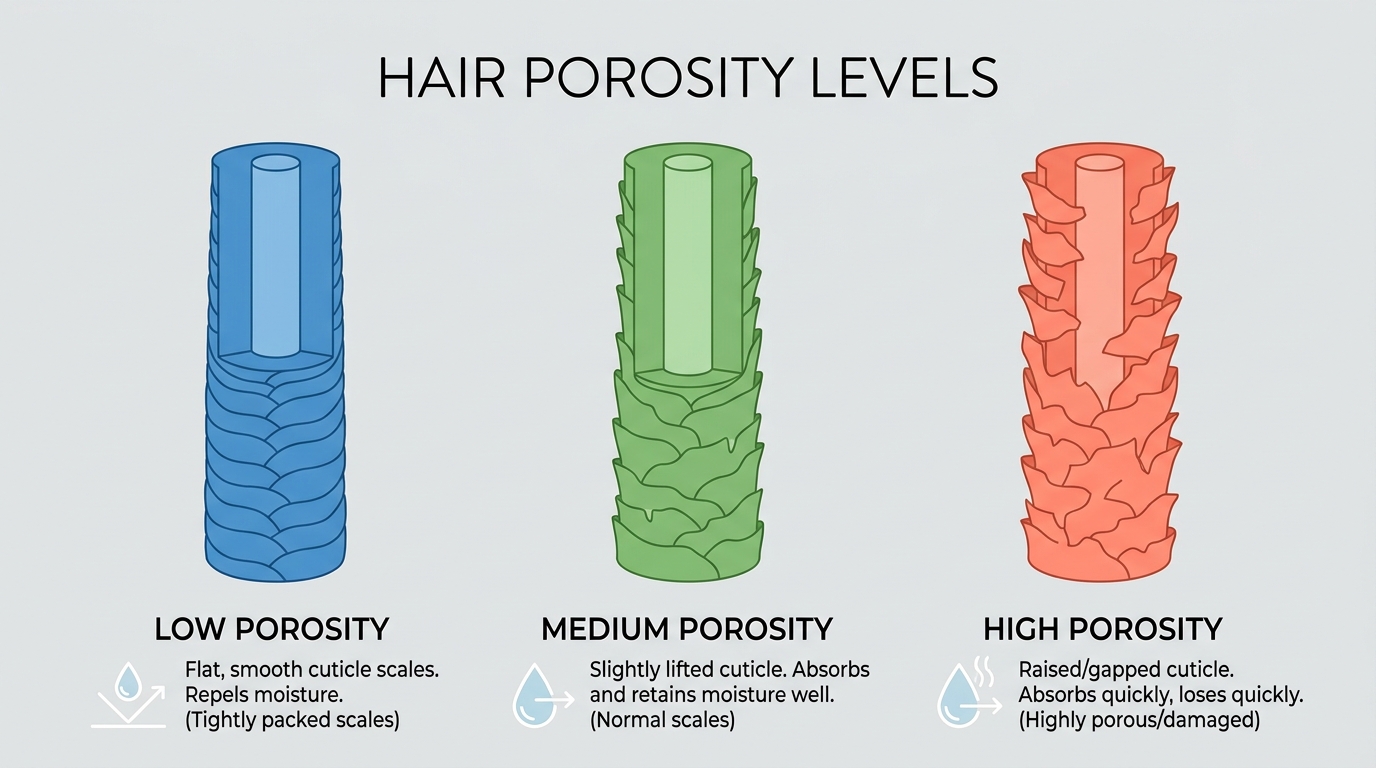
Porosity is about the cuticle — the outermost layer of each strand, made up of tiny overlapping scales (picture roof shingles). When those scales lie flat and tight, moisture has a hard time getting in. When they're raised and loose, moisture floods in — and floods right back out. That one variable controls everything: how long your hair takes to dry, whether products absorb or slide off, how color holds, how frizzy you get in humidity.
Low Porosity Hair
Tight, flat cuticle scales that create an almost waterproof surface. If it takes you forever to fully wet your hair in the shower, and then forever again to dry it — that's low porosity. Products love to just sit on top and look at you. The upside? Once moisture actually gets in, low porosity hair holds onto it like a vault. And the flat cuticle reflects light beautifully, so you're basically getting free shine. The key is learning how to open that cuticle enough to let products in (warm water, steam treatments, lightweight formulas).
Medium (Normal) Porosity Hair
The goldilocks zone. Cuticle sits just loose enough to absorb products without gulping them down. Color processes predictably. Styling holds well. Products do what they're supposed to do. If this is you, congrats — you have the most low-maintenance porosity level. You don't need specialized products or complex routines. Most off-the-shelf products work fine. The main risk is damaging your cuticle through heat or chemicals and shifting into high porosity territory.
High Porosity Hair
The cuticle is raised, gapped, or roughed up — either from genetics or (more commonly) from years of bleaching, flat-ironing, relaxing, or environmental damage. Hair absorbs water instantly, which sounds great until you realize it dumps that moisture just as fast. Five minutes after deep conditioning? Dry again. Color fades in weeks instead of months because the open cuticle can't trap pigment. Humidity turns you into a frizz cloud because your hair sucks up atmospheric moisture like a sponge. High porosity is manageable, but it requires strategy — heavier products, sealant oils, and techniques that close the cuticle down.
Bottom line: if you don't know your porosity, you're buying products blind. Every choice — from shampoo weight to styling technique — should factor in how your hair handles moisture.
Why the Float Test Is Unreliable
Honestly? The float test is garbage. And I know that's a bold statement because it's literally the first result on every "how to test your hair porosity" article on the internet. But it needs to be said.
The float test goes like this: drop a clean strand of hair in a glass of room-temperature water. Wait a few minutes. If it floats, low porosity. Sinks slowly, medium. Sinks immediately, high. Sounds elegant. Sounds scientific. It's neither.
Why it doesn't work
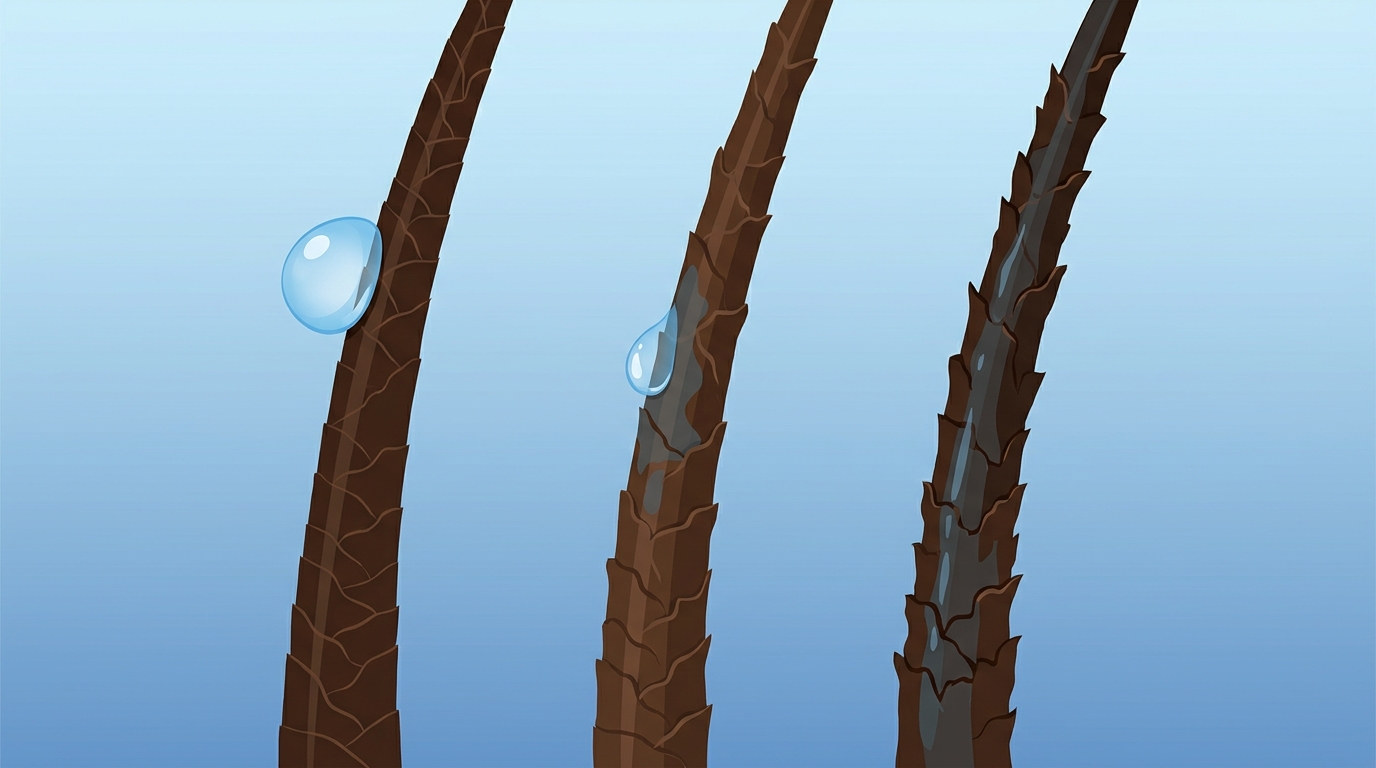
The premise is that porous hair absorbs water and gets heavier, so it sinks. Reasonable enough — except a dozen variables make this completely useless in practice. Surface tension alone can keep even extremely high-porosity hair floating indefinitely. Water molecules bond to each other and resist being pushed apart by something as light as a single strand. Product residue — even from your "clarifying" shampoo — creates a hydrophobic layer that repels water regardless of your actual cuticle condition. Sebum does the same thing. Strand thickness introduces mass as a variable: thick hair sinks faster because it weighs more, full stop, nothing to do with porosity. And water temperature changes surface tension, so the same strand can float in cooler water and sink in warmer water. You're not measuring porosity. You're measuring physics that has nothing to do with porosity.
What science actually says
Zero peer-reviewed studies validate the float test. None. Real porosity measurement involves electron microscopy of the cuticle layer or controlled moisture absorption studies in a lab. Not a Dixie cup on your bathroom counter. Trichologists and cosmetic chemists actively discourage the float test because it gives people the wrong answer and sends them down the wrong product path.
What actually works
Behavioral observation over time. How fast does your hair dry? How does it respond to products after days and weeks of use? Does color hold or fade fast? Does humidity turn you into a frizz monster? These real-world patterns are far more reliable than a 30-second experiment. That's exactly what our quiz measures — eight questions based on how your hair actually behaves, not how a strand floats in a glass.
Care Routines by Porosity Level
Low Porosity Care Routine
Your cuticle is basically Fort Knox. Getting moisture in is the whole challenge. Heat is your secret weapon — warm water opens the cuticle just enough for products to slip through. Apply deep conditioner under a hooded dryer, heated cap, or even a steamy shower. This is non-optional for low porosity hair. Product choice matters enormously: skip the thick butters and heavy oils. They'll sit on top of your hair and create a waxy buildup that blocks even more moisture. Go lightweight and liquid-based — water-first formulas, light sprays, thin leave-ins. Clarify once a month to strip away accumulation (the single biggest problem for low porosity hair). The LOC method (Liquid, Oil, Cream) works best because it leads with the ingredient that penetrates most easily.
Medium Porosity Care Routine
You won the porosity lottery. Your cuticle absorbs products without gulping them down, holds moisture without dumping it, and processes color predictably. Your job is simple: don't mess it up. Deep condition every two weeks. Alternate protein and moisture treatments based on how your hair feels — straw-like means more moisture, limp and stretchy means more protein. You've got the widest product range of any porosity level, so don't overthink it. The one real threat is heat and chemical damage pushing you into high porosity. Moderate your flat iron usage and you'll keep this easy-mode status for years.
High Porosity Care Routine
If low porosity is about getting moisture in, high porosity is about keeping it from escaping. Your cuticle's full of gaps, so moisture rushes in and rushes right back out. The LCO method (Liquid, Cream, Oil) is your foundation — it ends with an oil sealant that physically traps moisture underneath. Go heavy: shea butter, castor oil, thick creams, rich leave-ins. The stuff that weighs down low porosity hair? That's your bread and butter. Protein treatments are crucial — they temporarily patch the gaps in your cuticle, reducing moisture loss until the next wash. Rinse with cold water after conditioning (it physically closes the cuticle). And consider protective styles to reduce how much your hair is exposed to friction, wind, sun, and daily manipulation.
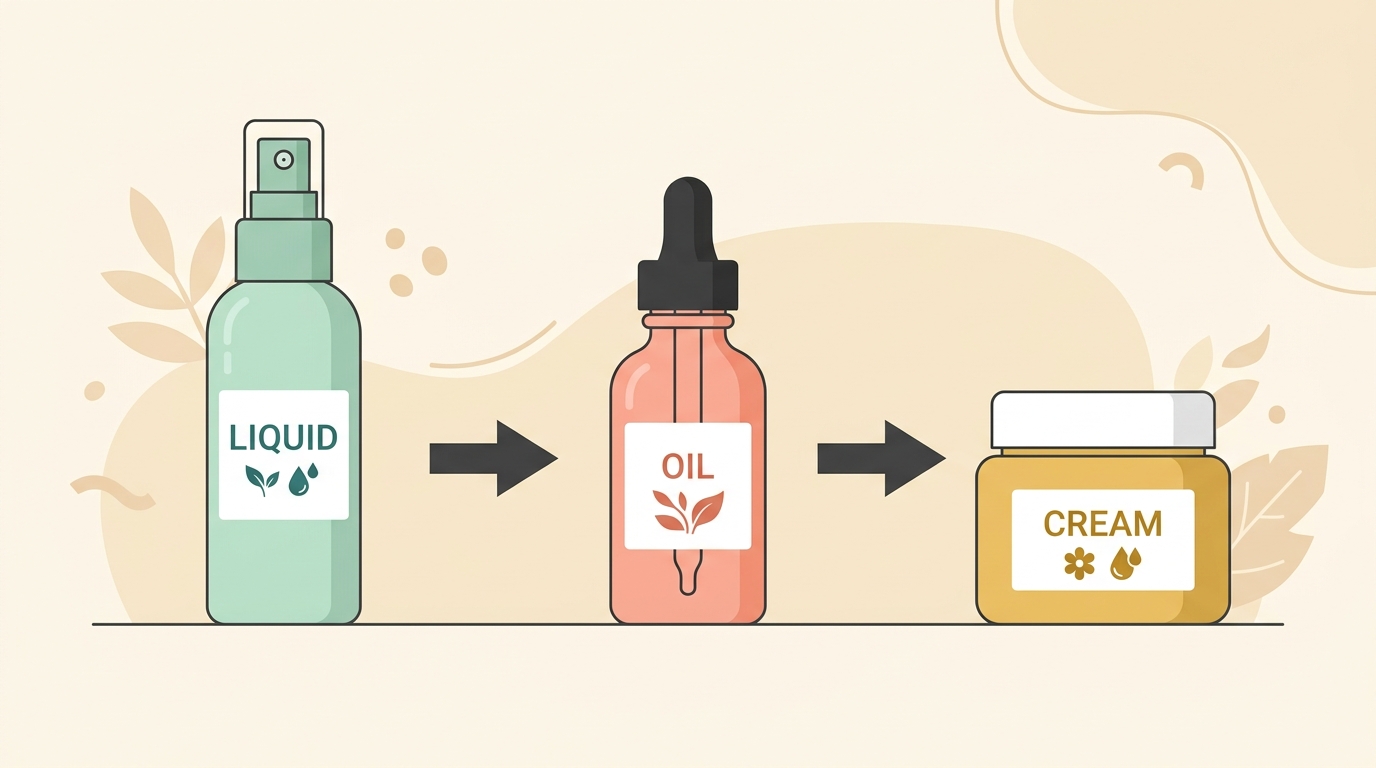
High porosity hair needs a different layering strategy. Because the cuticle is already raised and porous, you want heavier products that seal moisture in rather than lightweight ones that slip right through. The LCO method (liquid, cream, oil) works better than LOC for most high-porosity textures because the oil goes on last as a sealant.
Key Ingredients to Look For
Once you know your porosity, ingredient labels stop being hieroglyphics. There are three categories that matter: humectants, emollients, and proteins. Knowing which ones to prioritize (and which to avoid) for your porosity level is basically a superpower at the drugstore.
Humectants — The Moisture Magnets
Glycerin, honey, aloe vera, hyaluronic acid. These ingredients pull moisture from the air into your hair. Low porosity hair loves them — they help drag moisture past that stubborn cuticle barrier. Medium porosity handles them easily. But here's the trap for high porosity hair: in humid climates, humectants can pull too much atmospheric moisture into your already-porous strands, turning you into a frizz bomb. If you're high porosity in Miami or London, dial back the glycerin.
Emollients — The Sealers and Softeners
Shea butter, coconut oil, argan oil, jojoba oil, castor oil. These fill gaps in the cuticle and coat the strand to lock moisture in. High porosity hair absolutely thrives on heavy emollients — shea butter and castor oil are MVPs. Low porosity hair? Stay away from the heavy stuff. It'll sit on your hair like a wax coating. Stick to lightweight oils — argan and grapeseed absorb without weighing you down. Medium porosity can play the whole field based on personal preference.
Proteins — The Gap Fillers
Keratin, silk protein, collagen, wheat protein. These temporarily patch structural damage in the cuticle — think of them as spackle for your hair. High porosity hair usually needs protein weekly or biweekly because there are actual gaps to fill. Low porosity hair should tread carefully — too much protein on an already-tight cuticle makes hair feel stiff, crunchy, and straw-like. You don't need to reinforce what's already solid. Medium porosity benefits from protein every few weeks for maintenance.
Here's the real skill: learning to read your hair's signals. Feeling limp, stretchy, mushy when wet? Needs protein. Feeling stiff, brittle, straw-like? Needs moisture. This diagnostic skill is worth more than any specific product recommendation because it lets you adjust on the fly, week to week, season to season.
How Porosity Changes Over Time
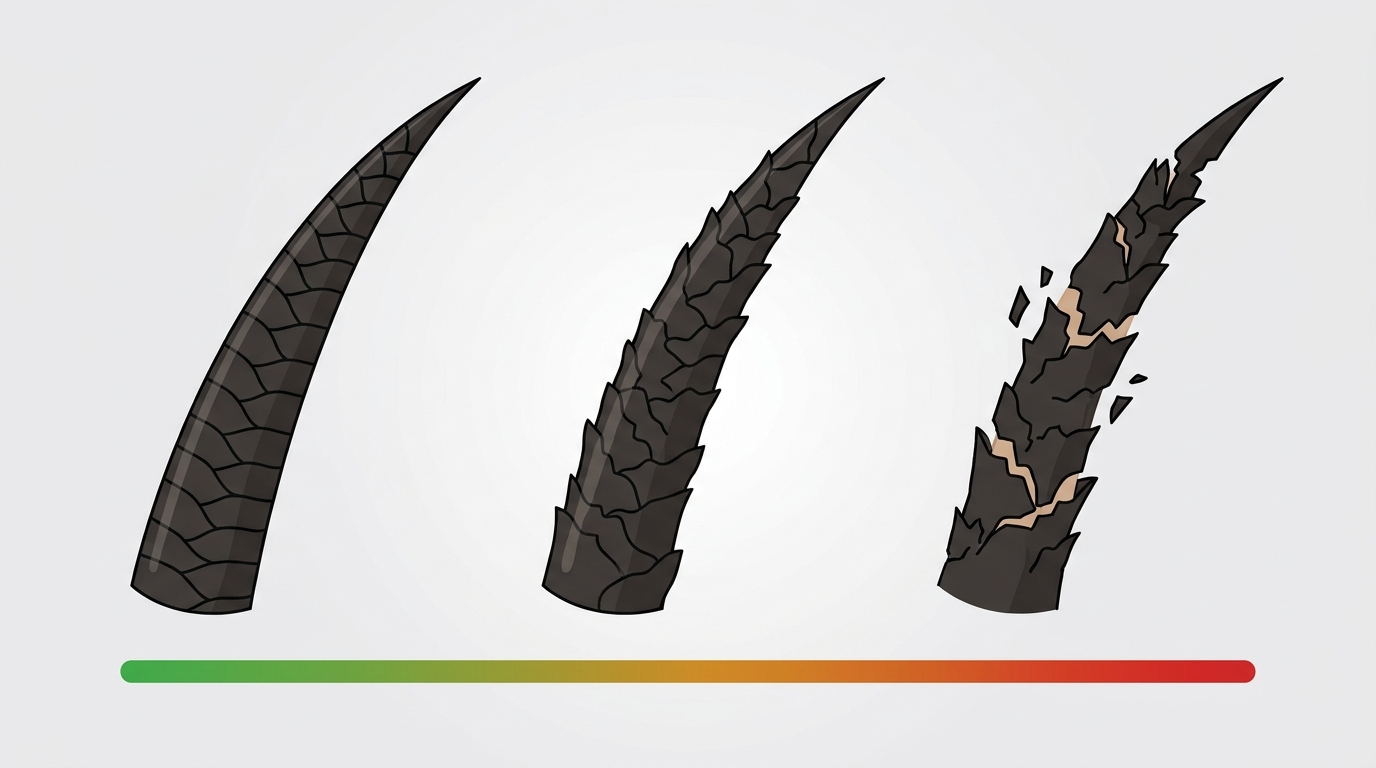
Your porosity isn't set in stone. You're born with a genetic baseline, but life changes it. Sometimes gradually, sometimes dramatically. Understanding what shifts porosity helps you adapt your routine instead of wondering why products that worked last year suddenly don't.
Chemical Processing
Every time you color, bleach, perm, or relax your hair, the chemicals forcibly open the cuticle. That's literally how they work — they have to get inside the shaft to change its structure. Each treatment nudges your porosity higher. One balayage? Minor shift. Five years of quarterly full-head bleaching? You've basically turned low porosity hair into high porosity hair. This damage is cumulative and permanent on the existing strands — you'd have to grow it all out to get back to your natural baseline. It's the number one cause of porosity change.
Heat Damage
Flat irons, curling irons, and blow dryers at high temperatures physically wreck cuticle scales — they lift, chip, crack, and break off. The proteins in your hair literally denature (same process as cooking an egg). This is sneakier than chemical damage because it's so gradual. You don't wake up one day with high porosity hair — it creeps up over months and years of daily heat styling until suddenly your products stop working and you can't figure out why. Heat protectant helps. It doesn't make heat safe — it just makes it less destructive.
Environmental Exposure
Sun exposure degrades the cuticle slowly but surely (UV radiation breaks down the protein bonds). Chlorinated pools swell the cuticle and strip natural oils — that straw-like feeling after swimming isn't your imagination. Salt water does similar damage. Hard water deposits minerals on the shaft that can mimic low porosity behavior even on naturally porous hair (a chelating shampoo fixes this). These factors are slow-burn — but they add up over seasons and years.
Aging
Hair gets more porous as you age. The cuticle thins, sebum production drops, individual strands may get finer. It's gradual — most people start noticing drier, more fragile hair in their 40s. This isn't something to fight against. Adjust your routine instead: heavier products, more moisture, less heat. Working with the change beats pretending it's not happening.
Protein and Repair Treatments
Good news: you can temporarily reduce porosity. Protein treatments fill gaps in the cuticle like spackle on drywall. Bond-building treatments (Olaplex and similar products) repair broken disulfide bonds at the molecular level. Neither is a permanent fix — the patching washes out over time, and the bonds can break again. But used consistently, they make a real, measurable difference in how well high porosity hair holds moisture. Think of it as regular maintenance on a car with high mileage — you can't make it new, but you can keep it running great.
The bottom line: re-test your porosity every 6-12 months, especially after major chemical treatments or lifestyle changes. The routine that worked perfectly last year might need tweaking today. Hair isn't static, and your care shouldn't be either.
Frequently Asked Questions
Hair porosity refers to your hair's ability to absorb and retain moisture. It is determined by the condition of the cuticle layer — the outermost protective layer of each hair strand. When cuticles are tightly bound (low porosity), moisture has difficulty entering. When cuticles are raised or damaged (high porosity), moisture enters easily but escapes just as fast.
Your natural porosity is largely genetic, but it can be altered by external factors. Chemical treatments, heat styling, UV exposure, and physical damage can increase porosity by lifting or damaging cuticles. Protein treatments can temporarily lower porosity by filling gaps in the cuticle. While you cannot permanently change your genetic porosity, you can manage your current porosity with the right products and care routine.
No, the popular float test (placing a strand in water and watching if it sinks or floats) is not scientifically reliable. Surface tension, product buildup, oil, strand thickness, and water temperature all affect the result. A behavioral assessment like our quiz — which evaluates how your hair actually behaves with moisture, products, and heat over time — provides a much more accurate picture of your true porosity.
Low porosity hair does best with lightweight, water-based products that do not sit on the surface. Look for liquid leave-in conditioners over heavy creams, and use heat (warm water, steam, or a hooded dryer) to help open cuticles and allow products to penetrate. Avoid heavy oils and butters that create buildup. Humectants like honey and glycerin work well to attract moisture into the shaft.
Porosity influences how your hair responds to styling, which indirectly affects your best hairstyle options. Low porosity hair tends to resist curling and hold straight styles well, but may struggle with volume. High porosity hair takes styles easily but may lose them quickly in humidity. Understanding your porosity helps you choose products and techniques that make any hairstyle last longer and look its best.
We recommend retesting every 6 to 12 months, or after any major chemical treatment (coloring, perming, relaxing, keratin treatment). Porosity can shift significantly after these processes. Seasonal changes and aging also gradually affect porosity. If your current products suddenly stop working well, that is often a sign your porosity has shifted and it is time to reassess.
Now that you know your hair porosity, see how different styles look on you.
Try On Hairstyles →