
What Hairstyle Suits Me?
Answer 8 quick questions and get personalized hairstyle recommendations based on your face shape, hair type, and lifestyle.
Choosing the right hairstyle is part art, part science. Professional stylists spend years learning how face geometry, hair texture, and lifestyle intersect to create the perfect look. This quiz distills that expertise into 8 simple questions so you can discover styles that genuinely flatter your unique features.
The quiz considers your face shape to determine what proportions to balance, your hair texture to ensure the recommended styles actually work with your natural pattern, your hair density because thin and thick hair behave differently with the same cut, your current and desired length to keep recommendations realistic, your lifestyle and styling willingness so you end up with a style you can actually maintain, and your style direction preferences. After thousands of transformations in our gallery, these six variables consistently predict what looks best. You will get 5 personalized recommendations, each with an explanation of why it works and a realistic maintenance estimate.
This quiz uses a multi-factor matching algorithm that evaluates 8 characteristics: face shape, hair texture, density, current length, desired length, lifestyle, styling willingness, and gender expression. Each hairstyle in our database is tagged with compatibility scores across all factors. Face shape matching carries the highest weight (40%), followed by texture compatibility (30%) and gender expression (20%). The algorithm returns your top 5 matches ranked by overall compatibility score.
What is your face shape?
What is your hair texture?
How dense is your hair?
What is your current hair length?
What length are you going for?
How would you describe your lifestyle?
How much time do you want to spend styling?
What style direction do you prefer?
How Professional Stylists Choose the Right Cut
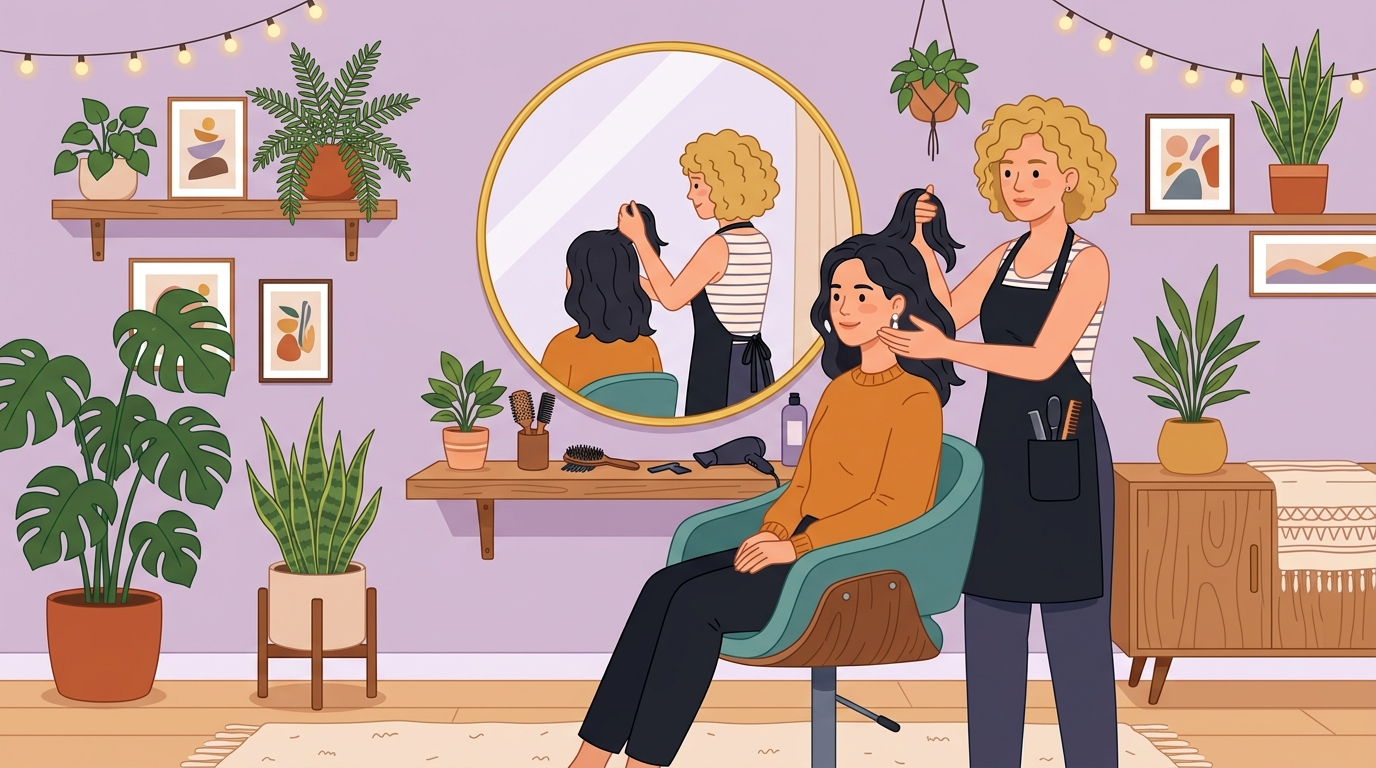
When you sit down in a good stylist's chair, they're not looking at your Pinterest board (not yet, anyway). They're looking at you. Before scissors touch hair, they're running through a mental checklist most clients never realize is happening. Forehead width versus jawline. Chin shape — pointed, round, flat. Where your hair naturally parts and how it falls. The texture, the density, the way the ends behave. Some will ask you to smile, because a face in motion looks different than a face at rest, and the best haircuts work in both states.
All of this serves one goal: visual balance. Every face has dominant features — a strong jaw, a high forehead, wide cheekbones, a small chin. A great cut doesn't hide those features. It counterbalances them. It redirects the eye toward harmony instead of letting one feature dominate. That's why oval faces are considered the "easy" shape — they're already balanced, so nearly anything works. Every other shape benefits from strategic choices: adding width where there's narrowness, softness where there are angles, volume where things fall flat.
Here's something most people don't think about: head shape matters just as much as face shape. Your profile — the side view — is half the haircut. A flat crown needs volume built up. A rounded head can pull off sleeker styles. A prominent forehead changes dramatically with bangs versus without. Good stylists think in 3D, not 2D. That's the difference between a haircut that looks good in the mirror and one that looks good from every angle in real life.
But all the technical analysis in the world means nothing if you hate styling your hair. The best stylists listen first. How much time do you actually spend on your hair each morning? (Be honest — not aspirational.) Do you own a blow dryer? Do you use it? How often can you realistically get to the salon? A technically perfect cut you won't maintain is worse than a simpler cut you love wearing every day.
The 4 Factors That Determine Your Best Hairstyle
1. Face Shape
This is the starting point, not the finish line. Your face shape tells you which proportions to balance: oval gets the widest range of options (lucky you). Round faces look incredible with long layers, side parts, and styles that create vertical lines. Square faces come alive with soft waves and textured layers that break up the jaw. Heart shapes are flattered by chin-length bobs and side-swept bangs. Oblong faces need horizontal volume and bangs (any kind). Diamond faces shine with side-swept fringe and chin-length texture. Not sure about your face shape? Take our face shape quiz first.
2. Hair Texture and Density
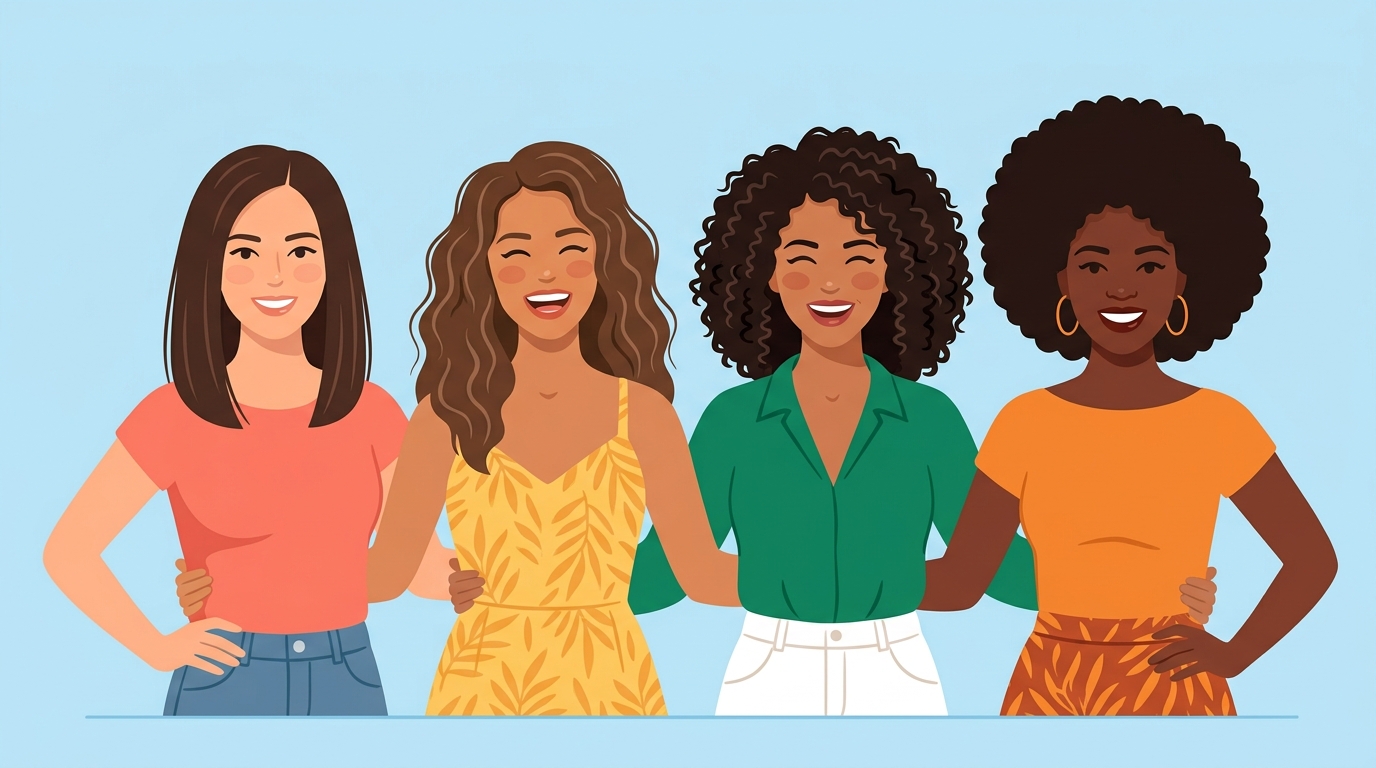
A style that's wash-and-go on straight fine hair might take 45 minutes on thick curls. Texture dictates how a cut falls, how layers move, how much natural volume you're working with. Density determines whether a style reads as "intentionally tousled" or "I woke up like this and not in a good way." Fine hair? Blunt cuts create the illusion of fullness. Thick hair? You need layers or it'll turn into a triangle. Curly and coily textures need a stylist who understands shrinkage — cutting curly hair the same way you cut straight hair is how you end up with a shape you didn't ask for.
3. Lifestyle and Maintenance
Here's the question nobody wants to answer honestly: how much time will you actually spend on your hair? Not how much time you wish you'd spend. If you're a wash-and-go person, don't pick a style that needs a round brush and 20 minutes. If you're active and sweating daily, you need hair that works in a ponytail. If you work in a corporate environment, you want something that looks polished without effort. Your hairstyle should make your life easier, not add another chore to your morning.
4. Personal Style and Confidence
Here's the honest truth: all the technical analysis in the world can't override how a style makes you feel. If a cut makes you feel powerful, magnetic, like the version of yourself you want to be — that's the right cut. Period. Our quiz uses face shape, texture, and lifestyle to narrow down smart recommendations. But the final call is yours. That's exactly why we built the AI try-on tool — so you can see each recommendation on your actual face before committing. No more guessing.
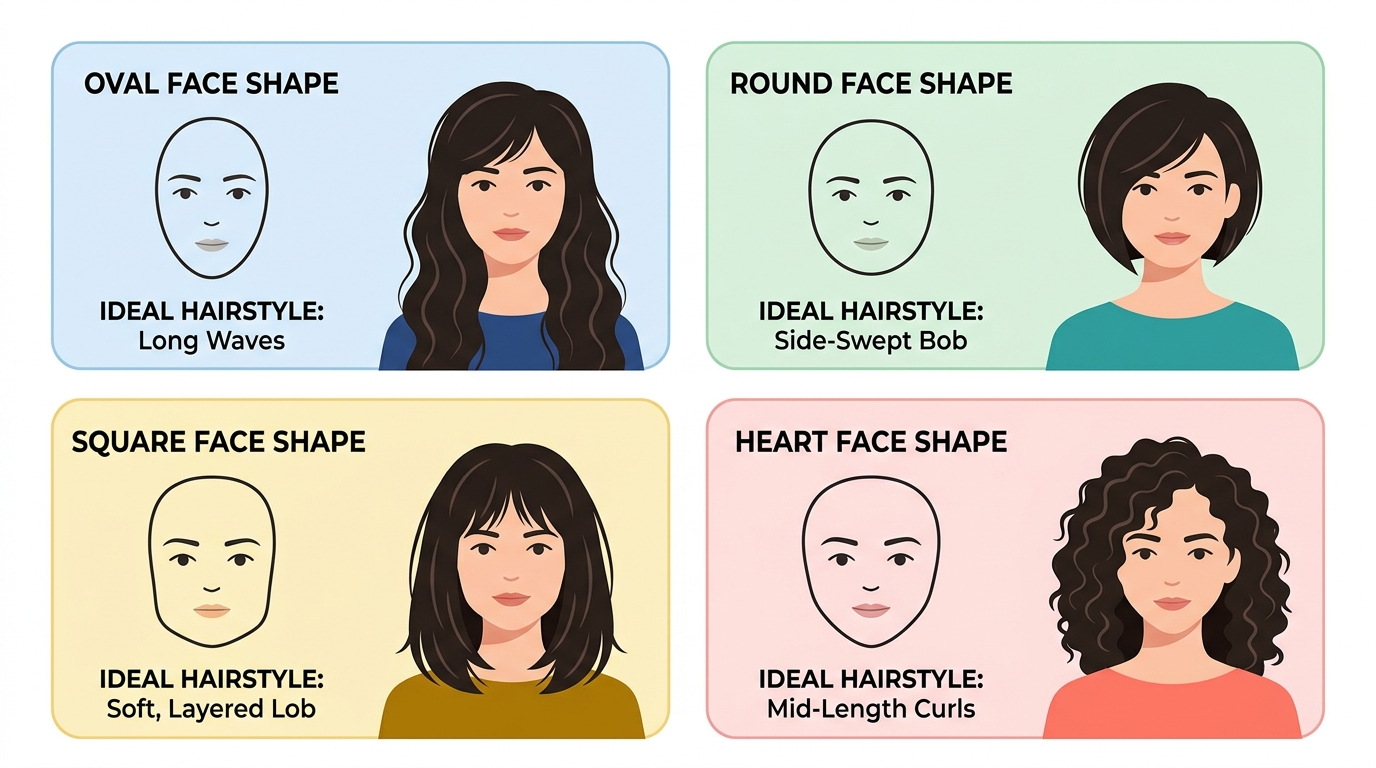
Hair texture plays an equally critical role. What looks effortless on straight, fine hair can require serious maintenance on thick curls — and vice versa. The best style recommendations factor in both your face shape and your natural texture working together.
Trends vs. Timeless — What Actually Matters
Every year, the trend cycle spits out a new "it" cut. The shag is back (again). Curtain bangs are having a moment (again). The wolf cut went from TikTok to every salon in six months. And look — there's nothing wrong with trends. They're fun. But it's worth knowing the difference between a style that'll look great for years and one that'll feel dated by next spring.
Timeless styles have a few things in common. They work with your hair's natural movement instead of fighting it. They're low-enough maintenance to survive between salon visits. They flatter most face shapes with small tweaks. Classic bobs, long layers, well-shaped pixies, properly layered natural curls — these have been popular for literally decades because they're built on good structure, not novelty. You'll never look at a photo of yourself with a well-cut bob and cringe.
Trend-driven styles are more extreme. They often need specific products and techniques to look right, and they have a shorter shelf life. The shag is a perfect example — fresh from the salon? Incredible. Three weeks later without a trim and some texturizing spray? It can veer into "I gave up" territory fast. Same goes for heavily layered wolf cuts, micro bangs, or any style that depends on a very specific shape to read correctly.
My take? Start timeless, add trendy. A classic lob is timeless. Throwing curtain bangs on it is a trend addition — one you can grow out in 3 months if you hate it. A well-shaped pixie is timeless. Texturizing and disconnecting it is the trend layer. This way you stay current without committing to something you'll be stuck with (or paying to fix) when the trend moves on.
The Maintenance Reality Check
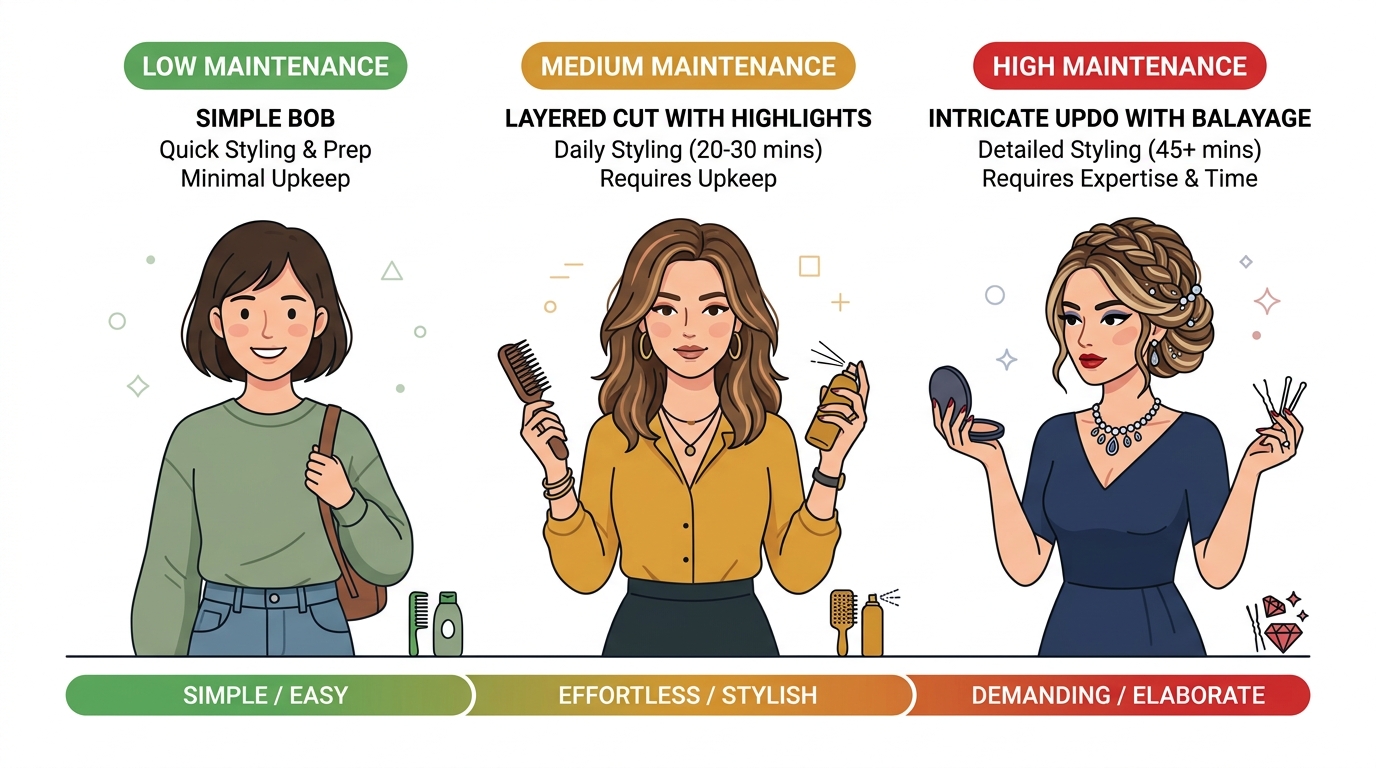
This is the part where you need to be brutally honest with yourself. Not aspirational you. Actual you. Monday-morning-running-late you.
Low maintenance (5 minutes or less): Wash-and-go territory. Long hair worn down naturally. A simple one-length bob. A buzz cut. Well-shaped natural curls that just need a scrunch and go. You'll still need trims every 6-10 weeks, but daily effort is basically zero. The tradeoff? Less variety day to day. But if your morning routine is "wake up, brush, leave" — lean into it. Some of the most stylish people barely touch their hair.
Medium maintenance (10-15 minutes): Where most people actually live. Layered cuts, styles with bangs, anything that benefits from a quick blow-dry or some product. You'll need a leave-in, heat protectant, maybe a volumizer or texturizer — and you need to be comfortable with a blow dryer or diffuser. Salon visits every 6-8 weeks. This is the sweet spot: looking polished without spending your mornings as a slave to your hair.
High maintenance (20+ minutes): Precision bobs that need daily flat-ironing. Multi-step curly routines. Blowouts that take half an hour. Bangs that require reshaping every morning. These styles look stunning when they're done — but they demand real time, real products, and salon visits every 4-6 weeks. Before falling in love with a high-maintenance style, ask yourself: do you want the morning routine that comes with it? If yes, go for it. If you're already exhausted thinking about it, pick something that works harder for you.
Our quiz factors your honest answer about styling willingness into the recommendations. If you told us 5 minutes or less, we won't suggest anything that needs a 20-minute blowout. If you love styling your hair, we'll point you toward cuts that reward the effort.
Frequently Asked Questions
See exactly how these styles look on you with our AI try-on tool.
Try On Hairstyles